
In the context of escalating security challenges, the political management of these crises reveals a striking dichotomy. The response from Pedro Sánchez's government towards Italy was prompt, addressing a seemingly absurd and propagandistic measure from Giorgia Meloni's administration. In stark contrast, there remains ambiguity surrounding Spain's approach to Morocco; we are left questioning whether there has been a crisis cabinet meeting or even a simple phone call. The critical question arises: why is there such a disparity in response between Italy and Morocco? What is it about Morocco that prompts this lack of action? How is it that Rabat has not been informed that its actions are intolerable?
This absence of a robust response from Spain has significant implications, suggesting that Morocco may perceive itself as having considerable leeway. When each act of pressure is met with silence, it raises the question: why should Morocco refrain from further provocation? The issue extends beyond Morocco's actions; it pertains to the signals being sent. This silence fosters a perception that Spain lacks the will or the ability to leverage its influence over Morocco. Ultimately, neither Spain's current model nor the broader European approach presents a convincing alternative.
Europe has frequently opted for a troublingly convenient approach: outsourcing the management of its southern borders to third countries, even those that do not meet the democratic standards espoused by the European Union itself. A nation is deemed 'safe,' and with that designation, access to asylum is curtailed, and the return of individuals already within its borders is facilitated. The situation in Syria serves as a poignant example of this troubling trend.
However, the externalization of borders does not resolve the underlying issues; it merely shifts them. This strategy does not come without costs. Europe invests financial resources, technical assistance, and means to ensure that others contain the issues it is unwilling to manage directly. This leads to an unavoidable question: if we seek stability among our neighbors, what concrete actions are we taking to support their development and security?
The situation in Morocco is particularly relevant in this regard. It is in Spain's intelligent self-interest to ensure that its neighbor is both prosperous and secure. Geographical realities cannot be altered. However, cooperation must not equate to a carte blanche. The relationship requires clear conditions, tools, and the capacity to assert non-negotiable boundaries. This approach is not hostility; it is a matter of foreign policy. The necessary tools are available, yet the political will to utilize them is lacking.
Meanwhile, Morocco operates adeptly within this gray area. This reflects the principles of hybrid warfare: exerting pressure and wearing down opposition without crossing the threshold that would compel Spain or the EU to respond militarily. Such a strategy proves effective when met with hesitation from the opposing side.
Moreover, a firm political stance does not necessitate the dehumanization of migration issues. Individuals are not commodities or mere tools of pressure. Upholding the law and ensuring regular migration pathways is not a sign of weakness; rather, it reflects civility. For this reason, it is imperative to demand that states not only comply with regulations but also enforce them among others.
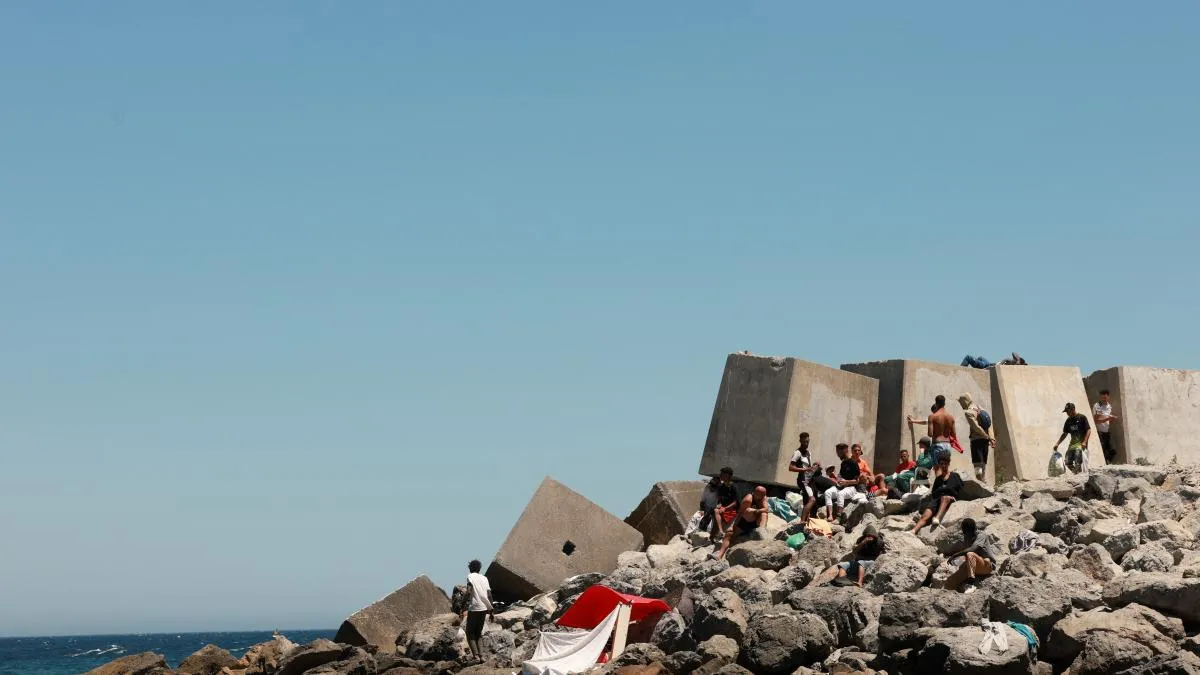
Ceuta will not find a solution through police, military, or security measures alone. The decisive instrument will be political engagement. A border that can be crossed without consequence ceases to function as a boundary. Until Spain can effectively persuade Morocco otherwise, the latter's sense of impunity will persist as a significant part of the problem.
As reported by lavanguardia.com.