
Digital Transformation and Its Impact on Human Rights
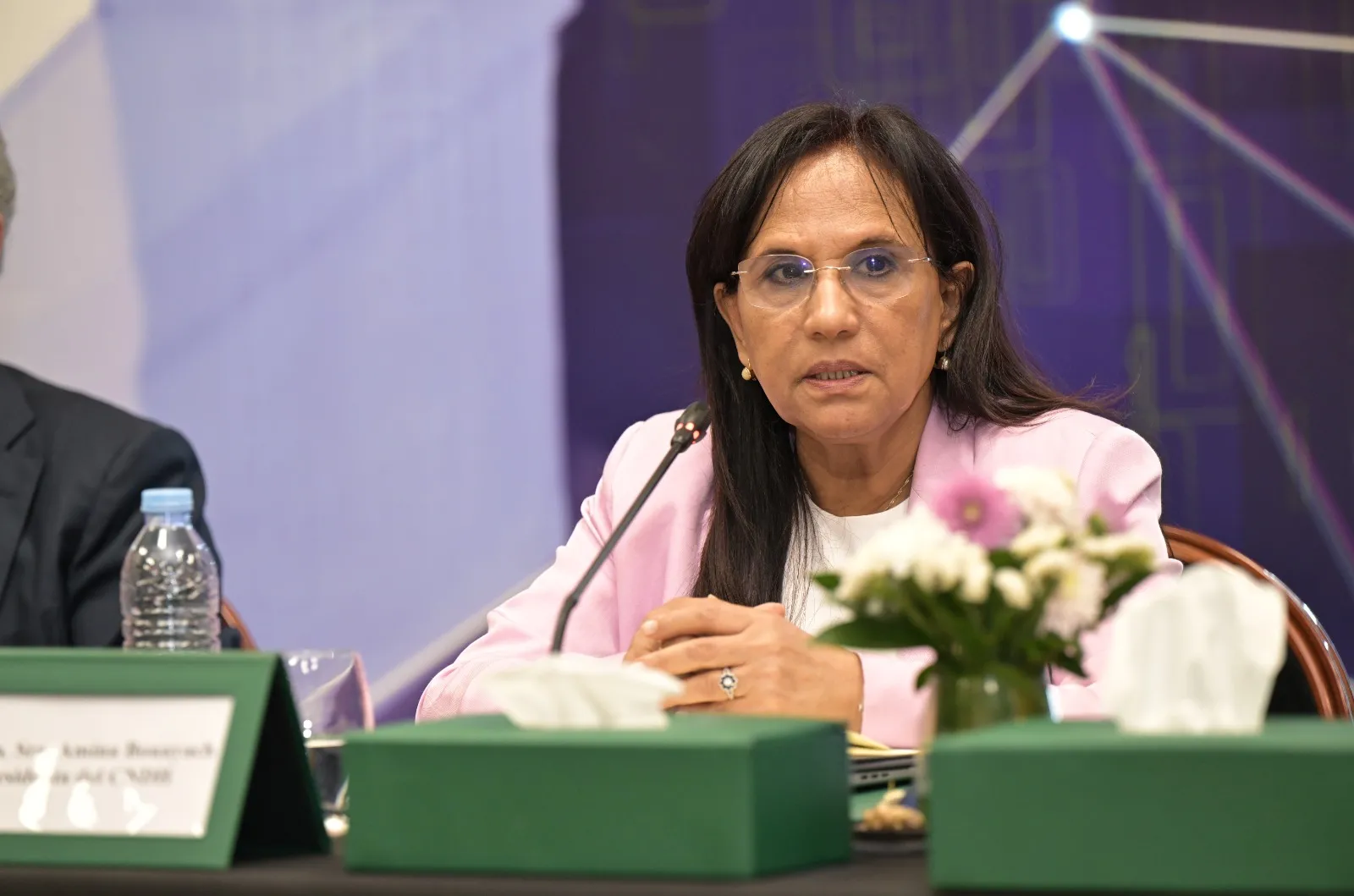
On Friday, in Marrakech, the President of the National Council for Human Rights, Amina Bouayach, emphasized that the rapid digital transformations and the rise of artificial intelligence present contemporary democracies with an unprecedented structural test, fundamentally affecting the essence of rights and freedoms while profoundly reshaping public space. During the opening of the International Conference on Human Rights and Electoral Laws, Bouayach highlighted the symbolic significance of Marrakech, often dubbed the "Red City," as a historical space for cultural exchange and idea-sharing, noting that hosting such an important international discussion reflects the stakes associated with the future of public discourse and the exercise of rights amidst swift technological changes.
Bouayach stressed that the ongoing discussion extends beyond the mere relationship between technology and elections; it fundamentally raises crucial questions about how to safeguard rights and freedoms in an environment where digital spaces are redefining the conditions for political participation and the formation of public opinion. She asserted that elections should not be viewed as mere procedural mechanisms for power transfer but rather as a constitutional and human right intricately linked to freedoms of opinion, expression, participation, and equal access to information. She cautioned that any non-transparent influence on public opinion formation undermines the core integrity and fairness of the democratic process.
The Challenges and Opportunities of Technological Advancements
In her remarks regarding technological transformations, Bouayach described the world as experiencing a "pivotal moment" akin to major historical shifts, driven by the ascendancy of artificial intelligence and digital technologies that directly impact communication, work, and public engagement patterns. She acknowledged that these transformations present significant opportunities to enhance rights and freedoms by broadening access to information, improving public services, and promoting transparency. However, they concurrently impose complex challenges related to protecting freedom of choice, ensuring the integrity of public discourse, and maintaining trust within democratic societies.
Furthermore, Bouayach warned that digital spaces have evolved from being mere communication tools to becoming a "real extension of the public sphere," governed by opaque algorithms that dictate the nature of content citizens are exposed to and interact with. This situation contributes to the fragmentation of public space and the emergence of parallel and contradictory narratives. She also addressed what she termed the "plague of our time"—misinformation and fake news—asserting that these phenomena threaten the right to information, freedom of choice, and the integrity of electoral processes, particularly in light of advancements in deepfake technologies, automated content generation, and targeted public opinion manipulation.
Highlighting the role of artificial intelligence in complicating this landscape, Bouayach noted its capacity to generate and amplify content rapidly and at low cost, making it increasingly difficult to distinguish between accurate and false information, thereby enhancing the spread and impact of misleading news. She underscored that the challenge lies not in rejecting technology or fearing it but in establishing democratic governance of the digital space—built on transparency, accountability, and non-discrimination—that keeps human rights and dignity at the core of technological transformation.
In this context, she revealed that the National Council for Human Rights is actively working to integrate digital transformations into its electoral monitoring mechanisms. She noted that the 2021 elections saw the adoption of tools for analyzing digital discourse and tracking information dynamics, with plans to enhance these mechanisms for the upcoming 2026 elections through improved monitoring and auditing tools. Bouayach concluded by emphasizing the need for a framework of dialogue and cooperation among institutions, researchers, and stakeholders to develop shared approaches capable of accompanying digital transformations from a human rights perspective, ensuring that technology becomes a tool for enhancing participation, freedom, and justice rather than a factor that undermines democracy.
As reported by al3omk.com.