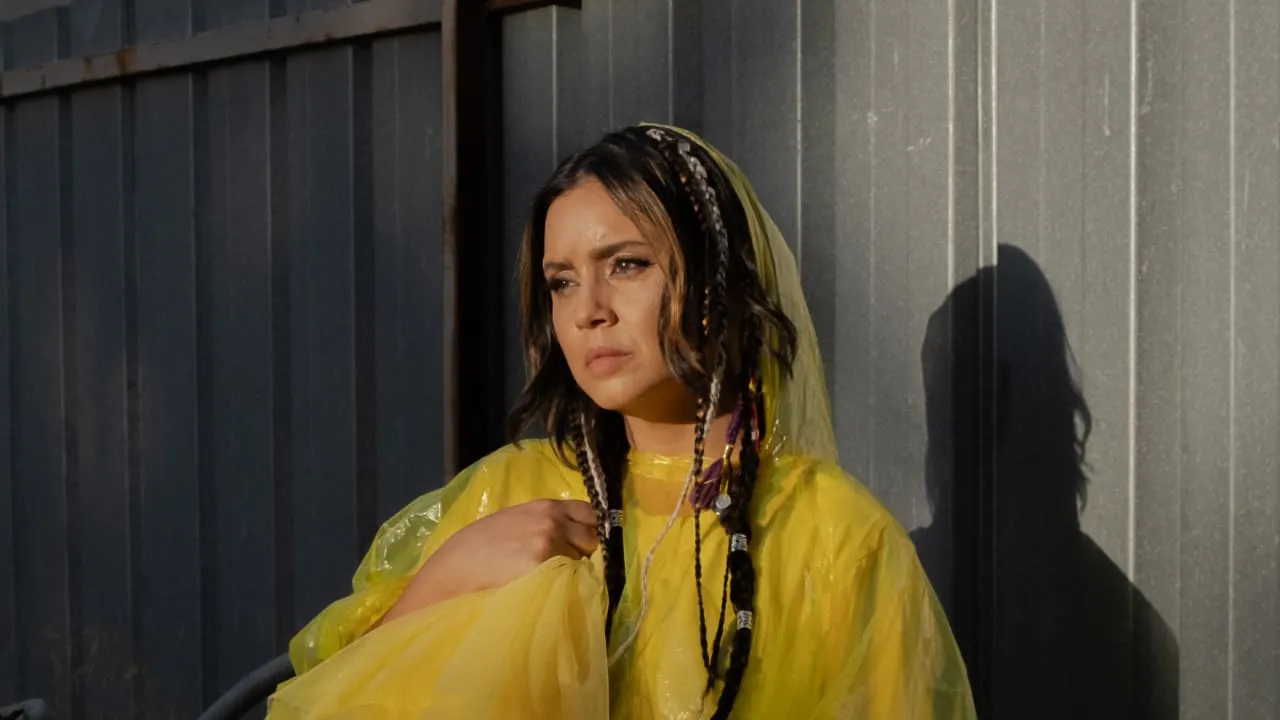

Neta Elkayam, an Israeli singer and multidisciplinary artist, arrived in New Orleans not with the intention of making it her new home, yet she found herself irresistibly drawn to the city’s vibrant cultural tapestry. In her own words, Elkayam describes New Orleans as "perfectly broken," a sentiment that resonates deeply with her personal experiences and artistic journey. Her connection to the city was instantaneous, particularly regarding its rich musical heritage, which she sees as a vital form of resilience and a way of honoring history—a concept profoundly familiar to her Jewish roots.
Elkayam, whose artistry is deeply influenced by her North African Jewish heritage, recognizes the cultural significance of music in various communities, particularly in how it serves to commemorate the deceased and narrate historical narratives. This perspective aligns with her own Jewish traditions, where storytelling through music has been a cornerstone of cultural identity for generations. However, before she could share her narrative, Elkayam felt the need to reconnect with her heritage, especially in its original language.
Straddling Two Worlds
Raised in Netivot as the daughter of Moroccan immigrants, Elkayam embodies the experience of many children of immigrants who navigate between two distinct worlds. Her father emigrated from Tinghir, Morocco as a young child, while her mother left Casablanca at the age of eight. Both parents possess Amazigh roots, an indigenous ethnicity in North Africa with a small Jewish minority in Morocco. As Elkayam reflects on her upbringing, she acknowledges the limitations of what her parents could bring to Israel—the music, food, memories, and photos that formed the essence of their past lives. These artifacts carried stories of resilience, yet Elkayam was simultaneously confronted with a society that instilled fear regarding anything Islamic or Arab. This dichotomy sparked her curiosity rather than discomfort, prompting a desire to explore her identity further.
Her transformative journey began at the age of 28 when she traveled to Morocco for the first time, where she discovered a vast community of people who spoke her grandmother's language. This realization shifted her perspective on her life in Tel Aviv, where she had been studying art and exhibiting in galleries. Elkayam yearned for a deeper connection with Arabic-speaking individuals and those rooted in their cultural identities. Although she was not ready to leave Israel, she made the strategic decision to relocate to Jerusalem, a city filled with diverse communities that she felt could satisfy her quest for cultural engagement.
Finding Her Place in New Orleans
While friends questioned her decision to exchange the vibrant, secular atmosphere of Tel Aviv for the multifaceted, religiously diverse environment of Jerusalem, Elkayam embraced her new surroundings. She began learning Arabic and eventually met Amit Hai Cohen, who would become her husband and creative partner. Initially focused on visual arts, Elkayam discovered her passion for music through her relationship with Cohen, who introduced her to the piano. Singing in her grandmother's language allowed her to carve out a niche in Israel's competitive music scene, revealing her authentic self and artistic expression.
The couple's first recording, originally intended as a gift for Elkayam’s mother, garnered unexpected attention online, eliciting responses from individuals across Egypt, Algeria, and France. Listeners expressed a longing for the Jewish melodies and stories that once flourished in their communities. This prompted Elkayam and Cohen to delve into the archives of North African Jewish musicians, seeking to revive the sounds and stories that had been forgotten over time. Their endeavor culminated in a performance in Morocco, where Elkayam shared the stage with Palestinian musicians, symbolizing unity and cultural synthesis.
Eventually, the couple was approached by BAMAH to participate in a residency at Xavier University in New Orleans. Their plans, however, were disrupted by the October 7 attacks, leading to an extended stay in Morocco before they could make their way to New Orleans. Once settled, Elkayam and Cohen developed a popular course at Xavier, titled "From Jerusalem to Morocco and Back: A Journey Through Culture and Music," which integrates art and music to explore themes of identity and memory.
As they became entrenched in New Orleans' musical landscape, Elkayam and Cohen embraced the city's rich jazz traditions, merging their Moroccan Jewish influences with rock and jazz. Elkayam views tradition as a dynamic palette, blending her multifaceted identity into her music. While she acknowledges the complexity of cultural conflicts, she emphasizes that her only answer lies within the realm of music—a powerful medium for connection and understanding.
As reported by jpost.com.