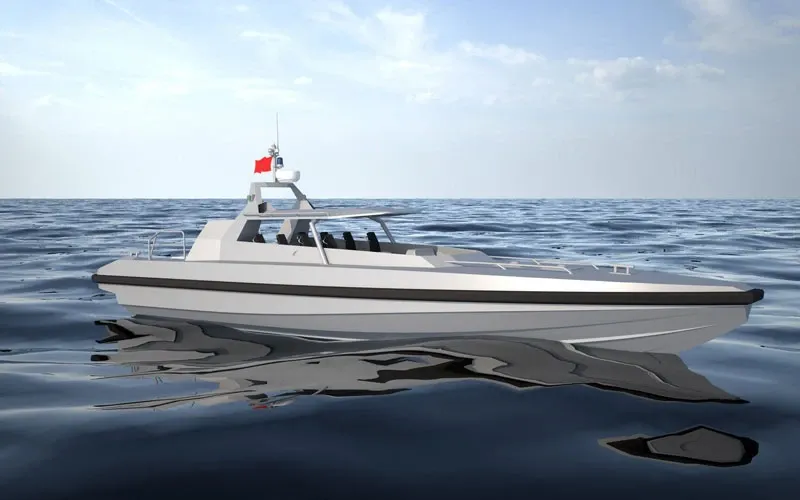

The Dutch government has officially authorized a military export to Morocco, valued at €13 million, which includes two unmanned surface vessels (USVs) intended for the Royal Moroccan Navy. This significant operation also encompasses necessary equipment such as sensors, control systems, spare parts, training, and technical assistance to ensure the proper commissioning of these advanced vessels.
The authorization was detailed in a letter sent on July 13, 2026, to the Second Chamber of the States General by the Dutch ministers of Foreign Trade and Development Cooperation, as well as Foreign Affairs. The document, identified as 2026D36720, confirms that the end user of this military material will be the Royal Moroccan Navy, with the vessels designated for anti-submarine warfare and mine countermeasures operations.
While the official documentation does not disclose the specific manufacturer or model of the two vessels due to commercial confidentiality, it does highlight the operational capabilities of the platforms tailored for their intended missions. The export package includes not only the two USVs but also mission equipment, a control station, documentation, training, and technical support essential for their operation and deployment.
Designed for Specialized Missions
According to the evaluation conducted by the Dutch government, these two vessels have been specifically configured for anti-submarine and mine countermeasure missions. The documentation emphasizes that their design renders them unsuitable for other tasks without significant modifications. Furthermore, the Dutch government clarifies that any armament these vessels may carry is intended solely for self-defense and the execution of their specific missions, rather than for general offensive capabilities.
This acquisition is expected to enhance the capabilities of the Royal Moroccan Navy in anti-submarine warfare through the utilization of unmanned systems, thereby reducing the need to expose crew members directly during certain search and surveillance operations. In the context of mine countermeasures, the use of unmanned platforms allows for missions that mitigate risks to personnel by eliminating the need for crewed vessels.
The Dutch assessment indicates that Morocco already possesses certain anti-submarine warfare capabilities, including ships equipped with sonar and specialized helicopters, while its specific mine countermeasure capabilities remain more limited.
Confidentiality Surrounding Manufacturer and Model
This operation has sparked interest in specialized media outlets due to the lack of information regarding the company supplying these platforms. The documentation merely states that a Dutch company has received authorization to carry out the export. The Dutch media outlet Bladna reported in July on the operation, confirming that the name of the company and the model of the vessels had not been disclosed for commercial confidentiality reasons.
Subsequently, there have been speculations suggesting a potential link between the vessels and the Seagull, an unmanned surface system developed in Israel; however, this identification has not been confirmed by either the Dutch government or the Royal Moroccan Navy. Thus, it remains impossible to officially attribute this €13 million operation to any specific model. Additionally, the official documentation does not clarify whether the contract is related to any previous naval programs Morocco has had with Dutch companies.
The authorization holds particular significance as the Dutch government explicitly evaluated the potential use of these systems in the context of the Western Sahara. In its export assessment, the government concluded that there were no indications that the vessels would be employed to commit aggression against another state or to reinforce Morocco's territorial claims through the use of force.
According to the assessment, conflicts between Morocco and the Polisario Front primarily occur within the territory, lacking significant maritime components. The evaluation does not identify any interstate maritime conflict or opposing territorial claims at sea that could heighten the export's associated risks. The request was also subjected to the eight criteria established by the European Union's Common Position on the export of military technology and equipment, receiving a favorable evaluation from Dutch authorities.
The acquisition aligns with the modernization process of the Royal Moroccan Navy, which has incorporated new platforms and surveillance and combat capabilities in recent years. The introduction of autonomous systems marks a qualitative leap from conventional naval platforms. Unmanned vessels enable prolonged sensor deployments at sea and the execution of specific missions without risking crew safety.
This operation also occurs at a time when bilateral relations between the Netherlands and Morocco are being strengthened, with both countries agreeing to deepen their cooperation in security and defense within a framework that the Dutch government aims to elevate to a strategic partnership. For the time being, the official information available confirms that Morocco will receive two unmanned surface vessels of Dutch origin, valued at €13 million, configured for anti-submarine warfare and mine countermeasures, while the manufacturer, model, and technical specifications of the platforms remain unverified.
As reported by infodefensa.com.