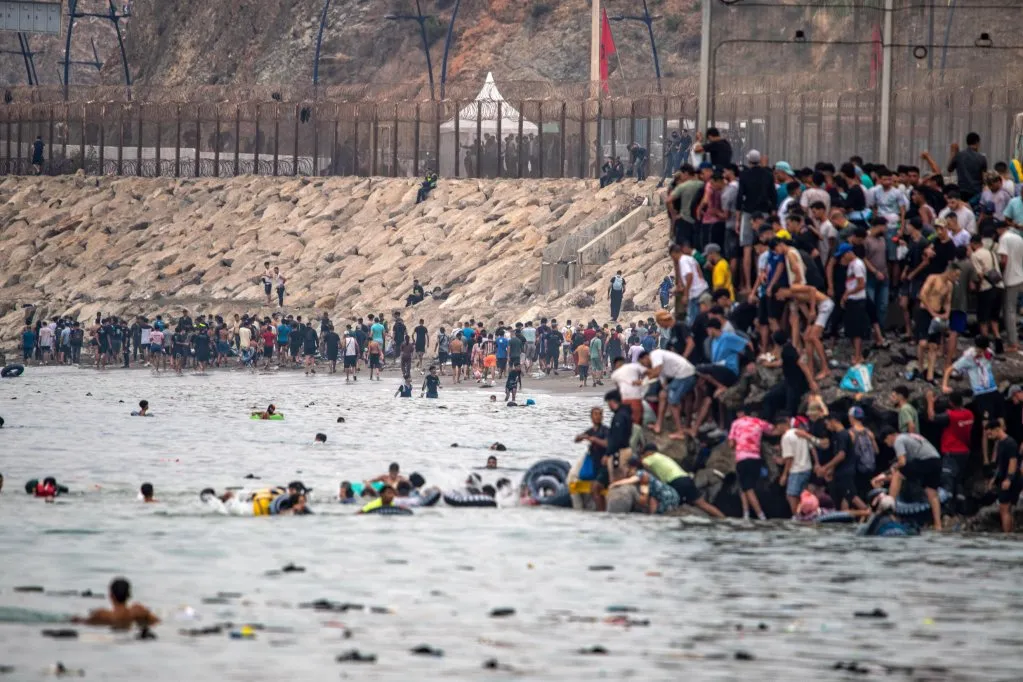

The Moroccan Association for Human Rights has recently shed light on alarming developments regarding the massive influx of migrants to Ceuta at the end of July. A total of 141 bodies have been documented on both the Spanish and Moroccan sides, alongside numerous arrests and ongoing documentation of missing persons and the injured. This information emerged following a press conference held by the association in collaboration with the European Coordination for Human Rights in Morocco on August 7. During an interview with Migrant News, the association's president, Souad Brahim, provided critical updates on this situation, which has unfolded over a week since the significant wave of migrants surged from Morocco to Ceuta on July 30 and 31.
Documented Casualties and Ongoing Concerns
According to the Spanish NGO, Comandantes Fronteras, at least 141 deaths have been documented, with 81 bodies recovered on the Spanish side and 63 on the Moroccan side. However, these figures only represent the bodies that surfaced; there are likely many more unaccounted for, as the Moroccan authorities have not conducted thorough searches. Eyewitness accounts from individuals who returned from Ceuta indicate that many were walking over bodies, with some even describing how their feet encountered heads and limbs, as the narrow 40-square-meter area in Tarajal, which separates Morocco from Spain, was overwhelmed with thousands of people simultaneously. This suggests that the death toll may continue to rise.
Regarding the missing persons, complaints are being received individually by our branches, and we are working to compile this data. Fluctuations occur daily as some missing individuals are found while others remain unaccounted for, making the situation highly dynamic.
Injuries have also been documented due to assaults by military personnel as well as the hazardous crossing methods. When Spanish authorities decided to return migrants, they did so through the same narrow passageway that allowed for their irregular entry, which resulted in numerous injuries. Our on-ground team monitored these repatriations, noting that individuals were not returned through official procedures, but rather through the dangerous route they initially used, which is perilously bordered by rocky cliffs.
While no specific number of injuries was reported, our policy is to refrain from providing figures until documentation is fully completed.
Arrests and Ongoing Legal Issues
Our organization has documented 59 cases of arrests in Tetouan, including five minors. Additionally, there have been 52 arrests in Nador, of which 18 are minors, including two girls who have been placed in child protection centers. Eleven of the arrests in Nador are facing criminal charges in court, with sentences that can reach twenty years or more. Furthermore, 41 other cases from the Nador area are currently before the primary court, encompassing both minors and the two girls.
A significant number of drivers have also been prosecuted for facilitating irregular migration.
Regarding other nationalities, the vast majority were not returned to Morocco and remain in Ceuta, often found in wooded areas and other locales.
For further details, please refer to our previous article on the situation: infomigrants.net.
In summary, the press release from the association highlighted several dimensions of this crisis: the social aspect, characterized by a deadlock in opportunities, unemployment, marginalization, and a lack of justice and social services; the political dimension, marked by the collapse of mediation institutions and the state's reliance on repression and propaganda; and the geopolitical aspect, involving the use of migration and displacement issues in Moroccan-Spanish relations as leverage in international alliances.
Collaborations with other human rights organizations continue, particularly with the European Coordination for Human Rights in Morocco, which includes 25 associations from countries such as Spain, France, Germany, the Netherlands, Belgium, and Italy. This network, alongside our branches in Europe, focuses on European policies and their responsibilities in migration. The events in Ceuta highlight the European reliance on Morocco to manage migration, which allows for serious human rights violations against migrants. Therefore, we maintain coordination with various organizations and communicate directly with Spanish human rights groups.