
A recent scientific study has unveiled significant differences in the bacteria residing within cochineal insects from the regions of Al-Hoceima and Marrakech. These findings are seen by Moroccan researchers as a hopeful avenue for developing future strategies to combat the pest that has caused extensive damage to cactus farming in the kingdom since its emergence over a decade ago. The research, published in the journal “Frontiers in Microbiology,” indicates that insects collected from Al-Hoceima exhibit a greater bacterial diversity compared to those from Marrakech, both in the intestines and ovaries of adult females and in the nymphs.
This study goes beyond merely cataloging bacteria; the overarching goal of the researchers is to determine whether some of these microorganisms assist the cochineal in feeding, growing, or reproducing. If it is found that disrupting these relationships could provide a new method for pest control, it would significantly advance agricultural practices in the region. To conduct their research, scientists from Mohammed VI Polytechnic University collected samples from various locations in Al-Hoceima, including Ait Hicham, Tamassint, and Tila Youssef, alongside samples from three sites in Marrakech. They then performed genetic analyses to identify the bacteria present within the insects.
The research team selected two areas with differing climates: Al-Hoceima, characterized by a more humid Mediterranean environment, and Marrakech, which experiences a drier climate. This approach aimed to explore the relationship between environmental conditions and the bacterial composition of the pest. The tests yielded approximately 2.84 million genetic readings, revealing that the samples from Al-Hoceima were richer in bacterial species, with notable differences in dominant groups between the two regions and across the insect's growth stages.
This variation is particularly significant, as many insects rely on the bacteria within their bodies for crucial biological functions. Thus, the researchers aim to transition from merely understanding “who lives inside the insect” to identifying “what they do there.” For instance, if certain bacteria are found to aid the cochineal in obtaining nutrients that it cannot independently secure or enhance its reproductive capabilities or resilience to environmental conditions, targeting these bacteria could potentially weaken the pest population itself.
However, the study has not yet produced a new treatment for cacti nor confirmed that the identified bacteria are responsible for the insect's ability to proliferate. The researchers emphasize the necessity for functional studies to ascertain the role of each bacterial species discovered. These findings arrive as Morocco continues its efforts to reclaim areas of cactus that have been lost since the arrival of the cochineal pest in the Sidi Bennour region in 2014, which later spread to other production areas.
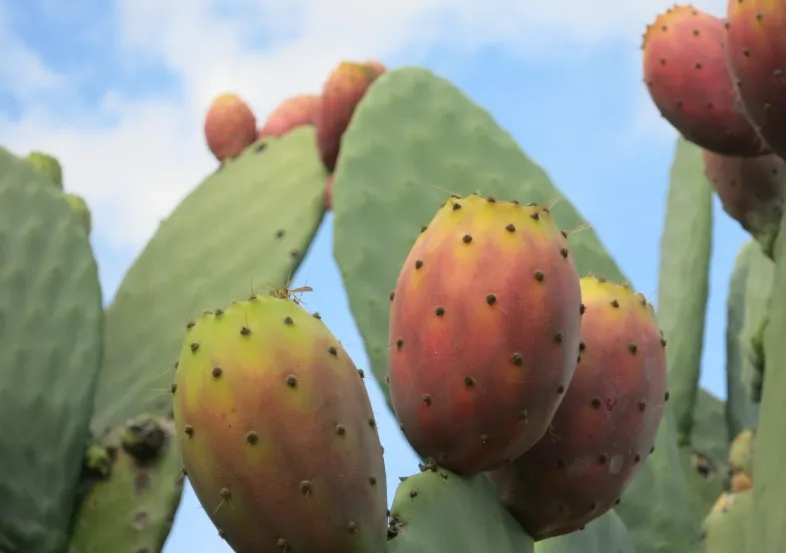
The cochineal feeds on the cactus by forming dense colonies and sucking its sap, leading to yellowing, drying, and eventual death of the plants as the infestation worsens. Its spread has severely impacted a crop that thrives in arid and semi-arid regions and provides income for farmers and cooperatives reliant on cactus fruits and products. Before the pest's arrival, the cultivated area of cactus in Morocco exceeded 150,000 hectares, but extensive losses have prompted authorities to implement measures that include uprooting infected plants, using pesticides, and researching resistant varieties.
This initiative achieved notable results when the National Institute for Agricultural Research identified eight resistant varieties, which later formed the foundation for a cactus replanting program. According to the institute, Morocco produced over 16.3 million resistant seedlings between 2021 and 2025, with the national program aiming to replant 122,000 hectares by 2028, backed by investments nearing 1.4 billion dirhams.
Nonetheless, providing a plant capable of withstanding the pest's attack does not eliminate the need for methods to combat the pest itself, especially considering the restrictions associated with reliance on chemical pesticides and their environmental impacts. Consequently, scientists are simultaneously seeking more targeted biological control methods. The new study places the bacteria associated with the cochineal among these possibilities, having demonstrated that their composition is not uniform across all regions and that environmental factors are linked to their diversity.
In the case of Al-Hoceima, the greater variety of bacterial species does not necessarily imply that the cochineal there is more dangerous than its counterpart in Marrakech; rather, it offers researchers a broader array of potential relationships between the pest and the microbes that coexist with it. The critical test in the next phase will be to determine whether severing one of these relationships genuinely impacts the insect's ability to survive or reproduce. If experiments confirm this, Morocco could add another tool to its arsenal against the cochineal pest, targeting a biological need of the pest rather than solely relying on pesticide applications.
As reported by tanja24.com.