
Nigeria-Morocco Gas Pipeline: An Ambitious Energy Initiative
In an era marked by significant geopolitical shifts affecting global energy flows, the Africa Atlantic Gas Pipeline (AAGP), which links Nigeria to Morocco, stands out as one of the continent's most ambitious projects. Designed with regional connectivity in mind, this pipeline transcends mere export functions and is poised to become a crucial infrastructure for economic and energy integration across Africa and Europe. Amina Benkhadra, the Director General of the National Office of Hydrocarbons and Mines in Morocco (ONHYM), emphasizes that this gas corridor has the potential to sustainably redefine energy balances between the two neighboring continents.
A Multifaceted Continental Project
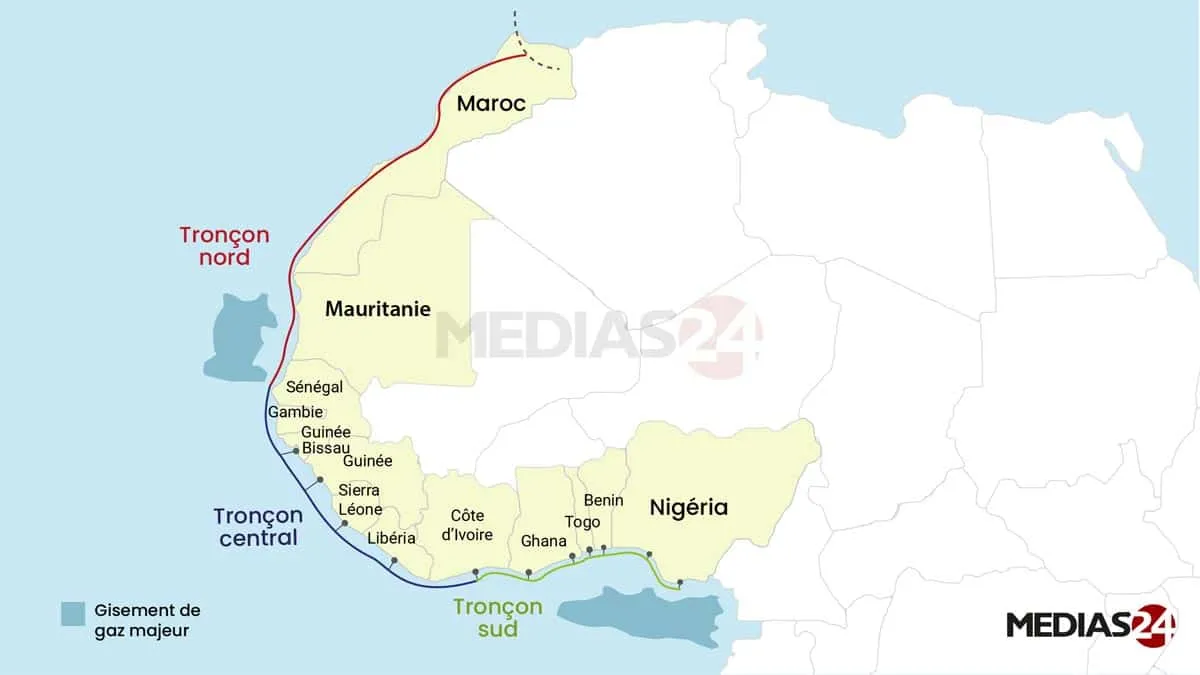
The pipeline will extend along the Atlantic coastline, traversing thirteen West African countries. By connecting to Morocco, it will facilitate the transport of Nigeria's vast gas reserves to an integrated regional network, potentially linking to Europe via the Maghreb-Europe gas pipeline. According to Amina Benkhadra, this initiative represents a genuine platform for regional energy integration, moving beyond a simple export logic. Furthermore, by linking African and European markets, the Africa Atlantic Gas Pipeline will create an unprecedented energy corridor across the Atlantic basin.
This infrastructure has been conceptualized as a multi-use facility, aimed not only at optimizing Nigeria's substantial gas reserves but also at providing reliable energy to West African economies. "The pipeline simultaneously addresses several objectives: securing supply, stimulating regional demand, and creating an energy bridge to international markets," explains Amina Benkhadra. With the potential to serve 400 million people, this project is expected to foster the emergence of a genuine regional gas market, reducing reliance on imports and enhancing Africa's economic integration.
Since its inception in 2016, under the vision of King Mohammed VI and former Nigerian President Muhammadu Buhari, now continued by President Bola Ahmed Tinubu, significant progress has been made. Feasibility studies have been completed, a route has been defined, agreements have been signed with the relevant countries, and an intergovernmental agreement was adopted by the Economic Community of West African States (ECOWAS) at the end of 2024. A key advantage of this project lies in its phased development strategy, which will initially connect Ghana and Ivory Coast to the south, as well as Morocco, Senegal, and Mauritania to the north. "This incremental approach will generate regional demand from the early stages and mitigate financial risks," adds Benkhadra, highlighting that this model should enhance the project's bankability and resilience against market fluctuations.
Beyond energy supply, the gas pipeline is expected to play a pivotal role in the industrial development of West Africa. Amina Benkhadra points out the necessity of reliable gas access to support electricity production, heavy industries, and mining operations. "The project acts as a backbone for regional industrialization," she asserts. The establishment of industrial zones and integrated energy markets, facilitated by the AAGP, could accelerate the economic transformation of the entire region.
Moreover, Europe views this corridor as a credible alternative, providing a new, stable, and competitive supply route between the two continents amid an energy crisis that compels consumer markets to diversify their supply sources. "Access to external markets significantly enhances the project's economic viability," emphasizes Amina Benkhadra, noting that the dual regional and international dimensions constitute one of the project's primary strengths.
At the northern end of the corridor lies Morocco, which is set to develop its gas infrastructure and interconnections with Europe, positioning itself as a strategic energy hub. Given its geographical position, Morocco will act as a bridge between African resources and global markets, thereby strengthening its role in energy exchanges between Africa and Europe. In the context of soaring gas prices, Amina Benkhadra concludes that this project is set to redefine the energy geography of the continent and open a new strategic corridor between Africa and the rest of the world.
As reported by medias24.com.