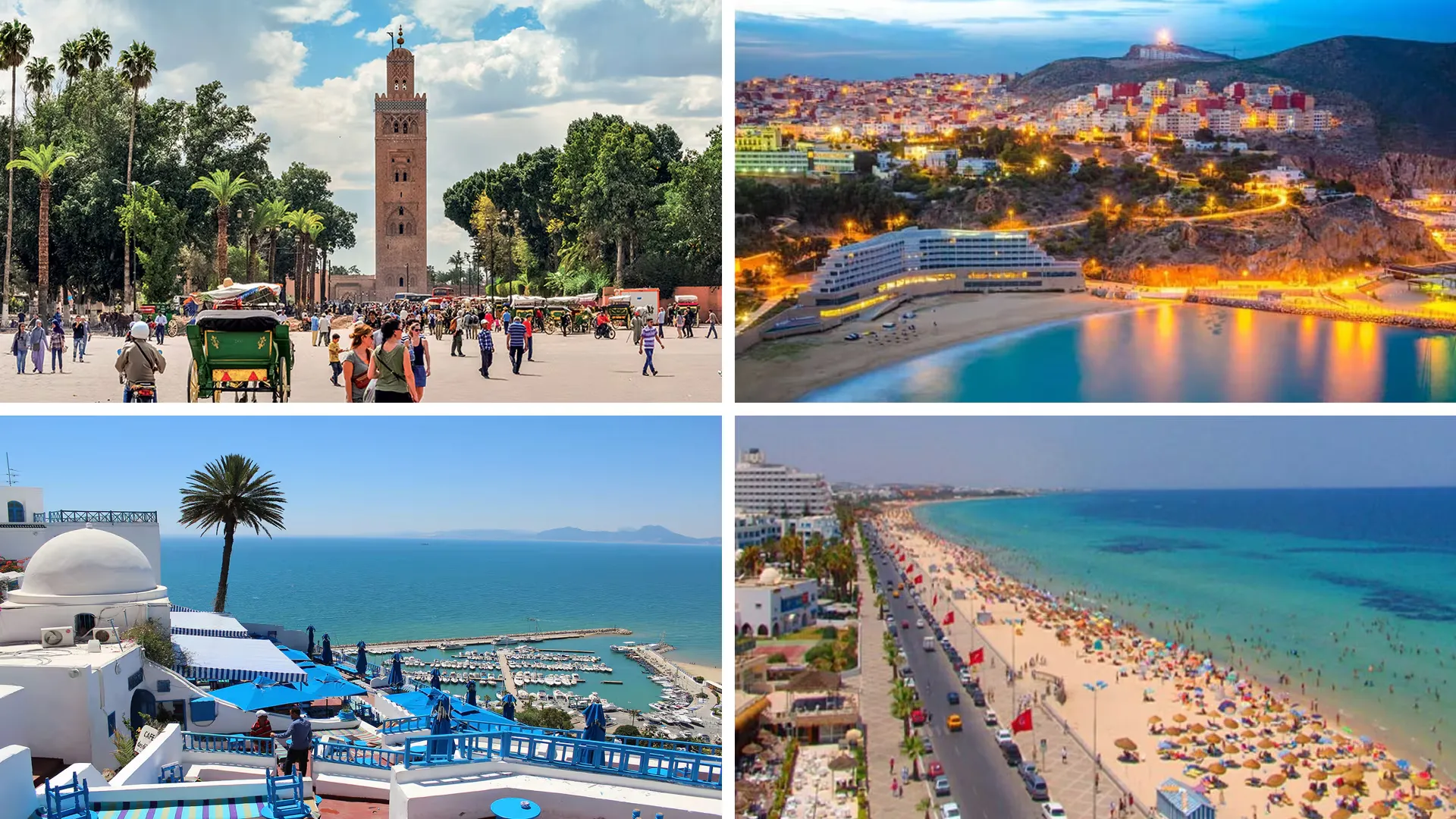

Tourism Performance in North Africa: A Shift in Trends
After three consecutive years of record-breaking tourism performances, the North African region is currently experiencing a significant slowdown in growth. In the first eight months of 2026, the top three tourist destinations in Africa—Morocco, Egypt, and Tunisia—recorded a total of 34 million arrivals, a marginal increase from 33.5 million during the same period last year, reflecting a mere growth rate of 1.61%. This is a stark contrast to the previous year's growth of 15% compared to the same timeframe in 2024, indicating that the pace of tourist arrivals has decreased tenfold.
However, the situation varies significantly across the region. From January 1 to August 31, 2026, Morocco, which has held the title of Africa's leading tourist destination for two years, continues to thrive. It is the only country in the region to show growth compared to last year, albeit at a reduced rate of 4.5%. In contrast, both Egypt and Tunisia reported stagnation, if not slight declines, in their tourism figures.
Several factors contribute to this deceleration in growth, and even stagnation, within the region. Firstly, there is a notable global tourism slowdown following years of post-COVID recovery characterized by rapid advancements in travel markets. According to the UN Tourism Barometer, global tourism growth was recorded at only 0.4% for the first half of 2026, which has adversely affected North Africa following exceptional growth rates post-COVID. Furthermore, the ongoing conflict in the Middle East, particularly between Iran and the United States and Israel, has had a significant impact on global tourism and the countries in the region. While Morocco has demonstrated resilience, Egypt has faced challenges due to its geographical proximity to the conflict.
The ongoing war and the spike in jet fuel prices have led to increased airline ticket costs, particularly for long-haul flights, thereby raising the overall travel expenses and discouraging many potential travelers. Additionally, the war's inflationary effects have strained the purchasing power of prospective tourists, causing some to cut back on discretionary spending, including travel and leisure. In Tunisia's case, electricity outages and water shortages during the summer season further discouraged tourists from visiting.
Consequently, all countries in the region have felt the effects, though some have shown greater resilience than others. Morocco continues to perform significantly better than the global average in terms of tourism performance.
Morocco Maintains Lead with Impressive Visitor Numbers
By the end of August 2026, Morocco welcomed 14.1 million tourists, representing a 4.5% increase from the previous year, which equates to approximately 608,000 additional visitors. In contrast, last year's growth was 14%, with an increase of 2.4 million arrivals. While this year's growth is notably lower than last year, it remains commendable when compared to the global tourism trends and regional developments. Moreover, in August, Morocco experienced a historic milestone by surpassing the two million tourist mark for the first time, marking a 3% increase from August 2025, confirming robust visitor engagement during the summer period.
"The dynamics of Moroccan tourism are built on solid foundations. The 2023-2026 roadmap has shown that by strategically investing in key levers, results follow, both in terms of visitor numbers and socioeconomic impacts," stated Fatim-Zahra Ammor, the Minister of Tourism, Handicrafts, and Social and Solidarity Economy. With this visitor volume, Morocco is widening the gap with Egypt, which recorded 12.8 million visitors by the end of August, solidifying its status as the leading tourist destination on the continent.
This achievement can be attributed to a combination of factors: Morocco's diverse tourism offerings, geographic proximity to major source markets mitigating the impact of rising jet fuel costs, and robust air connectivity that allowed Moroccan airports to accommodate 22.3 million passengers (an 8.8% increase) during the first seven months of the year. By the end of July 2026, tourism revenue reached 79 billion dollars, reflecting a 13.4% year-on-year increase. The average expenditure per tourist was reported at 6,810 dirhams, approximately 720 dollars, with the increase in revenue driven by both the rise in arrivals and hotel rate hikes.
Looking forward, following a record 19.8 million tourists in 2025, Morocco is expected to reach 21 million visitors in 2026. However, the previously announced goal of 22 million tourists appears unattainable given the current growth pace in arrivals for the latter half of the year.
In contrast, Tunisia is experiencing a slight decline in tourist arrivals. Despite its proximity to the European market, Tunisia has struggled to attract more visitors, witnessing a marginal decrease of 0.2% in arrivals, with 7.1 million tourists by the end of August 2026, according to the National Tourism Office of Tunisia (ONTT). While July showed a 2.6% increase compared to the same period last year, August did not perform well. In addition to the global economic situation, Tunisia faced electricity shortages that negatively impacted tourism during the critical summer months. Algerian tourists have provided some resilience, contributing to an 8.4% increase in arrivals from January to early August 2026.
Moreover, Tunisia remains hindered by connectivity issues, with only the route to France deemed satisfactory, serviced by multiple airlines. The lack of connectivity to other destinations has prevented Tunisia from fully capitalizing on the effects of the Middle Eastern crisis, despite offering favorable price-to-quality ratios. The aviation sector is not the only hurdle; the heavy reliance on beach tourism remains a critical challenge. Diversifying tourism offerings to include cultural, golf, and desert tourism should be a priority for authorities and industry professionals to enhance the destination's appeal and boost revenue.
As for Egypt, the country has been significantly affected by the ongoing Middle Eastern conflict due to its proximity to the war zone. After starting the year with a remarkable 43.5% increase in arrivals, totaling 5.6 million tourists by the end of March, the conflict has adversely impacted the Egyptian tourism sector. The country could not rely on tourists from Gulf countries due to flight suspensions lasting several weeks. Nevertheless, Egypt welcomed approximately 12.8 million tourists from January to the end of August 2026, remaining steady compared to the same period last year despite the challenging environment. This resilience is attributed to Egypt's diversified tourism offerings, which include archaeological sites, beach resorts along the Red Sea and Sharm el-Sheikh, Nile cruises, and the recent inauguration of the Grand Egyptian Museum (GEM) in November 2025, which has attracted 3.5 million visitors by the end of August 2026 and is projected to reach 5 million in its first year of operation.
Tourism revenues in Egypt reached 8 billion dollars by the end of June 2026, based on data from eight million tourists, with an average spend of 890 dollars per visitor. Looking ahead, the authorities maintain their projection of 20 million tourists for 2026; however, this target is contingent upon the geopolitical situation in the Middle East. In the coming years, Egypt aims to diversify its tourism offerings further by developing MICE (Meetings, Incentives, Conferences, and Exhibitions) to attract more events.
As reported by afrique.le360.ma.