
OCP's Financial Setback in 2026
The OCP Group has experienced a dramatic downturn, reporting a staggering net loss of 2.84 billion dirhams for the first half of 2026, contrasting sharply with a profit of 8.25 billion dirhams recorded in the same period last year. This represents a significant gap of 11.1 billion dirhams, driven primarily by surging sulfur prices, an increase in ammonia costs, and a global decline in fertilizer demand. The company’s recurring operational result plummeted by 57%, settling at 6.81 billion dirhams, while the operational margin deteriorated from 24.9% to a mere 9.8%. Furthermore, the financial result worsened by 7.68 billion dirhams, negatively impacted by foreign exchange fluctuations and rising debt costs. Despite these challenges, there are two glimmers of hope: the net debt decreased from 119.1 billion dirhams to 115.5 billion dirhams since the end of 2025, and the EBITDA margin remained at a solid 28%, indicating that the industrial operations of OCP are still performing effectively. However, this semester serves as a stark reminder that the profitability of the group is heavily reliant on two uncontrollable factors: the prices of its raw materials and the exchange rates.
Volkswagen and Gotion Collaborate in Kénitra
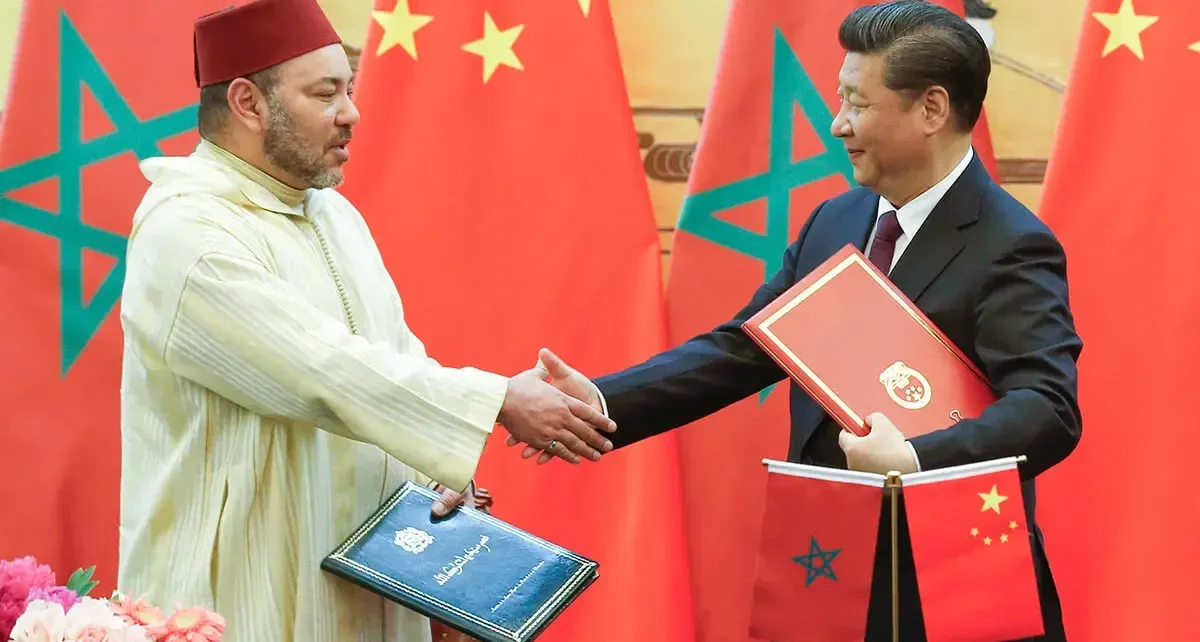
In a significant move for the Moroccan automotive sector, Chinese company Gotion High-Tech, alongside Volkswagen's battery subsidiary PowerCo, has established a joint venture worth 480 million euros in Kénitra, set to launch a production unit for LFP (lithium iron phosphate) cathode materials. The announced production capacity is expected to reach 100,000 tons annually. Kénitra, already home to the Stellantis factory and Gotion's gigafactory, is solidifying its position within the electric vehicle value chain. Previously fully owned by Gotion, this project now welcomes a European manufacturer as a stakeholder. This strategic partnership positions Morocco advantageously in the supply chain of Volkswagen, as it secures battery material supplies close to its European production sites. The cathodes produced will supply battery cell factories located in Valencia, Spain, and Šurany, Hungary.
As reported by mobile.telquel.ma.
Maroc Telecom Experiences Market Pressure
Maroc Telecom has announced solid semi-annual results, indicating a return to growth in Morocco, robust performance from its African subsidiaries, and sustained profitability. However, the stock has seen a decline of 13.5% since January, trading at 94.3 dirhams as of September 28, primarily due to investor reallocations towards sectors perceived as having better growth potential. CFG Research forecasts a dividend yield between 4.2% and 4.4% for the years 2026-2028, setting a target price of 121 dirhams, signifying a potential upside of 28%. The regulatory landscape is showing signs of normalization, marked by two fines and a dispute resolved in early 2025. For patient investors, the stock presents a solid yield and real potential for revaluation. Nevertheless, in a market chasing growth, a defensive telecom stock struggles to capture attention, even when its fundamentals remain strong.
CMS-GTR Secures Major Contract for Grand Stadium
The CMS-GTR consortium has been awarded the contract for exterior works on the Grand Stade Hassan II, valued at 2.7 billion dirhams. This contract encompasses roadworks, network installations, green spaces, connections, and civil engineering structures surrounding the upcoming stadium, with a completion deadline set for 18 months. The construction group CMS (Construction Management Services) had previously secured the electrical lot for the stadium in collaboration with EM Energie. GTR, the Moroccan subsidiary of the French company Colas, specializes in construction and public works. The involvement of two companies based in Morocco for a major segment of the most emblematic project for the 2030 World Cup underscores a broader trend: entrusting significant lots to local groups capable of handling substantial volumes, rather than outsourcing to foreign consortia. This choice sends a clear signal regarding the rising prominence of local enterprises in the kingdom's large-scale infrastructure projects.