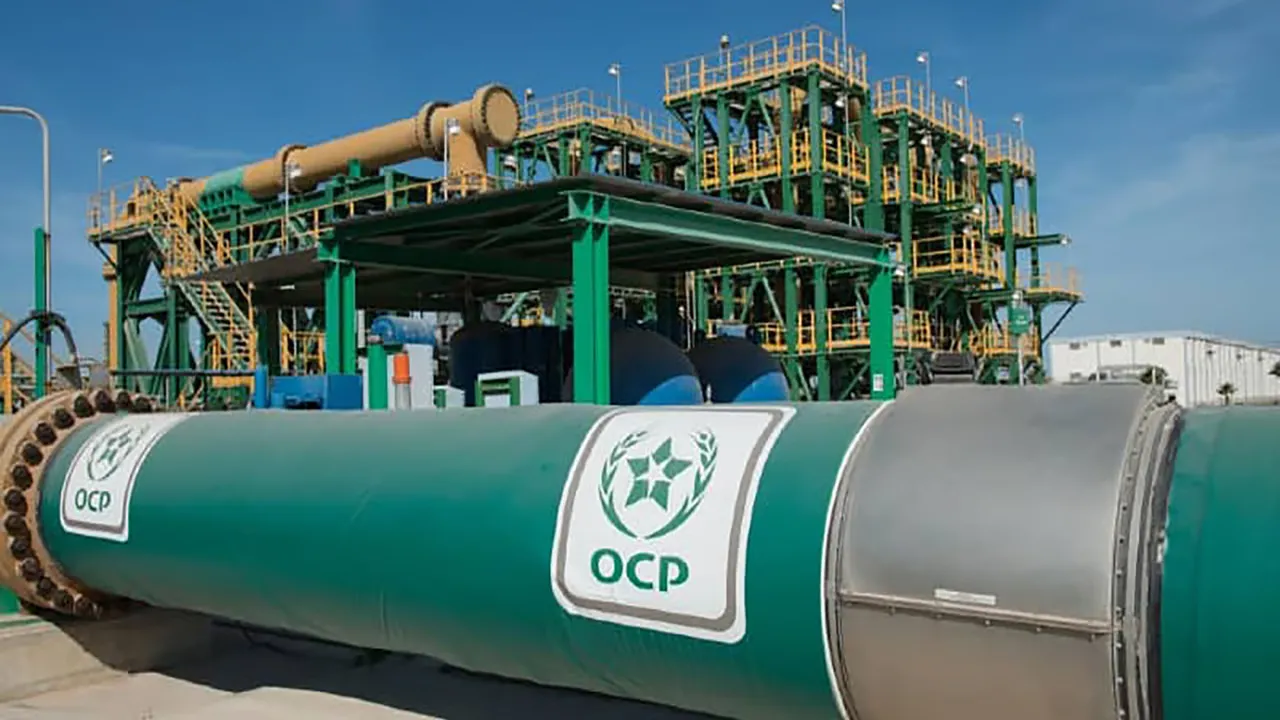

Morocco's leading phosphates and fertilizer company, OCP, has successfully raised an impressive $1.5 billion through its inaugural international hybrid bond issuance. This significant achievement not only positions OCP as the first African corporation to issue a US dollar-denominated hybrid instrument on the global financial markets but also represents a crucial step towards revitalizing the public primary bond markets in the Middle East and North Africa region, which had seen a lull in activity due to increased volatility stemming from geopolitical tensions, particularly related to the situation in Iran.
The hybrid bond issuance was carefully structured into two distinct tranches, with the first tranche set to mature in April 2031 and offering a competitive coupon rate of 6.74%. The second tranche, maturing in April 2036, carries a higher coupon rate of 7.37%. This strategic structuring aids in attracting a diverse range of investors while maximizing the financial benefits for OCP.
This landmark transaction drew significant interest from investors, even amidst the prevailing geopolitical uncertainties. The order book for the bonds peaked at just under $7 billion, indicating an oversubscription rate of 4.6 times, which led OCP to increase the size of the bond offering to accommodate the overwhelming demand. A total of 176 investors from 23 different countries participated in this transaction, underscoring the strong international appetite for OCP's financial instruments.
In related news, the Lebanese government has expressed its heartfelt gratitude to King Mohammed VI of Morocco for his prompt decision to dispatch urgent medical and humanitarian aid to Lebanon following the devastating explosions that occurred in the port of Beirut. This gesture of solidarity highlights Morocco's commitment to regional cooperation and humanitarian assistance.
Moreover, employers' unions from Morocco and Mozambique have taken a significant step towards enhancing bilateral trade and economic collaboration by establishing a joint business council. This agreement was signed in Marrakesh by Chakib Alj, the President of the General Confederation of Moroccan Enterprises (CGEM), and Agostinho Zacarias Vuma, the Chairman of the Confederation of Economic Associations of Mozambique.
In a separate development that stirred controversy, the Egyptian football club Pyramids FC, owned by Saudi Arabia's General Entertainment Authority Chairman Turki Al-Sheikh, faced backlash from Morocco after the club's social media account shared a map of Morocco that omitted the disputed territory of Western Sahara. Such actions reflect ongoing tensions and sensitivities regarding territorial integrity in the region.
Lastly, as the African space economy is projected to grow significantly, reaching an estimated $22.64 billion by 2026, up from $19.49 billion in 2021, Morocco is fortifying its status among Africa's leading space-capable nations. The Kingdom is recognized alongside Egypt, Nigeria, and South Africa as part of the continent's premier circle of space powers, according to various international assessments, thereby highlighting its commitment to advancing in this critical and emerging field.
As reported by northafricapost.com.