
Orange Morocco to Remove Billboard Featuring Controversial Map
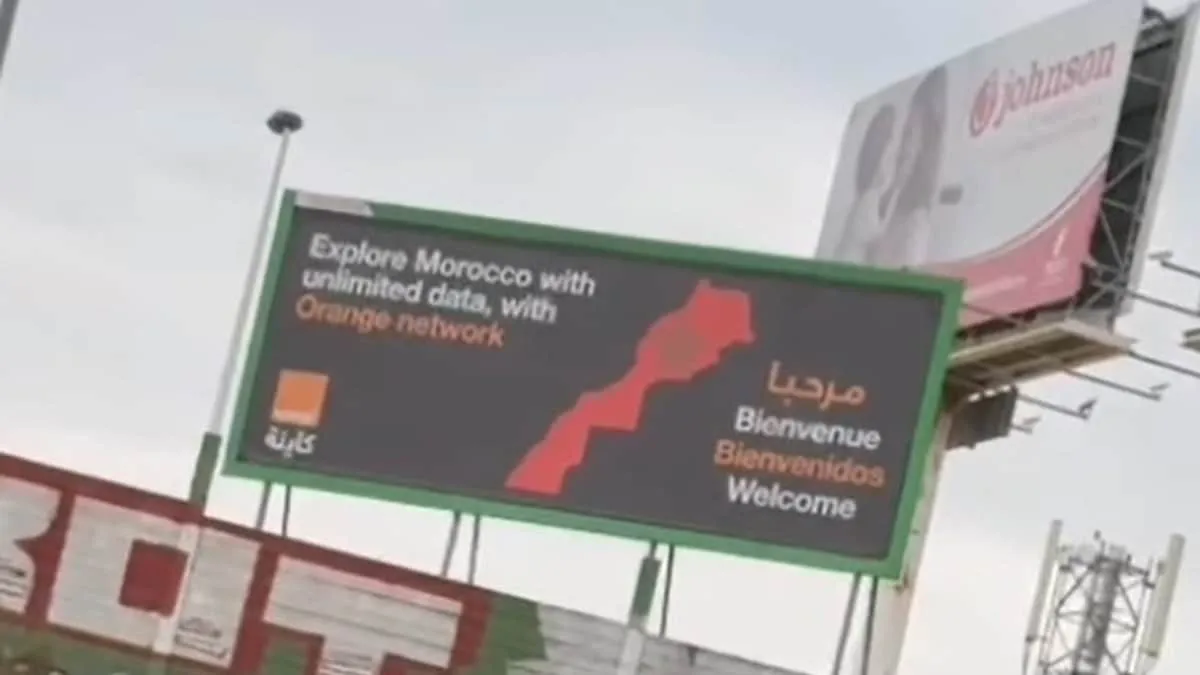
In a significant development, Orange Morocco has announced plans to remove a billboard that sparked controversy due to its inclusion of Western Sahara as part of Morocco on a map. The advertisement, located on the AP-7 highway headed towards Elche-Valencia, drew immediate criticism from the representative of the Sahrawi Arab Democratic Republic (SADR) in Spain, prompting this swift action from the telecommunications giant.
According to sources close to the situation, the billboard will be taken down "in the coming days". The decision to remove the advertisement follows a formal complaint lodged by the SADR representative, highlighting the sensitivities surrounding the status of Western Sahara—an area that has been a point of contention since its decolonization from Spain in 1975, when Morocco annexed the territory.
The presence of the map in the advertisement has been interpreted as a political statement, and Orange Morocco has clarified that it does not have any affiliations with the regional service provider MasOrange, which has been implicated in similar incidents in the past. The Sahrawi organization has vowed to monitor the situation closely, ensuring that the billboard's removal is executed properly and that any replacement does not include the disputed territory.
Historically, this is not the first instance of a map depicting Morocco that includes Western Sahara, with various entities such as Spain's national meteorological agency (Aemet) and the air traffic control organization Enaire having previously faced backlash for similar representations. The ongoing dispute over this territory continues to evoke strong reactions, and the SADR has indicated they will take appropriate actions if the billboard is not removed in a timely manner.
In conclusion, the incident underscores the complexities of territorial claims and the significance of political sensitivity in advertising. As discussions regarding the status of Western Sahara persist, businesses and institutions must navigate these issues carefully. This situation serves as a reminder of the broader implications of how geographic representations can influence perceptions and diplomatic relations.
As reported by elindependiente.com.