
ORNX Green Hydrogen has officially partnered with the American company KBR to undertake the front-end engineering design (FEED) phase for a substantial industrial project aimed at producing low-carbon ammonia in Laayoune, located in southern Morocco. This collaboration marks a significant transition for the project, moving from initial announcements and investment attraction to the crucial stage of technical studies and design preparations that will precede the final investment decision.
On August 12, KBR announced from its Houston headquarters that it would provide the necessary technological licensing and front-end engineering design services for the project, which aims to produce approximately 560,000 tons of ammonia annually. This ambitious production goal is predicated on an electrolyzer capacity of around 900 megawatts, which will be vital for generating the hydrogen required for the manufacturing process.
The project will be based on an integrated industrial platform that combines energy production, hydrogen generation, and ammonia manufacturing, leveraging the region's abundant renewable resources and its proximity to port infrastructures. The scope of this initiative extends beyond industrial aspects; it also involves financial studies previously announced by the U.S. Trade and Development Agency (USTDA) on July 28. The USTDA has signed an agreement with ORNX Laayoune 1 SASU to finance the FEED phase and technical assessment of the plant.
The U.S. agency has confirmed that the study will be executed by American companies led by KBR, alongside GE Vernova, Electric Hydrogen, and Terabase. This evaluation will include an assessment of electrolyzer technology, a study of energy supply options, and the determination of the optimal size of industrial components, in addition to preparing financial forecasts and detailed business models.
The total investment cost of the project is estimated at approximately $4.5 billion, as indicated by data accompanying its announcement in February. The initiative is expected to incorporate over 2 gigawatts of solar and wind energy capabilities, alongside electrical storage and seawater desalination, ultimately leading to the production of green hydrogen and its conversion into ammonia primarily targeted at national and international markets.
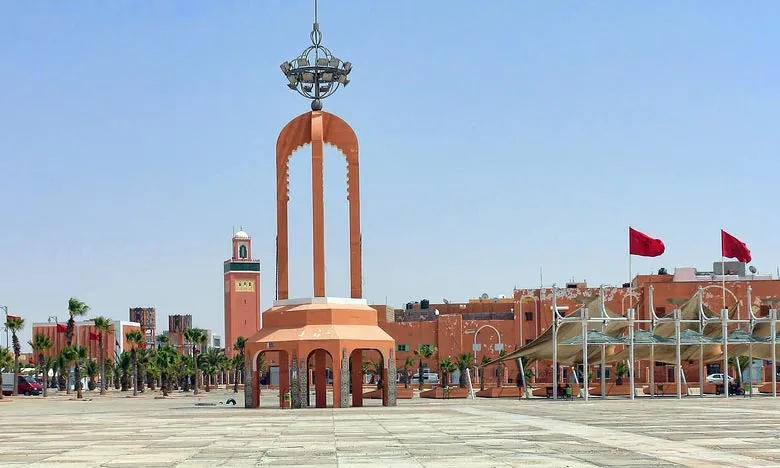
This step is particularly significant as it unfolds in Laayoune, a region in southern Morocco that has been attracting increasing interest from American stakeholders. The USTDA has highlighted the project as an important economic opportunity for the southern regions, with U.S. Ambassador to Morocco, Duke Buchan III, emphasizing that the approval of funding for this project illustrates the strategic importance of American investment in Moroccan Sahara. He noted that these initiatives open up new avenues for exports and job opportunities in both Morocco and the United States.
The implications of this partnership extend beyond technical considerations; they carry clear economic and political significance, indicating a shift in Moroccan-American relations from diplomatic support to direct investment and financial presence. Washington has previously reaffirmed its support for American investments across various regions in Morocco, including the Sahara, which positions the Laayoune project within a broader context of future American investment strategies.
Economically, this project has the potential to position Laayoune within the global value chain for low-carbon hydrogen and ammonia, products that are experiencing rising demand in the fertilizer, maritime transport, and heavy industry sectors. The production target of 560,000 tons annually represents a significant industrial scale, especially if it can be integrated with the network of ports and infrastructure that Morocco is developing in its southern regions.
KBR has asserted that the project will harness the vast renewable energy potential of the area and is designed to provide large-scale production aimed at export. Peter Gish, the President of ORNX, remarked that this initiative exemplifies a model of strategic partnership between Morocco and the United States, and he anticipates that the current preliminary design phase will lead to complete engineering design and ultimately to a final investment decision.
As reported by assahifa.com.