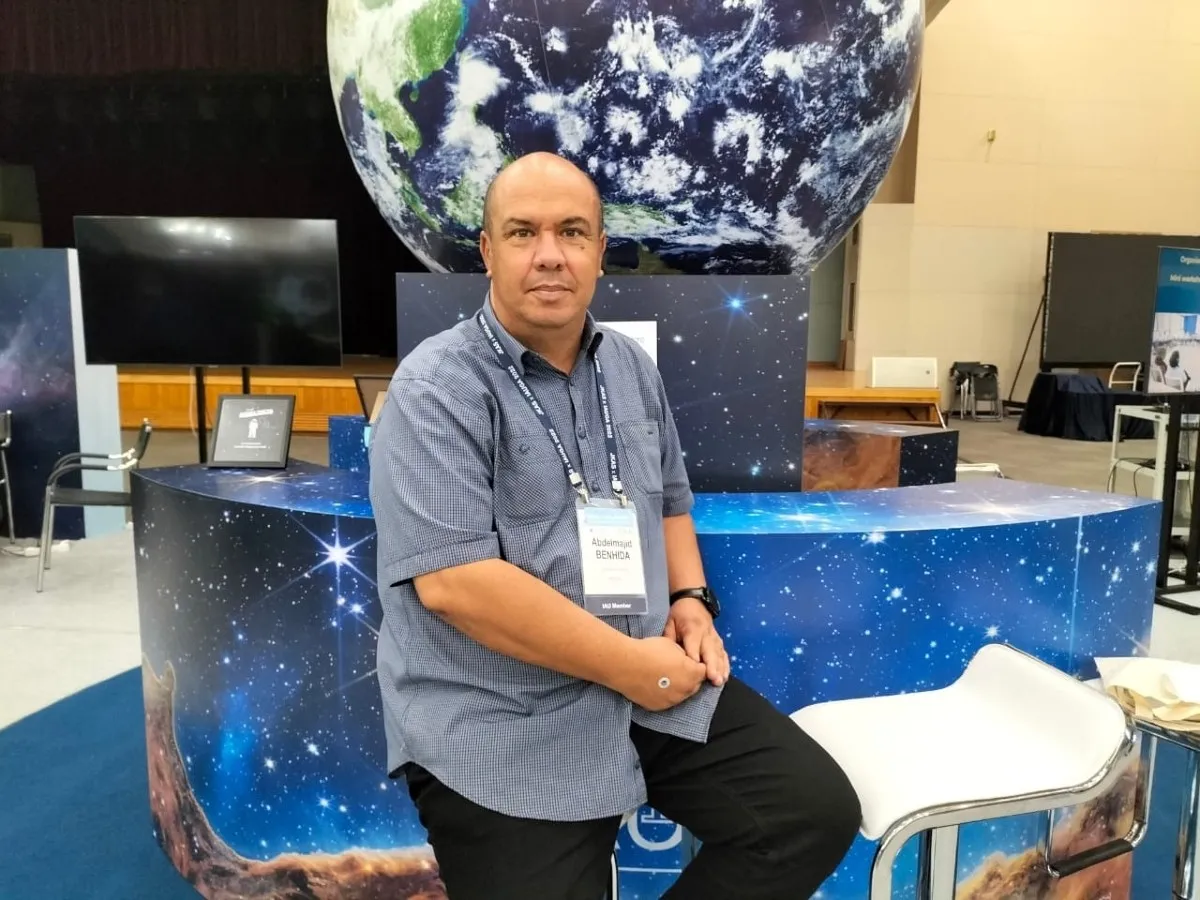

Transforming Astronomy in Africa
The High Atlas Mountains of Morocco are renowned for their exceptionally dark skies, making them a prime location for astronomical research. Over the past twenty years, the Oukaïmeden Observatory has evolved into a globally recognized center for astrophysics, fostering collaborations that span the globe while nurturing a new generation of African astronomers. At the heart of this initiative is Abdelmajid Benhida, a professor of physics at Cadi Ayyad University in Marrakech and the director of the Observatory. His vision and dedication have been instrumental in developing Morocco's astronomical capabilities, conducting site-testing for future international telescopes, and mentoring young researchers through programs like the Oukaïmeden International School for Astrophysics.
Lessons Learned from the Stars
Benhida’s passion for astronomy traces back to his childhood in a small Moroccan village, where the clear night sky sparked his curiosity about the universe. Coupled with a fascination for electronics, he developed a deep interest in how telescopes and sensors can capture the faint signals from celestial bodies. This early experience instilled in him the belief that remarkable contributions to science could emerge from even the most remote locations.
His journey into astronomy was further solidified through his engineering training, which emphasized the importance of sophisticated instruments in modern astronomy. Benhida's involvement in site-testing campaigns for potential telescope locations has not only advanced Morocco's infrastructure but has also garnered international recognition for its commitment to groundbreaking astronomical research. His work has proven that scientific excellence hinges not solely on the size of the equipment used but rather on the quality of the observational sites, the ingenuity of the instruments, and the dedication of the researchers involved.
Oukaïmeden Observatory, situated nearly 2,800 meters above sea level, presents unique challenges that have taught Benhida valuable lessons about humility and adaptability in the face of nature’s unpredictability. His extensive experience in remote locations underscores the notion that scientific endeavors are as much about building relationships and trust within local communities as they are about technology and data collection. These human connections are vital to the success of any scientific project.
Despite the logistical challenges faced during the establishment of observatories in Morocco, such as the transportation of delicate scientific equipment to high altitudes, the commitment to forging international partnerships has been paramount. The successful campaigns at the Aklim site have established Morocco as a credible player in the global astronomy community, attracting international teams to collaborate and share their research efforts at Oukaïmeden.
Benhida envisions a future where young African astronomers feel empowered and confident as they analyze data collected on their own continent. Through annual training programs and hands-on experiences at the Observatory, students are not just passive learners; they are active contributors to the field of astronomy. The realization that world-class scientific research is achievable in Africa is a powerful motivator for these emerging scientists.
Looking ahead, Benhida hopes that the Oukaïmeden Observatory will continue to serve as a gateway to scientific exploration for young people across Morocco and the rest of Africa. Success is not merely defined by groundbreaking discoveries, but also by the opportunities created for students to embark on ambitious scientific careers. He emphasizes the role of artificial intelligence in the future of astronomy, as modern telescopes generate vast amounts of data, and AI presents new avenues for analysis and discovery.
Ultimately, Benhida's dream is to see Oukaïmeden become an international hub for science, education, and innovation, while preserving the pristine dark skies that are essential for astronomical research. He aspires for the Observatory to be remembered not just as a scientific facility, but as a beacon of inspiration for future generations of scientists in Africa, contributing meaningfully to the global scientific landscape.
As reported by nature.com.