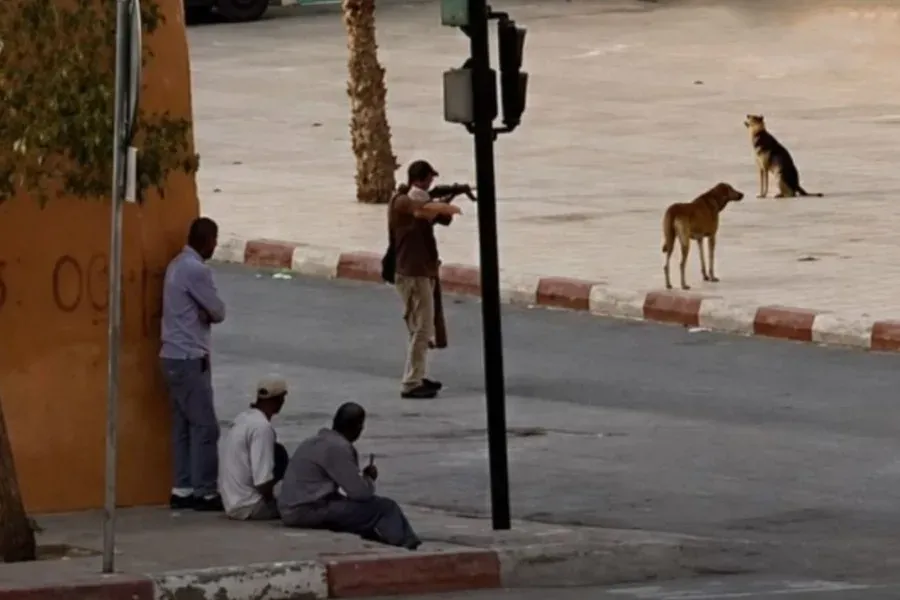

In a shocking incident that has captured the attention of the Moroccan public and beyond, a viral video depicting an armed individual shooting stray dogs in the city of Tinghir, located approximately 173 kilometers from Ouarzazate, has ignited widespread outrage. Many citizens are now calling for a thorough investigation to identify and hold accountable those responsible for this heinous act. The disturbing footage has triggered an intense backlash on social media platforms, where users have vehemently condemned the killings and advocated for humane alternatives to address the issue of stray dogs in the country, rather than resorting to violence.
This incident comes amidst Morocco’s ongoing commitment to tackle the stray dog situation through humane methods, prominently featuring the Trap-Vaccinate-Neuter-Return (TVNR) strategy. This approach encompasses capturing stray dogs, sterilizing, vaccinating, and subsequently releasing them back into their territories. Numerous non-governmental organizations (NGOs) and animal rights activists have long urged for the rapid expansion of this program across the nation, in collaboration with local authorities and animal welfare organizations, in order to effectively address the ongoing crisis.
It is important to note that the video from Tinghir is not an isolated case; local activists have repeatedly raised alarms regarding the inhumane treatment of dogs in various regions, particularly in remote areas. This ongoing situation has sparked division among citizens, with some expressing concerns that stray dogs pose a threat to public safety, especially for children, citing instances of aggressive attacks by such animals. Nevertheless, many advocates argue that the issue could be resolved more effectively through humane measures and by enhancing existing programs aimed at the welfare of stray animals, while passionately denouncing the killing of these creatures.
While many videos of this nature circulate online, often lacking authentication and context, they consistently make headlines, further complicating the public discourse surrounding animal welfare in Morocco. The issue has not only attracted domestic attention but has also garnered international scrutiny, with various tabloids reporting extensively on the matter—often without verifying the authenticity or age of the footage. This has led to perceptions that the coverage aims to undermine the country, particularly as Morocco prepares to host significant events such as the 2030 World Cup.
In response to the escalating situation, Moroccan authorities have reiterated their commitment to addressing the stray dog population in alignment with international standards, firmly denying allegations of any planned culling. Instead, they emphasize a humane approach to animal control. On June 30, the House of Representatives approved a draft law specifically aimed at managing stray animals in urban and peri-urban areas, in light of growing concerns regarding public safety, health risks, and animal welfare.
The proposed legislation aims to establish systematic management for stray animals, which includes creating shelters, implementing vaccination and sterilization programs, and setting up a national database to monitor animal populations and interventions. Furthermore, it outlines the responsibilities of local authorities and relevant institutions, with the objective of replacing inconsistent practices with a well-coordinated framework.
In a recent interview with Morocco World News, Catherine Thomson, the head of communication and engagement for the International Companion Animal Management Coalition (ICAM), acknowledged that Morocco’s official policies align with internationally recognized humane standards for managing stray animals. However, she also pointed out ongoing challenges, particularly in ensuring that measures to address stray animal issues are consistently enforced throughout the nation.
As reported by moroccoworldnews.com.