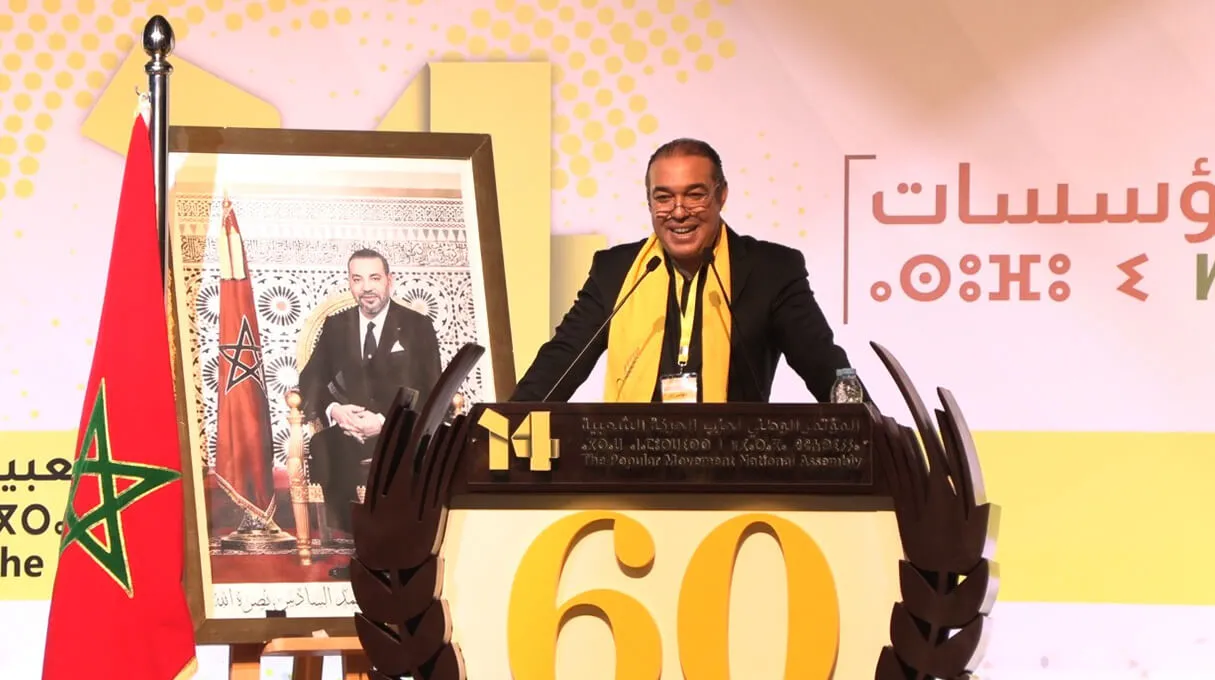

In a recent press conference held on September 5, 2026, Mohammed Ouzin, the Secretary General of the Popular Movement Party, launched a pointed critique against the Spanish government. His remarks were particularly directed at Spain's ongoing occupation of the Moroccan cities of Ceuta and Melilla, alongside other Moroccan territories. Ouzin expressed disbelief at how Spain could advocate for the rights of the Palestinian people while simultaneously maintaining its occupation of Moroccan lands.
During the event, which was organized to unveil the party's electoral program for the upcoming 2027-2031 government elections, Ouzin stated emphatically, "We say it clearly and without ambiguity: the Sahara is Moroccan and will remain so. Just as we defend our territorial integrity in our southern provinces, we will not forget our legitimate historical rights in the cities of Ceuta and Melilla, as well as the other occupied islands and enclaves." He further emphasized that this issue is not merely a temporary concern or an electoral tactic, but rather a deeply ingrained national cause that resonates with the Moroccan people's conscience and remains a priority on the political agenda.
Ouzin did not hold back in criticizing statements made by Spanish officials, labeling them as 'provocative' and some as crossing lines that were unacceptable in their disrespect towards the symbols and sanctities of Morocco. He articulated that the political rhetoric coming from certain Spanish factions is wholly inadequate, asserting that Moroccans strive to uphold a respectful dialogue, not only regarding their King, Felipe VI, but towards all Spanish citizens whom they view as neighbors and partners. This reflects the cultural values that Moroccans cherish.
He raised a critical question: "How can factions within Spain express their support for the Palestinian people in their just cause for freedom and self-determination, yet accept the ongoing occupation of Moroccan lands that has persisted for over six centuries? Shouldn't Moroccans also be allowed to question the status of Ceuta, Melilla, and other occupied enclaves?" Ouzin concluded by highlighting that the dual standards cannot serve as a foundation for a balanced relationship between nations and peoples. He reiterated that the future of Ceuta, Melilla, and the other islands lies with Morocco, and this perspective is not merely the stance of a political party or group, but a conviction held by wise individuals, rooted in history, memory, and Moroccan rights.
As reported by thevoice.ma.