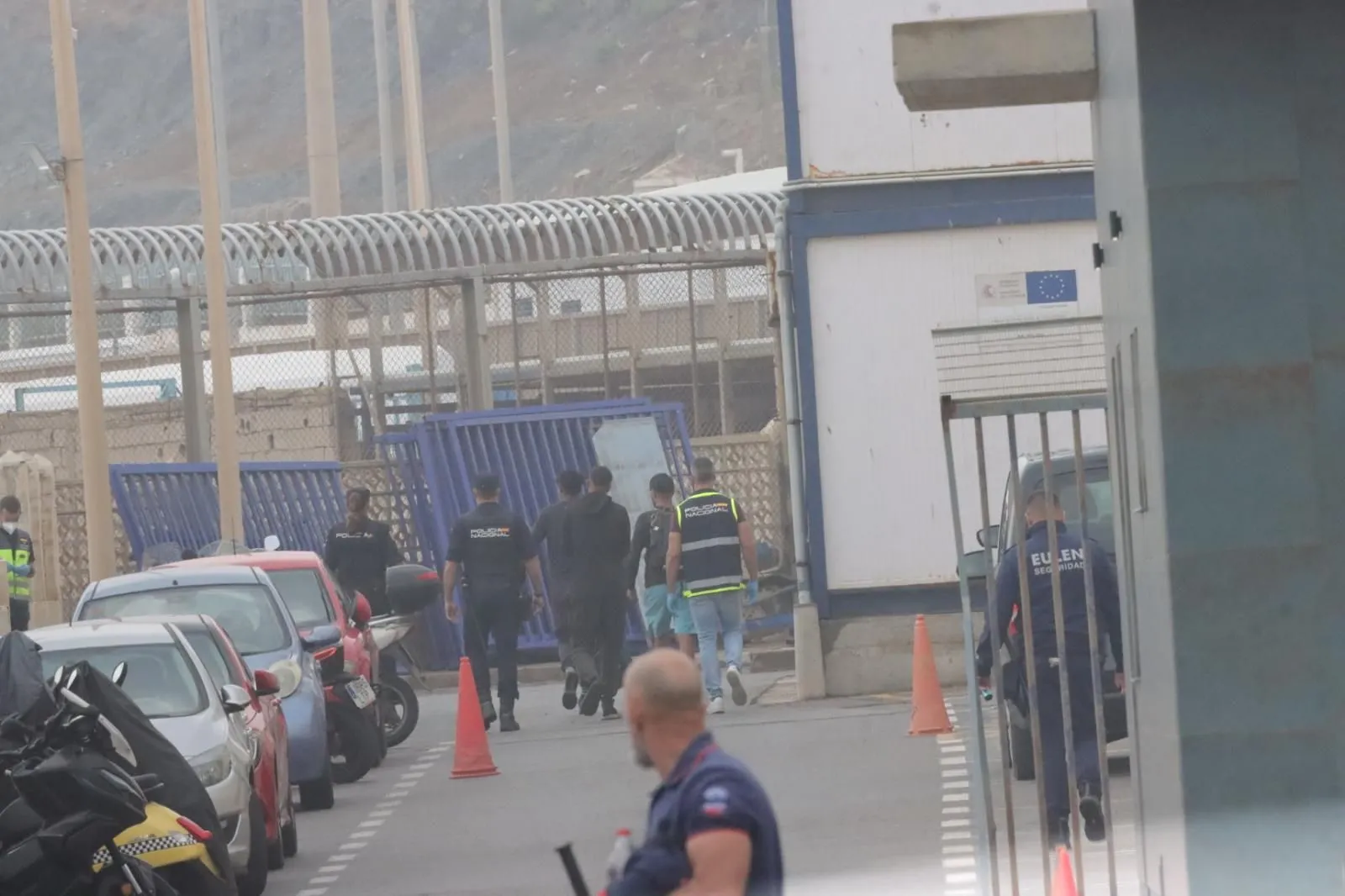

On Sunday, a total of 927 migrants returned to Morocco by 9:45 PM, according to police sources involved in the operation organized for the initial phase of the evacuation of Trampolín Beach. This operation resulted in only a partial dismantling of the makeshift settlement, which had been housing over 3,500 migrants until the previous day. From this number, approximately 1,100 individuals were evacuated during this first phase of the complete dismantling of the shantytown. The confirmation of these figures came shortly after 10:30 PM from the coordinator of the unified command, Minister Ángel Víctor Torres.
The outcome of this Sunday’s operation, which deployed more than 350 police officers and even armored vehicles, mirrored the previous Tuesday’s initiative to dismantle the shanties at Benítez, where the vast majority of those evacuated opted to return to their home country. Each migrant was presented with two options: voluntarily return to Morocco or be transferred to the Temporary Attention Center for Foreigners (CATE), where they could be registered and subsequently redirected to reception camps.
The Trampolín evacuation lasted from 8:00 AM until late afternoon. By around 4:30 PM, the National Police had managed to transport approximately 700 people by bus, of whom nearly 500 chose to return to Morocco on foot. This information was substantiated by several sources close to the operation and later confirmed by Ana Alarcón, the national spokesperson for the Unified Police Syndicate (SUP).
During the operation, there was a brief pause in the afternoon to allow the NGO Red Cross to distribute food. Following this break, the final bus transfers continued until after 9:00 PM. By 9:45 PM, a total of 927 migrants had successfully crossed back over the border into Morocco, according to the consulted sources.
Of the 1,100 individuals evacuated from Trampolín on Sunday, around one hundred were unaccompanied foreign minors. These children and adolescents are required to remain in Spain, even if they express a desire to return to Morocco. This stipulation exists because, once Spain identifies an unaccompanied minor, they automatically enter the child protection system, and any decisions regarding their return must prioritize the child's best interests rather than merely their wishes. The Foreigners Law establishes a specific procedure for unaccompanied children and adolescents. Article 35 mandates that, prior to deciding on a repatriation, the administration must fulfill several requirements, including investigating the minor's family circumstances or verifying if there is family with whom they can be reunited.
Additionally, this newspaper has learned that several dozen adults also opted to proceed to the CATE for registration and subsequent transfer to reception camps. However, according to sources, this group is a minority, with “fewer than a hundred,” as “the vast majority” have chosen to return home.
Reception Facilities for Migrants
The National Police reported on Sunday that the new transfers were due to “the availability of spaces in the resources provided by the Ministry of Inclusion, Social Security, and Migration, as well as the necessity to place migrants in a protected environment due to the rains and unsanitary conditions.” However, the ministry has not disclosed specific information regarding the number of available spaces or the camps where the migrants are located. Furthermore, they have not provided figures on the number of evacuated migrants, leaving the media to rely on sources from various involved institutions.
According to the latest statements from ministers, the Loma Colmenar camp houses between 300 and 400 spaces after expanding the tents. Additionally, the reception facility in Caballería is nearly ready, although Minister Ángel Víctor Torres indicated during his last press conference in Ceuta that only women would be directed to that facility. However, CATE sources have assured this newspaper that some individuals registered on Sunday will be directed there. According to consulted sources, CATE processes a maximum of 126 individuals per day.
As reported by elpueblodeceuta.es.