
The Authenticity and Modernity Party (PAM), a liberal political entity and part of the outgoing government coalition, has declared itself the winner of Morocco's legislative elections. These elections have been characterized by a staggering abstention rate of 61.9%, the highest recorded in two decades, according to provisional data from the Moroccan Ministry of Interior. The ongoing crisis in Ceuta has also influenced the election agenda, leading to a predictable outcome.
Nearly nine hours after the polling stations closed, Interior Minister Abdeluafi Laftit announced that PAM had secured a significant victory, obtaining 97 out of 395 parliamentary seats. This success positions PAM ahead of its coalition partners: the National Rally of Independents (RNI), which has transitioned from leading the executive to becoming the second most influential party with 66 seats, and Istiqlal, a nationalist party that remains in third place with 65 seats. The results were anticipated, aligning with analysts' projections that favored PAM followed by its coalition partners.
PAM was founded in 2008 by Fouad Ali El Himma, a close associate of King Mohammed VI and a royal advisor. It has recently become the political home of Fouzi Lekjaa, the Minister of Budget, who is also the president of the Moroccan Football Federation. Lekjaa is expected to play a pivotal role in the upcoming legislature, especially with Morocco co-hosting the 2030 FIFA World Cup alongside Spain and Portugal.
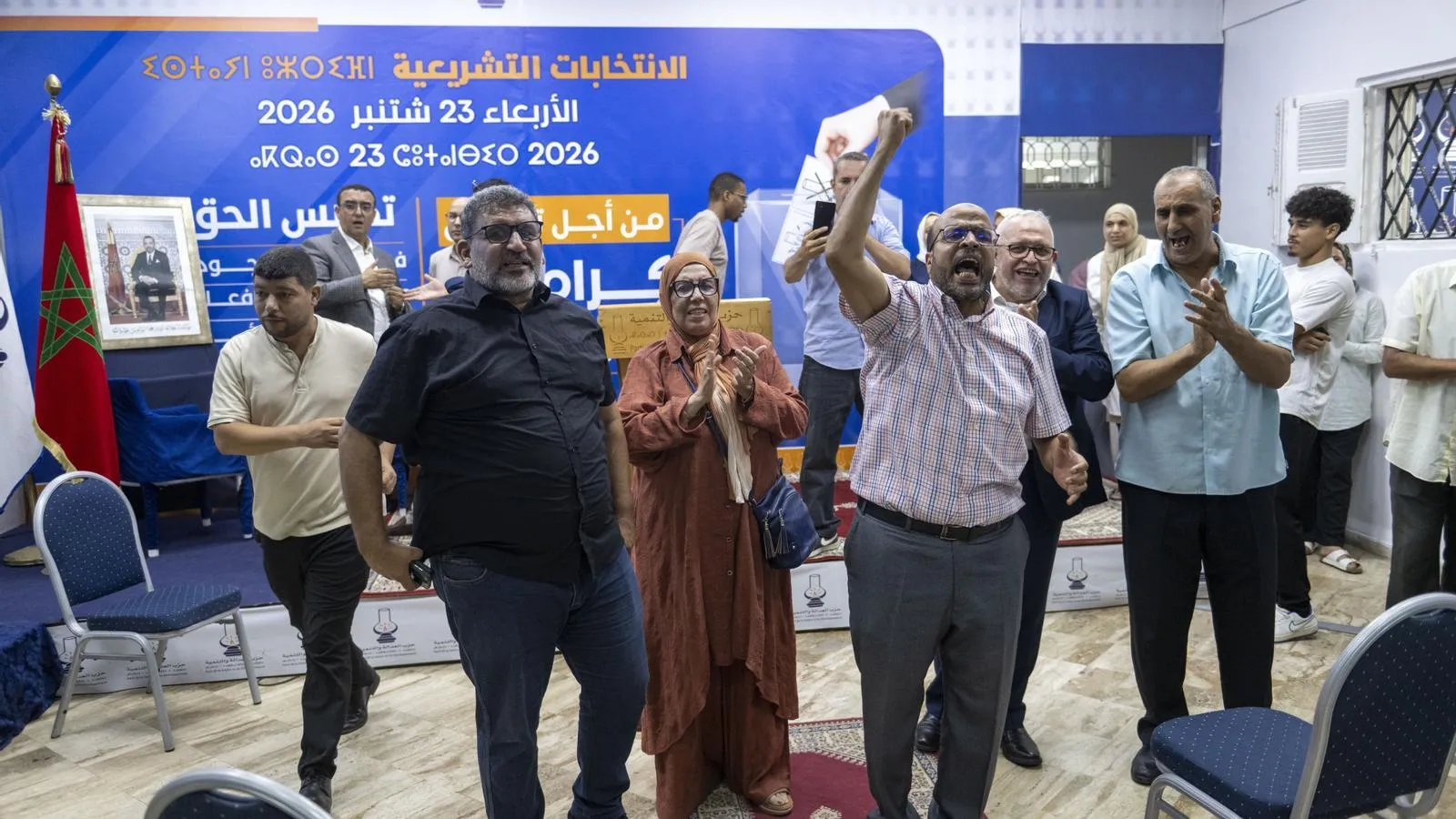
In a surprising turn of events, the Justice and Development Party (PJD), a moderate Islamist party, managed to secure 54 seats following a significant electoral setback five years ago when their seats plummeted from 125 to just 13. This defeat marked the end of a decade of electoral dominance for the PJD, which had initially come to power after the 2011 protests and successfully won the legislative elections again in 2016.
Additionally, the left-wing parties celebrated notable gains, achieving significant progress with eight legislators, despite their minority status in Morocco's political landscape. The allocation of seats follows a system based not on valid votes but on the number of registered voters in each constituency, a factor that encourages fragmentation and hinders the formation of absolute majorities.
Experts had accurately predicted a high abstention rate as a reflection of the growing disconnect between the political class and Moroccan society. The elections held this Wednesday witnessed a mere 38.08% voter turnout, the lowest since 2007, with approximately six million voters participating out of 15.8 million registered voters, a prerequisite for voting in the country. Contrarily, voter turnout in Western Sahara was notably high, with 77% in El Aaiún and 61% in Dajla.
Fatima Zahra El Mansouri, the Minister of Housing and a member of PAM's leadership, emphasized the importance of Morocco's historical and necessary relationship with Spain, asserting that bilateral relations should be of a high standard. "I know that the relations between the two countries sometimes experience ups and downs, but our geographical proximity necessitates that these relations remain at a high level in economic, commercial, and diplomatic domains," El Mansouri stated during her first press conference following the party's victory, positioning herself among the potential candidates for the Prime Minister role.
As reported by es.ara.cat.