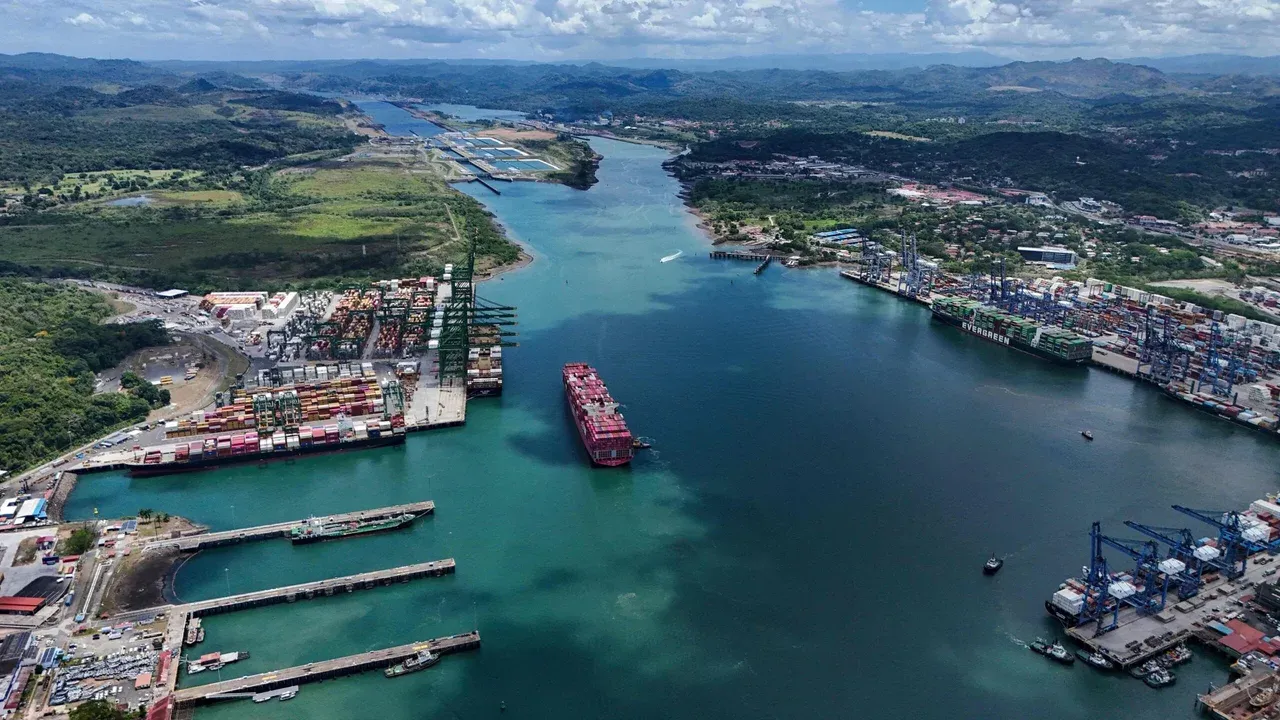

National Emergency in Panama Due to El Niño Effects
The Panamanian government has declared a national emergency in response to the increasing repercussions of the El Niño phenomenon, which has triggered significant climatic and water disturbances across the country. This decision comes amid concerns regarding the persistence of drought conditions and their detrimental effects on agriculture, water resources, and navigation through the Panama Canal, a critical artery for global trade.
The Cabinet's decision reflects the mounting pressures faced by this strategic canal due to diminished rainfall and declining water flow into its basin. In light of these developments, the Panama Canal Authority has taken measures to reduce the number of ships permitted to transit daily. Starting September 4, the allowable number of ships will decrease from 36 to 34, with a subsequent reduction to 32 vessels beginning September 15. The basin has recorded a staggering 34% decrease in rainfall between May and August 2026 compared to historical averages, while water inflow has plummeted by 44%.
This situation has ramifications that extend far beyond Panama's borders, given the canal's pivotal role in global commerce. It links the Atlantic and Pacific Oceans and facilitates approximately 5% of worldwide trade, according to the Panama Canal Authority.
Implications for Morocco
In light of these developments, questions arise about the implications of El Niño for Morocco, particularly given the ongoing disturbances in other strategic maritime corridors, including the Red Sea and the Strait of Hormuz. These conditions could lead to additional pressures on shipping costs and global supply chains. Economic expert Rashid Sari has indicated that the effects of the Panama Canal crisis will indirectly impact Morocco due to its economy's reliance on global trade dynamics and supply chains.
Sari explained in an interview with "The Voice of Morocco" that the repercussions of the Panama Canal crisis will reverberate in Morocco, primarily by exerting pressure on global supply chains concurrently with crises in the Red Sea and the Strait of Hormuz. This will likely result in increased maritime shipping costs and higher prices for imported goods, particularly grains, energy, and industrial products. The importance of the Panama Canal lies in its strategic location and its role in connecting the Atlantic and Pacific Oceans, handling a significant portion of global maritime trade.
According to the Panama Canal Authority, the canal serves over 144 shipping routes, connecting 160 countries and nearly 1,700 ports worldwide. Approximately 5% of the global trade passes through it, underscoring its critical importance.
Sari cautions that the decision to reduce the daily ship transits will lead to congestion and delays, particularly if water levels continue to decline and further restrictions are imposed in the future. He emphasized that reducing the number of daily ships from 36 to 32 starting mid-September will inevitably lead to increased congestion and delays, alongside soaring transit fees that have previously exceeded $4 million per passage.
The Panama Canal Authority's phased decision to cut daily transits from 36 to 34 vessels beginning September 4, and then to 32 vessels from September 15, is part of precautionary measures related to the water situation and predictions associated with El Niño.
The previous drought crisis that affected the canal in 2023 and 2024 highlighted the extent to which water shortages can disrupt global trade, forcing authorities to limit ship transits and impose draft-related restrictions.
For Morocco, Sari believes the most significant impact will manifest through heightened shipping costs, given the kingdom's reliance on imports from various regions worldwide. He noted that Morocco imports grains from Latin America and the United States, as well as industrial products from Asia. Consequently, rerouting ships around the Cape of Good Hope or through longer routes will increase transit times and shipping costs, thereby exerting additional pressure on global markets.
Sari does not isolate the Panama Canal crisis from the disruptions occurring in other maritime corridors, asserting that the convergence of these developments exacerbates the challenges facing international trade. He remarked, "We must not forget that disruptions in the Red Sea and the Strait of Hormuz will place Morocco in the midst of troubled maritime routes from two directions: from the east, where energy and goods come from the Gulf and Asia, and from the west, where grains and products arrive via the Atlantic Ocean."
Moreover, the multiplicity of risks in maritime corridors is likely to increase insurance costs for shipments. Sari explained that this situation will also inflate shipping and insurance costs, as insurance companies will undoubtedly raise their premiums amid heightened risks. He adds that the repercussions of the drought affecting Panama could extend to prices in the Moroccan market.
Notably, Sari also highlighted that the potential impact is not limited to imports but could also affect Moroccan exports, including fertilizers. He stated, "We can also confirm that there is an impact on the OCP Group, as Moroccan fertilizer exports to America and Asia may encounter additional costs if ships are forced to change their routes or incur higher transit fees in the canal."
Sari concludes that any increase in transit costs or changes in maritime routes could ripple through both imports needed by Morocco and Moroccan exports destined for foreign markets. He emphasizes that the impact of the crisis on Morocco will be evident, albeit through indirect channels, stating that "there will be repercussions for Morocco; I wouldn’t say they will be less or more severe, but there will be a clear impact on both export and import routes."
As reported by thevoice.ma.