
Exploring the Deep Connection Between Pedro Sánchez and Morocco
Throughout his life, Spanish Prime Minister Pedro Sánchez has maintained a profound fascination with Morocco, a country that represents not only a geographical neighbor but also a significant part of Spain's historical and cultural identity. As a child growing up in the working-class neighborhood of Tetuán in Madrid, the name alone offered Sánchez a glimpse into a world that extended beyond the borders of his immediate surroundings. The architecture of the area seemed to press against the dry winds of the plateau, echoing tales of Spanish troops returning from Morocco in the late 19th century. These narratives, filled with memories of families settling in the capital, laden with photographs, textiles, and fragrances, lingered in the air, painting a rich tapestry of shared history that Sanchez absorbed even before he formally learned about it.
In his teenage years, Sánchez would often jokingly refer to himself as "moro," a term that hints at the complexities of identity he grappled with. This playful assertion was not merely a whimsical fabrication; it revealed his understanding that identities are never singular or pure. Instead, they are layered, often intertwined with historical narratives that defy simple explanations. This early recognition of the intricacies of identity helped shape Sánchez's worldview, particularly his belief that a deeper, almost visceral connection to the Moorish past still resonates within Spanish society today.
Reimagining Spanish History Through a Regenerational Lens
Sánchez's intellectual journey led him to embrace the "regeneracionismo" movement, a clandestine intellectual initiative that emerged in the early 20th century. This movement advocated for a revitalization of Spain's cultural and social landscape by reconnecting with its Moorish heritage, which had been disrupted by the Reconquista of 1492. Within this framework, the Reconquista is not viewed as a historical closure to foreign influence, but rather as a truncation of Spain's true potential—a narrative that originates from the rich, multicultural history of medieval Morocco. Sánchez's association with notable figures in this movement, such as Felipe González and José Luis Rodríguez Zapatero, highlights the importance of this intellectual heritage in shaping contemporary Spanish politics.
Under Sánchez's leadership, the Spanish government has attempted to bridge historical divides by integrating long-excluded Muslim communities into the national narrative. His tenure has seen efforts to foster dialogue with the Islamic world, transforming Spain into a more pluralistic society. Sánchez's symbolic acts, including his unprecedented inauguration without a Bible or crucifix, signify a foundational shift towards a secular state that embraces all faiths rather than adhering rigidly to a singular religious identity. It is a conscious effort to acknowledge and embrace the country's Muslim past, not simply to remember it, but to rediscover and reintegrate it into the fabric of national consciousness.
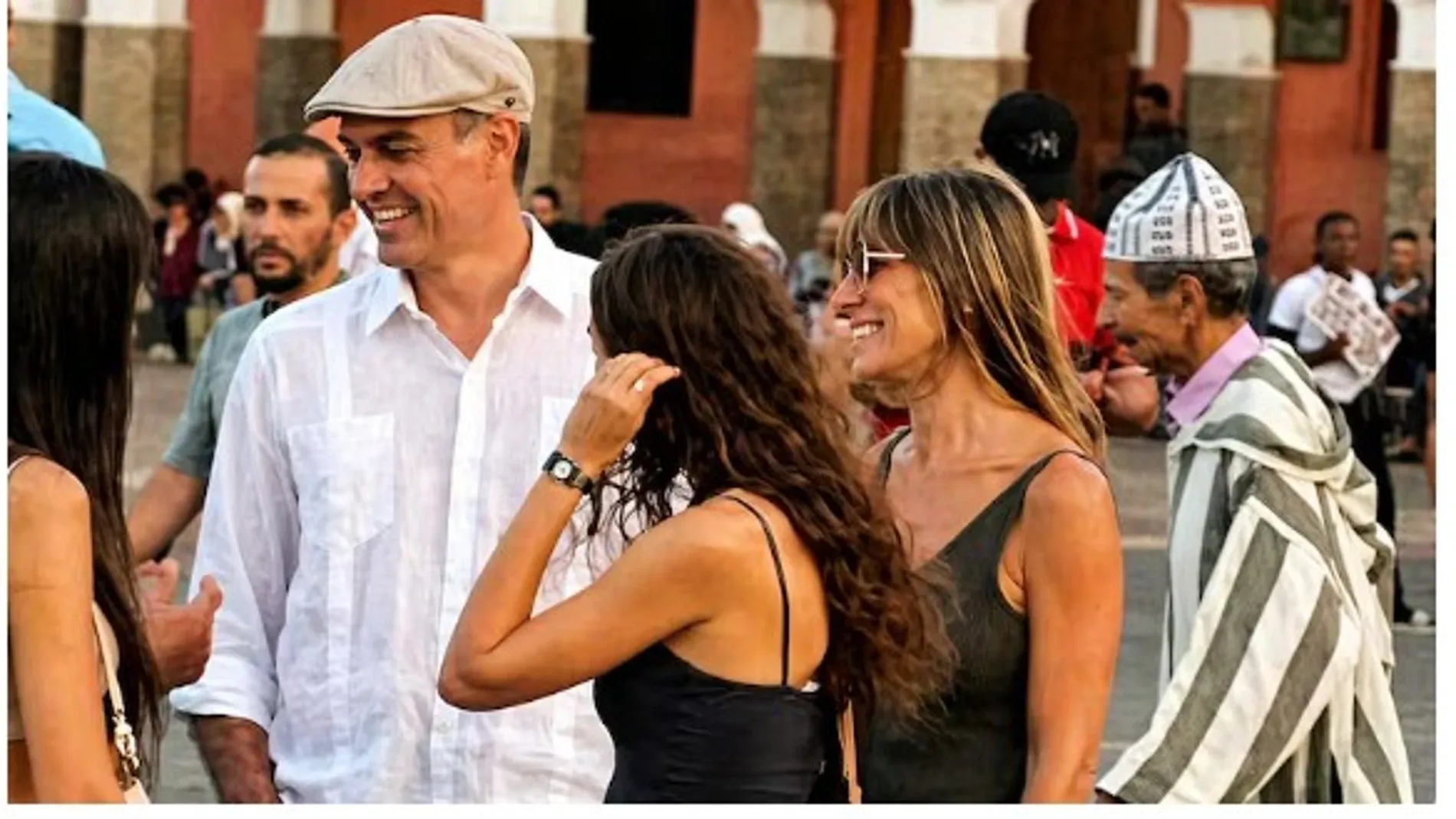
The narrative of Sánchez's connection to Morocco is not merely about diplomatic relations; it is deeply personal and reflective of a broader historical consciousness. His visits to Moroccan cities such as Tangier and Marrakech are not just political gestures but are imbued with a sense of returning to a wellspring of cultural continuity that transcends the notion of historical ruins. Through this lens, Sánchez envisions a Spain that is more secure and prosperous by embracing its multifaceted identity, allowing for a re-evaluation of its historical heroes and a reopening of its doors to the past.
Ultimately, Sánchez's journey is about reconciliation—between Spain and its Moorish past, between historical narratives and contemporary realities. As he continues to navigate the complexities of identity and history, Morocco stands as a pivotal piece that bridges the gaps and enriches the understanding of what it means to be Spanish in a modern, interconnected world. The relationship with Morocco, therefore, becomes not only a diplomatic necessity but also a crucial element in the ongoing quest for a more inclusive and reflective Spanish identity.
As reported by larazon.es.