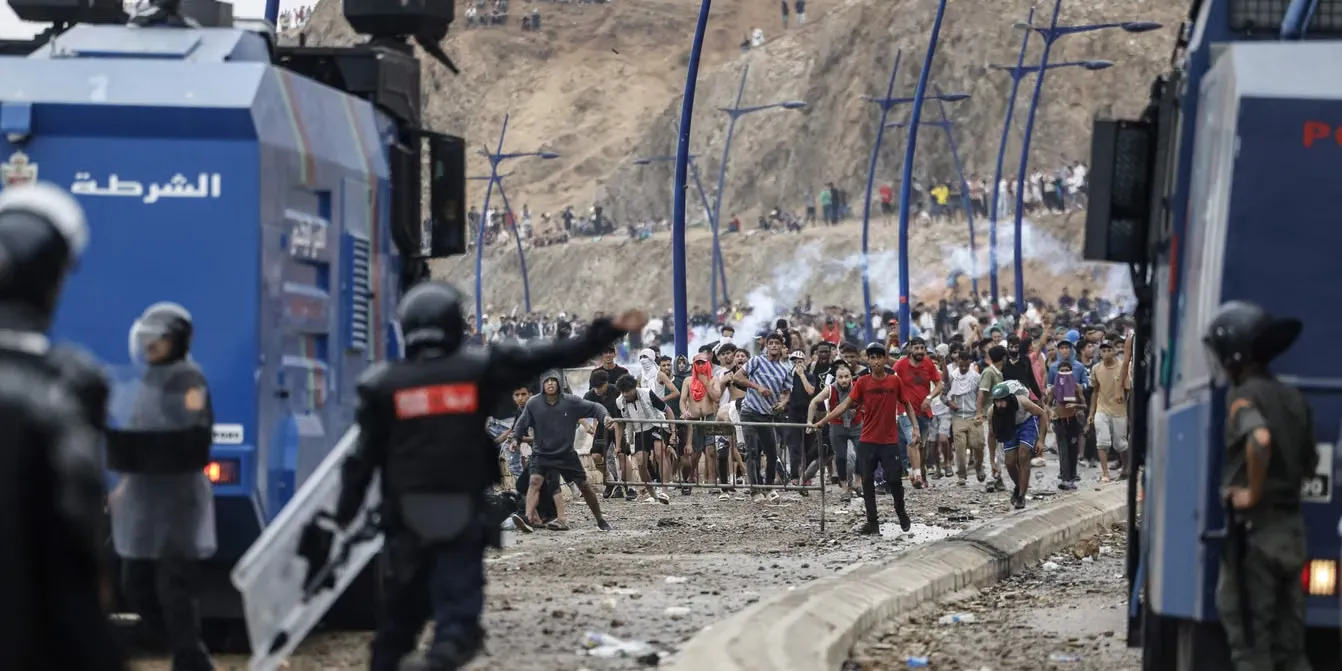

On September 3, 2026, Spanish Prime Minister Pedro Sanchez addressed the Spanish Congress, providing much-anticipated explanations regarding the management of the migration crisis in Ceuta. This address came after a significant influx of 72,000 migrants over the summer disrupted the calm of this Spanish enclave. Sanchez aimed to clarify several critical issues surrounding this complex situation.
Rejection of Moroccan Involvement in Migration Facilitation
A central theme raised during the past month has been the alleged involvement of Moroccan authorities in facilitating illegal migration. According to a police report circulated in the Spanish media, Moroccan law enforcement was accused of assisting migrants in crossing into Ceuta. However, Sanchez firmly refuted these claims, stating, "No service or international organization has provided the Spanish government with solid evidence that Morocco planned or orchestrated this arrival. If such evidence existed, we would act accordingly, with all the firmness that the situation demands." This statement underscores the Spanish government's commitment to addressing the crisis without casting blame on neighboring nations without substantial proof.
In his speech, Sanchez also reaffirmed the status of Ceuta and Melilla as integral parts of Spain, countering claims made by Moroccan officials. He expressed, "We have heard unacceptable statements from two ministers regarding Ceuta and Melilla... statements that we have categorically rejected. I want to inform you that we summoned the Moroccan ambassador on August 21 to express our position." Emphasizing the historical significance of these territories, Sanchez assured, "For the Spanish government, these two cities will remain Spanish until the end of time." This declaration aims to reinforce Spanish sovereignty and address any misconceptions regarding territorial claims.
Call for Ongoing Support and Presence in Ceuta
Prime Minister Sanchez also called for King Felipe VI to visit Ceuta, expressing disappointment over the absence of royal representation during this critical time, especially as many ministers have already made the journey. He stated, "Ceuta needs more than ever to be supported by the State," highlighting the urgency of the situation. The last visit by a Spanish monarch to this enclave was in 2007, when King Juan Carlos I was in power.
Regarding the current status of migrants in Ceuta, Sanchez indicated that as of now, approximately 3,658 migrants have been returned to Morocco since August 10, with an additional 3,300 having been relocated during the same period. He aims to expel another 1,500 migrants in the following two weeks. In response to the ongoing crisis, Sanchez has called for a permanent presence of Frontex, the European Border and Coast Guard Agency, near the Tarajal beach area, a critical entry point for illegal crossings.
To bolster regional governance, Ceuta and Melilla will also secure a permanent seat on the Committee of the Regions and are being offered the opportunity to join the customs union, which could lead to a more favorable tax regime. These measures reflect the Spanish government's commitment to addressing the migration crisis while simultaneously strengthening the political and economic status of Ceuta and Melilla.
As reported by cnews.fr.