
Political Fallout from the Ceuta Crisis
In the wake of the Ceuta crisis, Spanish Prime Minister Pedro Sánchez finds himself in a precarious position as political tensions escalate within the country. The unprecedented influx of approximately 80,000 individuals crossing from Morocco into the Spanish enclave of Ceuta has triggered a profound national security crisis in Spain, leading to significant discord within Sánchez's cabinet. This situation raises critical questions about the government's awareness regarding the surge and the timeline of their knowledge, resulting in internal disputes that threaten the stability of the ruling coalition.
Sánchez characterized the events of July as a “violation of Spain’s territorial integrity,” yet when pressed for details about the instigators behind this breach, Spanish ministers—aligned with their Moroccan counterparts—pointed to the influence of human smuggling networks and social disinformation. Interestingly, they even implicated external actors like Russia and Israel, diverting attention from Morocco's potential involvement. This narrative has not only sparked debate in the government but also among various political factions, with increasing scrutiny directed at Morocco’s actions and the efficacy of Sánchez's long-standing policy of friendship with the North African kingdom. Critics argue that this approach may have inadvertently encouraged Morocco’s aggressive stance, particularly concerning their claims over the Spanish enclaves of Ceuta and Melilla.
Calls for Accountability and Transparency
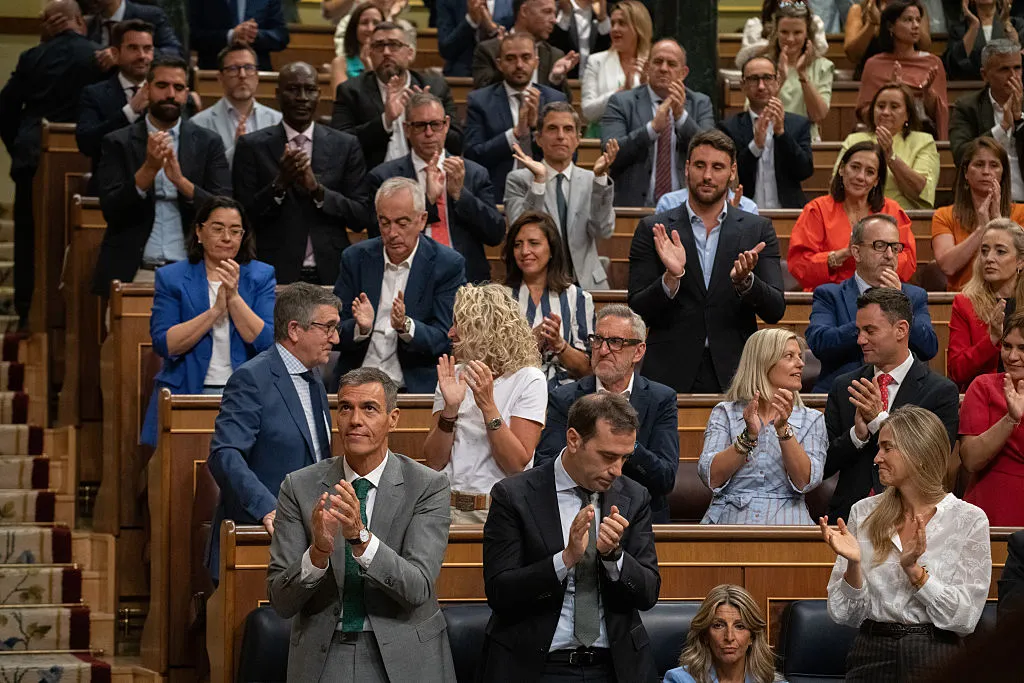
During his initial parliamentary address concerning the crisis, Sánchez asserted that there was no substantial evidence linking Morocco to the tragic border incident that resulted in over 100 casualties. He labeled Morocco as a “trustworthy ally,” despite a police report suggesting that Moroccan security forces had a direct role in orchestrating the migrant surge. Sánchez acknowledged that Moroccan gendarmerie facilitated a ten-hour window for individuals to cross the border but stopped short of attributing the planning and execution of the crisis to Moroccan authorities. His insistence on the absence of evidence against Morocco has been met with skepticism from both opposition leaders and his left-wing allies. Alberto Núñez Feijóo, the head of the opposition People’s Party, and Santiago Abascal, leader of the far-right faction, have challenged Sánchez, questioning why he is the only one defending Morocco amidst growing evidence of its complicity in the crisis.
The left-wing faction has also demanded clarity on Morocco’s involvement, with Podemos MP Ione Belarra calling for greater transparency and even suggesting a severance of diplomatic ties with Rabat. Gabriel Rufián from the Catalonian Republican Left (ERC) accused Morocco of orchestrating the border crisis to destabilize the Spanish government, labeling King Mohammed VI as a “murderer.” In response to the mounting pressure, Sánchez has pledged to declassify all security and intelligence reports leading up to the migrant influx, aiming to demonstrate that his government lacked prior warnings of the impending crisis.
Criticism has also arisen from within Sánchez's own ranks regarding Spain’s perceived appeasement policy toward Morocco, particularly following the controversial shift in Spain's stance on Western Sahara, a territory historically governed by Spain and claimed by Morocco since 1975. This shift was seen as a concession to placate Rabat after a previous migrant surge in 2021, and many argue that it has compromised Spain's credibility on the international stage. As attention increasingly focuses on Morocco’s role in the crisis, Sánchez acknowledges the need for a reformed approach to bilateral cooperation, emphasizing caution in navigating the complex diplomatic landscape with a neighboring country.
As reported by euractiv.com.