

Overview of Phoenix Express 2026
The Phoenix Express 2026 military exercise has officially commenced in Tunisia, drawing naval forces from North Africa, Europe, and the United States. This 21st edition of the exercise runs from September 7 to September 18 and is organized by the Tunisian Navy under the auspices of the U.S. Sixth Fleet and the U.S. Africa Command (AFRICOM). Among the participating countries is Spain, alongside Morocco, which is engaging in this joint deployment amidst ongoing tensions following the recent mass incursion in Ceuta. The main focus of the exercise is set in the southern Mediterranean, aimed at enhancing the capabilities of the participating forces to collaborate effectively on maritime security operations. Phoenix Express is a crucial component of the U.S. strategy to partner with African forces and their international allies in addressing significant maritime security challenges.
Joint Operations and Technological Innovation
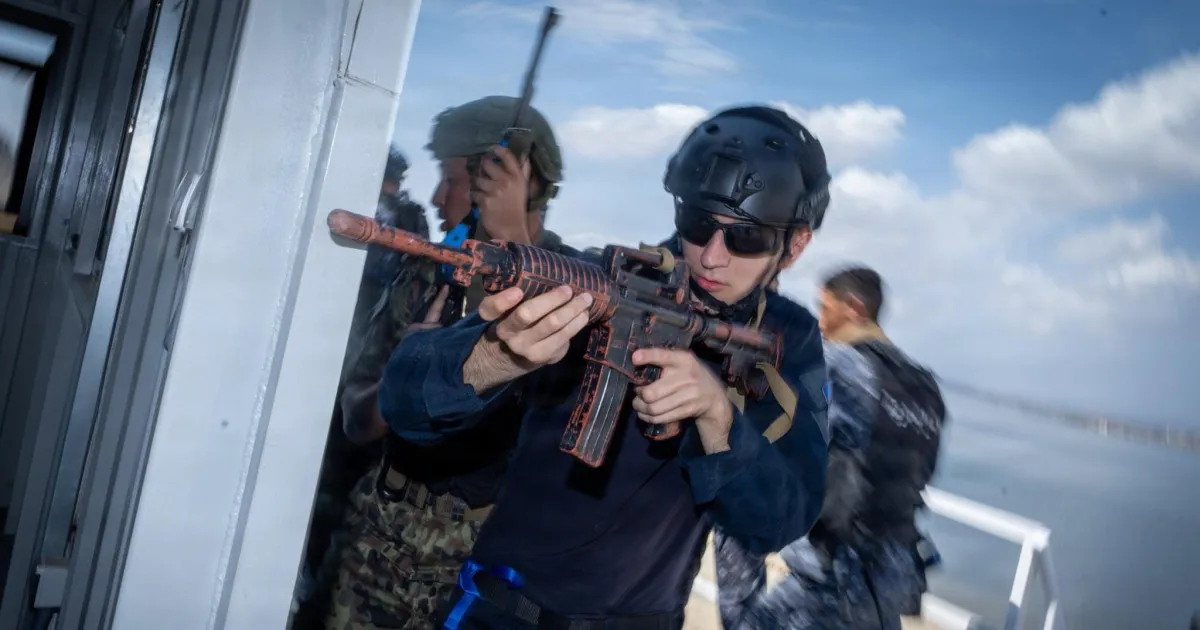
The exercise kicked off on September 7 at the Naval Base of La Goulette in Tunisia. Over the span of 12 days, participating units will engage in both land and maritime activities, with a particular emphasis on coordination between maritime operation centers and the exchange of information. The goal is to establish a common operational picture through real-time data sharing, enabling the various forces to enhance their capabilities for detecting anomalous situations, coordinating responses, and acting in unison against illegal activities at sea. Spain’s involvement is particularly noteworthy as it positions the Spanish Navy within a broad multinational framework that includes European, North African, and Middle Eastern nations. The official list released by the U.S. Navy includes Algeria, Belgium, Egypt, France, Georgia, Italy, Libya, Morocco, Tunisia, Turkey, Saudi Arabia, Spain, and the United States, underscoring the Mediterranean focus of the exercise and its relevance to the security of maritime routes. Unlike mere interoperability drills for vessels, Phoenix Express presents a scenario where forces must share information, coordinate their procedures, and develop joint responses to various maritime security situations. This year’s edition features search and rescue exercises, simulated boardings of vessels, and live demonstrations, all designed to refine tactical procedures that require a high degree of coordination among the participating navies.
One of the highlights of this year’s exercise is the integration of advanced systems and tracking tools. The U.S. Sixth Fleet aims to utilize the exercise to showcase how these technologies can aid in detecting and deterring illegal activities within African exclusive economic zones. This approach represents a move towards maritime surveillance that combines sensors, tracking systems, operation centers, and deployed units at sea. The objective is to ensure that information gathered through various means can be shared among participating countries, transforming it into a unified understanding of maritime activities. In the early days of the exercise, activities involving unmanned capabilities have already commenced. Official U.S. documents indicate the use of an unmanned surface vehicle, Lightfish, during an operation conducted in Bizerta. Such systems expand the possibilities of maritime surveillance by obtaining information without the need for continuous manned platforms in specific areas.
The ultimate goal of Phoenix Express is directly linked to the protection of maritime routes. Vice Admiral J. T. Anderson, commander of the U.S. Sixth Fleet and NATO's Naval Strike and Support Forces, emphasized the synergy between technology and the preparedness of participating forces. He stated, "The true strength of Phoenix Express lies in the combination of cutting-edge maritime technologies with the exceptional professionalism of the forces operating them." Anderson further noted that the exercise aims to bolster the capabilities of partner African nations to detect and deter illegal activities that threaten navigation freedom and the free flow of maritime commerce. This focus on navigation freedom is especially pertinent to an exercise conducted in the Mediterranean, which serves as a major maritime communication route between Europe, Africa, and the Middle East. The security of commercial routes relies not only on surveillance capabilities but also on the rapid coordination of actions among different countries.
The U.S.-Tunisia relationship serves as one of the cornerstones of this exercise. The Phoenix Express series has been ongoing since 2004, evolving into one of the primary military cooperation instruments between the two nations regarding maritime security. U.S. Ambassador to Tunisia, Bill Bazzi, highlighted the longstanding ties between the two countries during the exercise's opening, situating the current cooperation efforts within a bilateral relationship dating back to the Treaty of Peace and Friendship of 1797. "Today, as Tunisia leads the hosting of Phoenix Express, we take pride in collaborating with our Tunisian hosts, regional allies, and partners to ensure that the vital maritime routes of the Mediterranean remain secure and open," Bazzi remarked. Moreover, the exercise is part of a broader framework, as Phoenix Express is one of three major regional maritime exercises led by U.S. Naval Forces in Africa, designed to provide training and cooperation opportunities to African forces and their international partners.
As reported by eldebate.com.
