The Resurgence of Sheep Import Support Debates
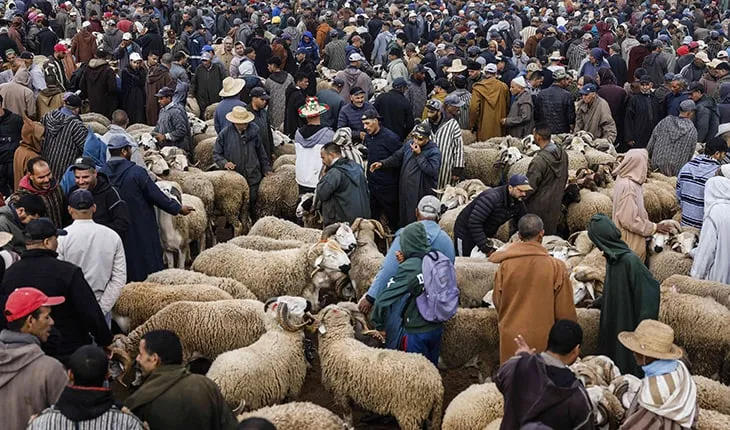
Rabat – The issue of subsidies for sheep imports has once again taken center stage in Moroccan political discourse, following an announcement by Abdelilah Bouano, the head of the parliamentary group for the Justice and Development Party. He revealed that certain opposition factions are moving toward establishing a fact-finding committee to investigate the public funding allocated for sheep imports in recent years, a matter that has gained traction in both media and political forums under the term "Faraqshia." This ongoing debate emerges in the context of continuous discussions spanning several years regarding the Moroccan government's measures to counteract the effects of drought, a decline in livestock numbers, and the soaring prices of red meat and sacrificial animals. These measures include opening the door for imports, implementing customs and tax exemptions, as well as direct support for importers. The government asserts that these initiatives were designed to ensure a steady supply in the national market and stabilize prices, while opposing voices argue that the outcomes have not positively impacted citizens' purchasing power.
Understanding the "Faraqshia" Phenomenon
As discussions surrounding the issue intensify, the term "Faraqshia" has resurfaced, becoming a prominent concept in political and media discussions related to sheep support. Originally, in Moroccan vernacular, the term "Faraqshi" referred to professional livestock thieves who engaged in the illicit stealing of cattle and sheep from barns and selling them unlawfully. Over time, however, the term has undergone a significant semantic shift, transcending its literal meaning to symbolize opportunism, abuse of power, and the pursuit of quick profits at the expense of public interest. In recent years, this term has been frequently mentioned in political and media discussions tied to issues of corruption, exploitation of privileges, and public contracts, particularly in the ongoing debate over subsidies for sheep imports. Critics of this policy use the term to question how benefits from exemptions and public support are distributed among stakeholders.
During a public session dedicated to monthly oral questions for the Prime Minister held in parliament, Bouano emphasized that many citizens were deprived of the opportunity to perform the sacrificial rite last year due to rising prices, while others have had to forgo it this year due to difficulties in purchasing sacrificial animals or the inflated prices. He urged the government to adopt a more transparent approach, ensure equal opportunities, and uphold the principle of accountability while adhering to good governance standards. Bouano called on the Prime Minister to clarify the reasons behind the persistent high prices of sacrificial animals despite the support and import measures in place, questioning the accuracy of the data and statistics utilized in managing this file, and demanding the disclosure of the beneficiaries of the support intended for sheep imports.
The origin of this issue dates back to measures taken by public authorities starting in 2023 to address the repercussions of consecutive droughts, a dwindling livestock population, and rising red meat prices. In February 2023, a joint decision was issued by the Ministry of Agriculture and the Ministry of Economy and Finance to suspend the collection of import duties imposed on domestic sheep, aimed at facilitating the entry of imported sheep into the national market. Furthermore, in 2024, direct support for sheep imports intended for the Eid al-Adha festival was introduced, set at 500 dirhams per head (approximately $50), alongside ongoing customs and tax exemption measures through subsequent decrees designed to encourage imports and ensure market supply. Yet, these measures have remained a subject of ongoing political and parliamentary debate, with the government claiming they have bolstered the supply of Moroccan markets, while opposing parties argue that their impact on final prices has been limited compared to the scale of support and exemptions provided.
The release of a new book by Abdelilah Bouano titled "The National Herd Crisis: From Supporting Domestic Production to Import Rent" has reignited discussions around this issue both within legislative institutions and beyond. The book critiques the support policies directed at livestock imports during the period from 2022 to 2025, with the author contending that these measures did not achieve the stated goals of protecting purchasing power and lowering meat prices. Instead, according to his analysis, they have primarily benefited specific groups of importers. The book sparked controversy within parliament during discussions regarding the government's performance, leading the Speaker of the House, Rachid Talbi Alami, to request its withdrawal from the session, while Bouano insisted on presenting it, arguing that it falls within the realm of parliamentary oversight, especially after previous initiatives to form a fact-finding committee regarding livestock import support stalled.
As reported by alquds.co.uk.