
Fouzi Lekjaa: A Rising Star in Moroccan Politics
The political landscape in Morocco has been shaken up by a report from the U.S. economic agency Bloomberg, just as the country approaches crucial parliamentary elections. On June 22, 2026, Bloomberg cited sources within the political establishment, revealing that Fouzi Lekjaa, the Moroccan Deputy Minister for Budget in the Ministry of Finance and Economy and the President of the national football federation (FRMF), is being actively courted by two of the three major ruling parties. The objective of these overtures is for Lekjaa to formally take the lead of one of these parties and enter the parliamentary elections on September 23, 2026, as the official top candidate. This sudden interest in his candidacy is no coincidence; it coincides with the national football team's global presence on the FIFA World Cup stage and the impending question of succession for the incumbent Prime Minister Aziz Akhannouch, who has decided not to run for re-election.
The discussions surrounding Lekjaa occur during a politically sensitive phase, especially as Morocco gears up to co-host the 2030 FIFA World Cup alongside Spain and Portugal. This event amplifies the pressure on the political leadership to ensure economic stability and effective administrative capabilities. The insights from Bloomberg could potentially support an earlier analysis by Maghreb-Post, suggesting that the purely partisan squabbles in Rabat are reaching their limits, with an increasing call for pragmatic crisis managers becoming more pronounced.
Technocrat or Politician? The Dilemma Facing Lekjaa
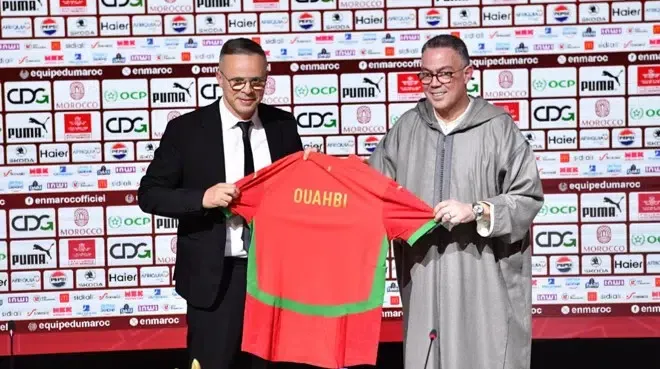
Fouzi Lekjaa embodies a unique profile within Moroccan politics that sets him apart from traditional party players. As Deputy Minister for Budget, he effectively manages state expenditures within the Ministry of Finance, and is recognized in economic circles as an efficient administrator capable of steering large projects without ideological constraints. His immense popularity stems from his role as the architect of Morocco's recent football boom, which includes the national team's historic semi-final run in the 2022 World Cup, the successful bid for co-hosting the 2030 World Cup, and the highly praised organization of the recent Africa Cup of Nations in 2025—all achievements closely associated with his name.
This combination of fiscal prudence and widespread public appeal makes him an attractive candidate for established political parties. At a time when Morocco faces the necessity of multi-billion dollar infrastructure investments, including a comprehensive four-billion-dollar program to expand hotel capacities, financial investors and the domestic economic elite demand reliable structures. While many longstanding politicians are primarily rooted in regional or party-specific contexts, Lekjaa enjoys national visibility and possesses international connections, particularly within economic and sports networks. He is viewed as someone who delivers results.
However, the international interest signaled by Bloomberg highlights a critical aspect of the political landscape shaped by the constitutional reinforcement of voter will established in 2011, intended to counteract purely partisan strategies. According to Article 47 of the Moroccan Constitution, the King is obliged to appoint the Prime Minister from the political party that secures the majority of seats in the parliamentary elections. As Lekjaa has functioned as a non-partisan technocrat in the cabinet, he cannot simply emerge as a consensus candidate after September 23. This explains the intensifying behind-the-scenes maneuvering during the summer months. For Lekjaa to assume the role of head of government, he must first align himself with a political party.
This situation presents significant political implications. Until now, Lekjaa has benefited from his image as a pragmatic technocrat outside traditional party conflicts. A formal entry into party politics could alter this profile, exposing him to internal power struggles and loyalty conflicts. Moreover, it raises the question of how such a move would be received within the parties themselves, where local cadres have been waiting for their opportunity to step into the limelight for years. The debate surrounding Lekjaa may hint at a broader structural evolution within the Moroccan political system. As economic challenges and substantial infrastructure projects grow, there seems to be an increasing demand within the establishment for administratively experienced and internationally connected figures.
In addition to Lekjaa, other technocratically inclined government members are also being mentioned as potential key players in a future political realignment. A particularly intriguing aspect, raised in previous analyses by Maghreb-Post, remains the question of whether Morocco is ready for a historic premiere at the helm of government. Two names stand out from the current cabinet, both of whom, like Lekjaa, represent pure economic competence: Minister of Finance Nadia Fettah Alaoui and Minister of Energy Transition Leila Benali. Both policymakers are highly regarded in the international finance and energy sectors and embody a modern, pragmatic technocratic style. They have achieved notable successes, although not as emotionally charged as football. While Minister Benali has positioned Morocco as a reliable player in the renewable energy sector, Minister Fettah Alaoui has successfully reestablished the kingdom in the international financial market, earning the trust of foreign institutional investors. Unlike traditional party officials, they are free from regional political squabbles and nearly scandal-free, making them serious alternatives in the event of a coalition realignment. However, unlike Lekjaa, they do not share the same level of public popularity.
Despite the current speculations, traditional parties remain the crucial actors within the political system. Within the liberal RNI, faction leader Mohamed Chouki is considered a possible successor to Aziz Akhannouch. In the national-conservative Istiqlal Party, Nizar Baraka stands out as an experienced candidate with a governmental profile. Whether the 2026 elections will ultimately evolve into a classic partisan power struggle or whether technocratic personalities will come to the forefront will largely depend on how the economic situation and coalition dynamics unfold in the coming months. The Bloomberg report indicates that discussions about Morocco's future political leadership have already commenced, and that increasingly, models beyond traditional party careers are being considered.
As reported by maghreb-post.de.