
Ceuta Border Crisis: A Catalyst for Political Strife
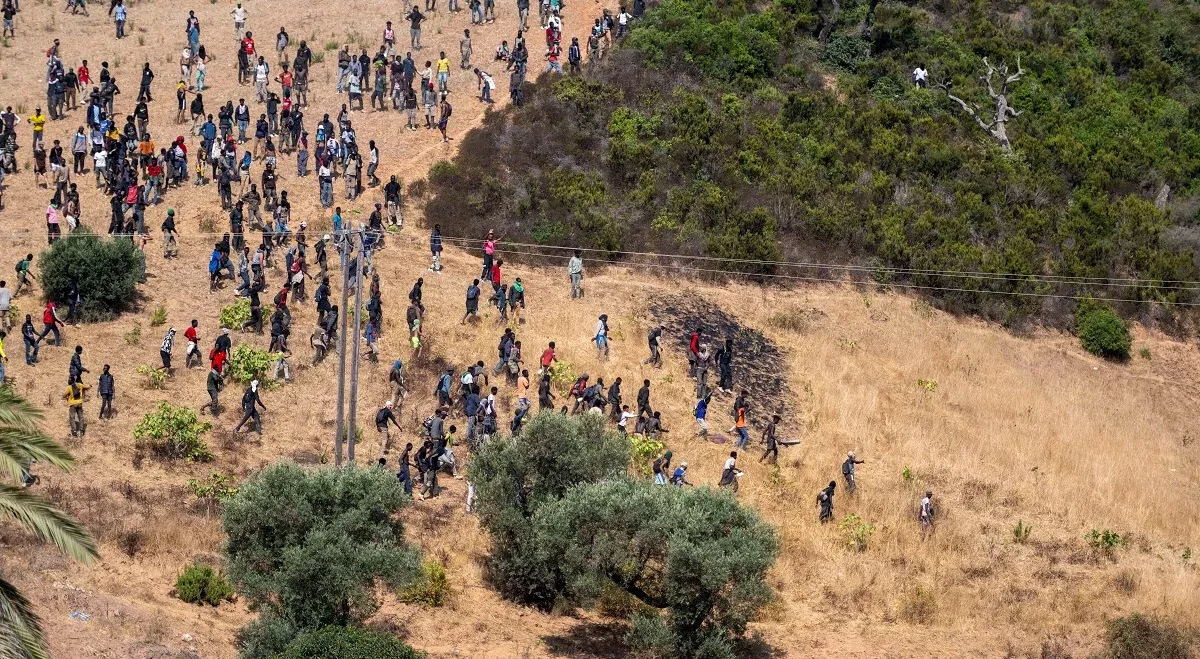
The recent influx of migrants into Spain's enclave of Ceuta from Morocco has ignited a significant political upheaval within Spain. Following the mass crossing of migrants on July 30-31, which saw thousands storm the border, the Spanish government has faced accusations from opposition lawmakers of inadequately addressing Morocco's role in the crisis and mishandling the subsequent fallout. Critics argue that the Moroccan border guards’ apparent inaction during the initial crossing suggests complicity, raising questions about the broader implications of the incident on Spain’s foreign relations, particularly with Morocco.
Notably, this situation is compounded by a subsequent attempted mass crossing on August 15, which Moroccan authorities successfully thwarted, thus prompting further scrutiny of their earlier actions. José Antonio Monago, a senator from the Popular Party, emphasized that such significant movements of people could not transpire without Moroccan cooperation, suggesting a systematic approach to border management—or lack thereof. Lawmaker Javier Alonso from Vox has gone even further by claiming that Morocco is engaging in a "hybrid war" against Spain, manipulating migration as a tool to destabilize the political landscape within Spain.
Diplomatic Relations and Regional Dynamics
Throughout this turmoil, the Spanish government has largely opted for diplomatic restraint, with Foreign Minister José Manuel Albares maintaining daily communications with his Moroccan counterpart. Interior Minister Fernando Grande-Marlaska has also praised the bilateral relationship, indicating a desire to keep diplomatic channels open amidst the crisis. However, Defense Minister Margarita Robles has taken a firmer stance, asserting that any threats to the territorial integrity of Ceuta or Melilla would be regarded as attacks on Spain itself, a sentiment echoed by the Foreign Ministry, which has declared that discussions around Spain’s territorial integrity are non-negotiable.
This crisis is also viewed in the context of shifting geopolitical dynamics. Morocco's growing influence, particularly due to its control over significant phosphate reserves—an essential ingredient for global fertilizer production—has elevated its standing within international relations, especially in light of the U.S.'s increasing economic and military engagement with Rabat. Some commentators have drawn parallels between this crisis and past incidents, noting that the timing coincides with Spanish Prime Minister Pedro Sánchez's visit to Algeria, a rival of Morocco, hinting at potential strategic maneuvers at play.
The ramifications of this crisis extend beyond Spain, as Brussels has criticized Madrid's handling of the situation, and neighboring Italy has briefly reinstated border checks on Spanish travelers, highlighting the broader European tensions surrounding migration policy. Within Ceuta, the humanitarian crisis continues to unfold, with between 5,000 and 8,000 migrants still in the enclave, including over 2,100 minors awaiting processing. The Spanish government has pledged EUR 25 million to enhance facilities in Ceuta, yet local leaders have shown reluctance to cooperate fully, reflecting a hardened public sentiment on migration ahead of upcoming elections.
While the government points to an increase in social security enrollment following the recent legalization of undocumented migrants, analysts caution that migration is fundamentally a complex socio-political issue that cannot be resolved through economic arguments alone. As political tensions mount, the situation at the Ceuta border underscores the intricate balance of diplomacy, humanitarian responsibility, and national security.
As reported by polskieradio.pl.