
Escalating Political Tensions in Spain Over the Ceuta Crisis
In the recent political landscape of Spain, the tensions surrounding the Ceuta crisis have ignited a fervent response from the right-wing parties, particularly the People's Party (PP) and Vox. These parties have effectively harnessed public outrage regarding the influx of migrants into Ceuta, a Spanish exclave on the African continent, by launching fierce criticisms against Morocco. The rhetoric they employ draws upon historical anti-Arab sentiments that resonate deeply within Spanish history, particularly regarding the tumultuous events of the 19th century.
Standing outside the Spanish Parliament, two bronze lions symbolize a historic narrative, as they were cast from melted cannons seized during the infamous "African War" between Spain and Morocco in the late 1850s. This conflict was sparked by Moroccan attacks on Ceuta and Melilla, resulting in a Spanish military victory that solidified its territorial claims. Fast forward to today, the issue of these exclaves has resurfaced with renewed urgency, particularly following the so-called "hybrid attack" of thousands of migrants upon Ceuta in late July, which has further strained relations between Spain and Morocco.
Political Maneuvering and Historical Resonances
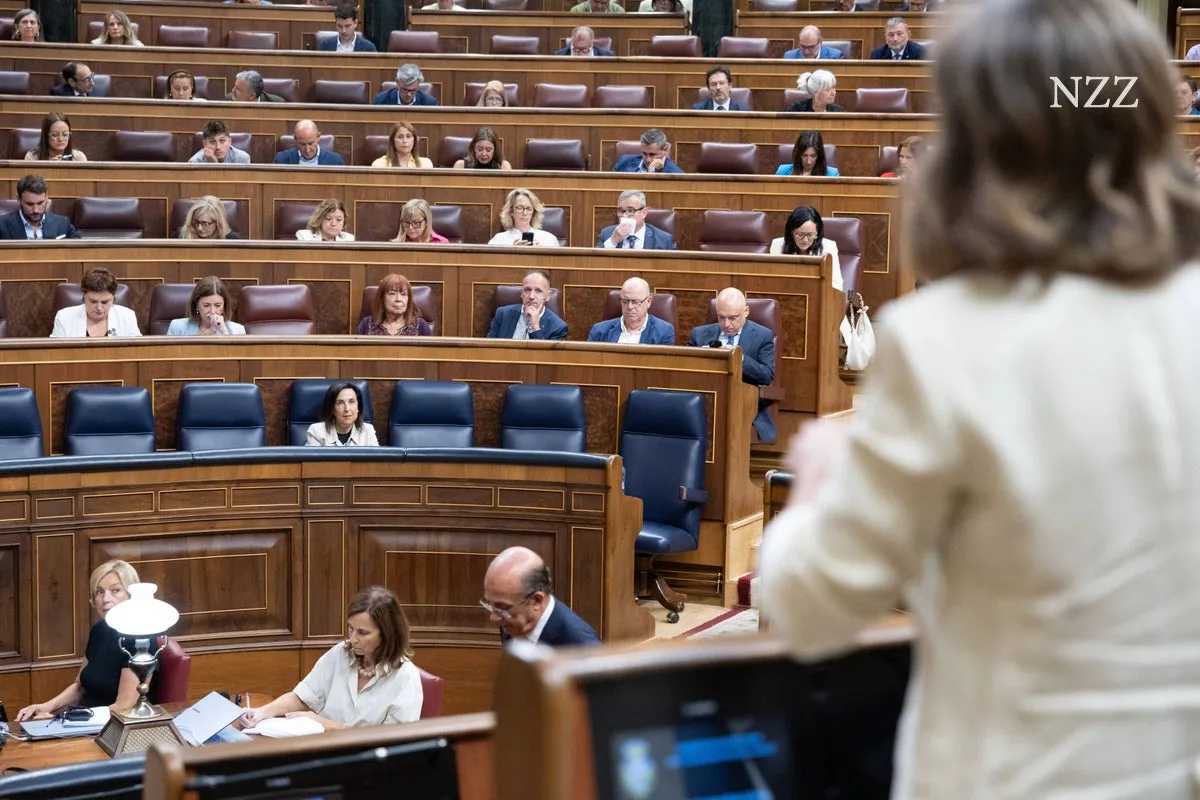
In the Spanish Parliament, Vox has initiated a proposal calling for the suspension of the association agreement between Spain and Morocco, a move that has been met with resistance from the ruling parties, while the PP opted for abstention. Interestingly, the PP has adopted a more aggressive stance towards Morocco, paralleling Vox's hardline approach, as they both seek to capitalize on nationalist sentiments to bolster their political standing. Statements emerging from the PP echo a strong commitment to defending Spanish sovereignty at all costs, a sentiment that has become increasingly popular in the current political climate.
Meanwhile, the European Parliament is witnessing similar sentiments, with the PP advocating for a resolution that threatens Morocco with subsidy cuts, framing the situation as an "invasion" and contemplating the suspension of the association agreement. The political landscape is rife with tension, as figures like Manfred Weber of the European People's Party visit Ceuta to discuss the "obvious consequences" of Morocco's actions.
However, Europe's support for Morocco is less about altruism and more about self-interest, hinging on cooperation in border security efforts that are vital for maintaining control over migration flows, particularly for Spain. Spain's economic ties to Morocco are significant, with an annual trade volume of €65 billion under the association agreement, of which €25 billion is attributed to Spain, yielding a surplus of €3 billion. This economic interdependence complicates the narrative, as Spain's government has approached criticism of Morocco with caution, despite allegations of passivity and possible complicity by Moroccan authorities during the migrant crisis.
The opposition, particularly the PP, has seized this opportunity to amplify its rhetoric, appropriating Vox's narrative of "invasion" to frame the situation as a historical repeating of grievances. This terminology is laden with historical significance, harkening back to the Arab invasion of 711, which has been mythologized in nationalist discourse. The implications of such a narrative are profound, as they risk alienating the significant Moroccan population residing in Spain, currently estimated at 1.16 million, the largest minority group in the country.
The societal repercussions of this heated debate are evident, with incidents of violence against individuals of Arab descent occurring in Ceuta and elsewhere, reflecting a dangerous climate of intolerance. The political discourse surrounding the upcoming FIFA World Cup 2030 has also become contentious, with Spain expressing outrage over Morocco's bid to host the final match in a new mega-stadium, further fueling perceptions of betrayal and invasion.
In the context of these escalating tensions, Prime Minister Pedro Sánchez finds himself grappling with a narrative that increasingly portrays his government as weak in the face of such crises. The political landscape is shifting, with projections indicating that the PP and Vox could secure a majority in the upcoming parliamentary elections, driven by the sentiments stirred by the Ceuta crisis.
As reported by nzz.ch.