
International Match Sparks Controversy Over Ceuta and Melilla
On September 6, an international football match took place between Morocco's Maghreb Association Sportive de Fez (MAS Fez) and Burkina Faso's Rahimo FC. During the event, supporters linked to the ultra group Fatal Tigers unfurled a lengthy banner in Spanish that read: "Ceuta and Melilla: two cities, one homeland: Morocco." This political gesture was underscored by statements from two Moroccan ministers who asserted their country’s "historical and geographical right" to these Spanish territories in North Africa. This followed a massive influx of over 80,000 people into Ceuta, an event that many Spanish political parties, except for the central government, labeled as an "invasion" by Morocco. The Spanish Prime Minister acknowledged the "attack" but refrained from directly identifying the aggressor. As the political climate intensifies, particularly with elections approaching in Morocco, the situation regarding these disputed territories appears increasingly precarious.
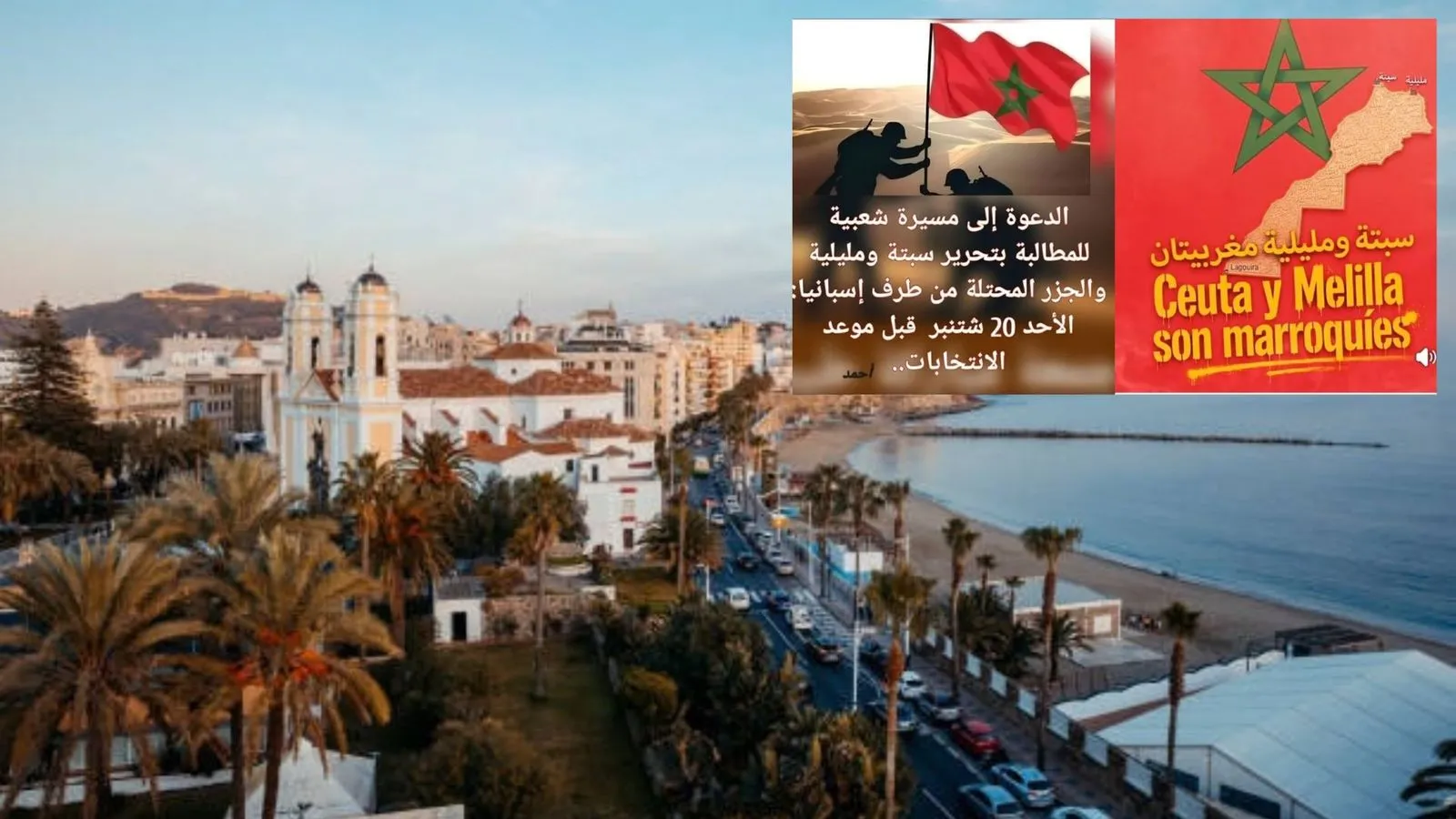
Calls for a public march demanding the liberation of Ceuta, Melilla, and other Spanish-held islands are set for September 20, just days before Morocco's elections. This announcement, circulated on social media for at least two weeks, has garnered attention from Spanish intelligence services, who are keen to monitor the situation, assess the true extent of the mobilization, and identify the organizers behind the initiative. The tensions surrounding Ceuta and Melilla have escalated significantly since the border incident of July 30-31, with the Ceuta government firmly believing that the Moroccan government is orchestrating these actions to destabilize the region and create conditions conducive to territorial expansion.
Moroccan Ministers Advocate for Territorial Claims
Moroccan Justice Minister Abdellatif Ouahbi claimed on August 21 that Ceuta and Melilla represent a "historical and geographical right" of Morocco and advocated for dialogue with Spain to facilitate their return. Shortly thereafter, in early September, Nizar Baraka, the Minister of Equipment and Water, asserted that Morocco would not "recede an inch" from what it considers its national territory. In response, Spain's Justice Minister, Félix Bolaños, downplayed the contentious remarks from his Moroccan counterpart, suggesting that the real decision-makers in Morocco regarding international policy are Foreign Minister Nasser Bourita and King Mohammed VI, neither of whom has made similar statements.
However, a closer examination of Moroccan politics reveals the significant implications of these comments, particularly given their timing. Morocco is set to hold its legislative elections on September 23, which many citizens do not view as credible. The political landscape is influenced heavily by the legacy of former King Hassan II, with voter turnout historically low. In the last election in 2021, only half of the 17.5 million registered voters participated. The election campaign began on September 10 and concludes on September 22, placing the march for the "liberation" of the cities in the midst of this political contest.
The ministers advocating for the claims on Ceuta and Melilla are emblematic of the current Moroccan administration. The Justice Minister, who previously served as the Secretary General of the Authenticity and Modernity Party (PAM), has been instrumental in the governance of the National Rally of Independents (RNI), the ruling party. The PAM is often viewed as a creation of King Mohammed VI, leading to speculation that the king is maneuvering behind the scenes to influence territorial ambitions and destabilize Ceuta. The Institute of Ceutian Studies (IEC), comprising scholars and artists dedicated to promoting research on the city, has publicly condemned Ouahbi's remarks, asserting that the recent surge of migrants was a "civil invasion commanded by Morocco." They emphasize that the Moroccan claims over Ceuta and Melilla have resurfaced with alarming regularity.
Despite the apparent coordination behind the mass mobilization into Ceuta, the Spanish government continues to deny any involvement from Morocco in orchestrating these events or in harboring ambitions to annex Spanish territory. This denial, however, contrasts sharply with the visible realities in Ceuta and Melilla, where the local populace is acutely aware of the escalating tensions and the implications for their future.
As reported by elpueblodeceuta.es.