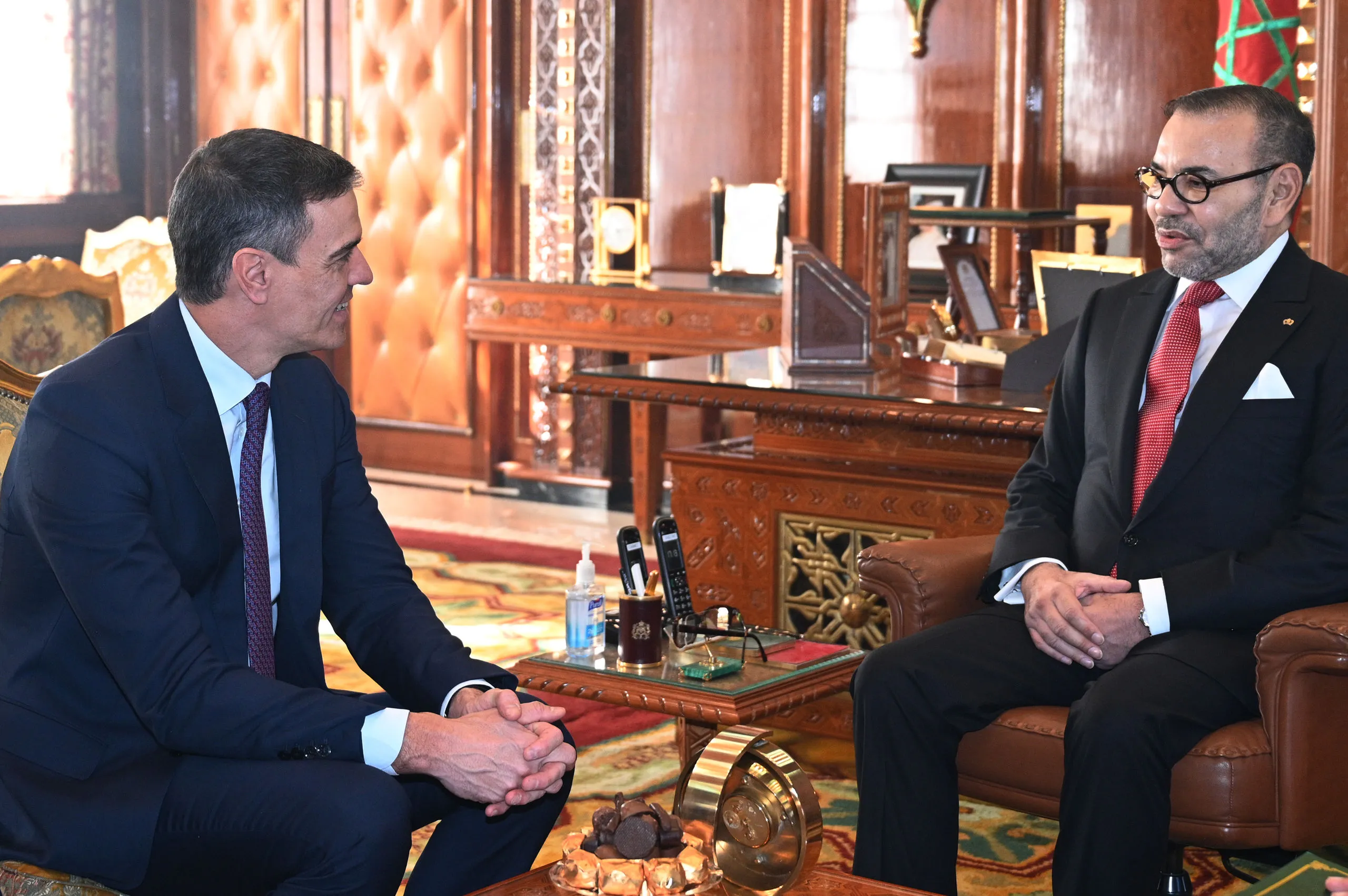

The relationship between Pedro Sánchez's government and the Sahrawi people has been marked by numerous controversies. Following Spain's decision to abandon Western Sahara in favor of Morocco, leaving the Sahrawis vulnerable to the regime of King Mohammed VI, the socialist government has also chosen to exclude them from a mass regularization process aimed at documenting over half a million immigrants through expedited means.
In light of this backdrop, Yolanda Díaz's political party has initiated a motion in the Congress of Deputies, compelling Pedro Sánchez's government to address the circumstances faced by Sahrawi political prisoners in Moroccan prisons and demand their immediate release from the Alaouite Kingdom. The party argues that this action would align with the government's stance on human rights in other contexts.
To advance this cause, the leftist coalition has presented a non-legislative proposal for discussion in the Lower House, which, if successful, would urge the government to formally denounce the situation of Sahrawi political prisoners in Moroccan jails. Furthermore, the lawmakers behind this initiative, including Enrique Santiago, Gerardo Pisarello, and Tesh Sidi, are advocating for the government to demand not only their immediate release but also the assurance of a fair process and dignified conditions during their detention, in accordance with international law. This includes fundamental rights, the cessation of solitary confinement, and adequate health care.
In their rationale, the coalition emphasizes that "for five decades, international bodies, UN mechanisms, and human rights organizations have documented a persistent pattern of systematic repression by the Moroccan Kingdom against the Sahrawi civilian population, especially against those who peacefully advocate for their right to self-determination." The signatory deputies reference the Gdeim Izik group, highlighting those detained during protests in November 2010 in the former Spanish colony of Western Sahara, noting that they continue to endure severe detention conditions characterized by solitary confinement, mistreatment, and systematic restrictions on fundamental rights such as healthcare and family visits.
They also highlight the ongoing indefinite hunger strike initiated by Sahrawi students and political prisoners Brahim Babeit and Salah-Eddine Sabbar in Ait Melloul prison, Morocco, to protest their detention conditions and demand dignity. "Given the grave situation, the Spanish government should intervene to contribute to the defense of human rights for the Sahrawi civilian population, particularly for those imprisoned for political reasons," argue members of Sumar to support their initiative. In this regard, Sumar believes that such action would be consistent with the government's established position in advocating for the application and respect of international law in other situations.
As reported by libertaddigital.com.