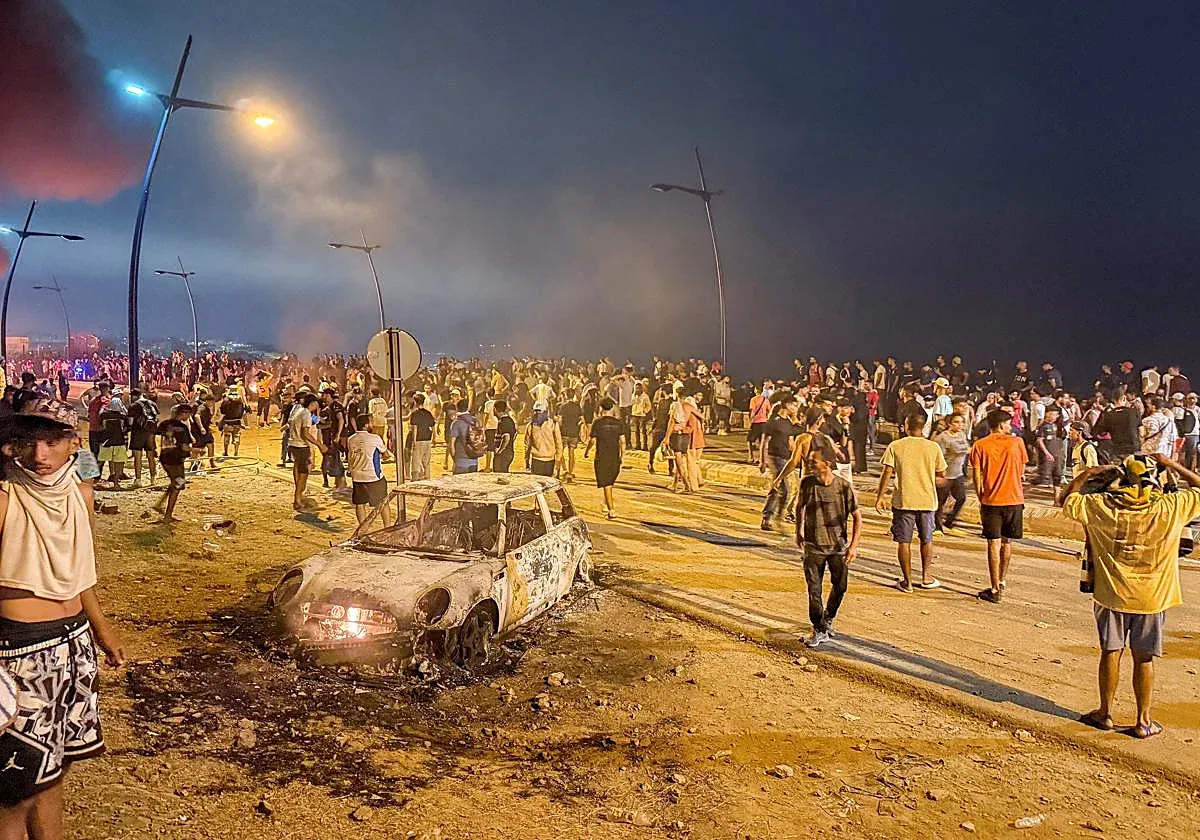

Political Reproach in the Senate Over Ceuta Crisis
The spokesperson for the Popular Parliamentary Group in the Senate, Alicia García, announced on Wednesday that the party intends to formally register a motion to censure five ministers due to their handling of the ongoing crisis in Ceuta. This announcement indicates that the upper chamber, which is under the absolute majority of the Popular Party (PP), is poised to take action against these ministers, a move seen as both political maneuvering and an assertion of power. Following the absence of three government members from a meeting with senators within a mere six days, the PP has decided to demand their resignations in a parliamentary debate. While this debate bears no legal binding, its symbolic weight cannot be underestimated.
As reported by abc.es.
Health Concerns Arise Amidst the Crisis
In an alarming development, at least 24 military personnel and two police officers stationed in Ceuta have been diagnosed with scabies, a contagious skin condition. Despite the Ministry of Defense's assertion that this outbreak is unrelated to the massive influx of migrants experienced in the autonomous city at the end of July, there are growing concerns regarding the health implications of such situations. The Ministry claims that the initial cases predate the border assault, thereby distancing the infection from any possible contact with newly arrived immigrants. However, as the situation unfolds, questions about the adequacy of health responses in the face of such crises remain pertinent, prompting calls for increased vigilance and preparedness.
Additionally, the local government is set to begin the burial of unidentified deceased individuals next week, a tragic consequence of the events that transpired during the influx, which left 82 people dead, 76 of whom remain unidentified. This step underscores the humanitarian crisis that continues to unfold in Ceuta.
Furthermore, regional leaders, including Fernando López Miras, have vocalized demands for the repatriation of migrants who entered Ceuta illegally, framing the situation not as a humanitarian crisis but as an invasion orchestrated by external forces. This rhetoric illustrates the ongoing political polarization surrounding the issue, with various stakeholders offering divergent narratives and solutions.
As the situation develops, there is a pressing need for coordinated efforts to address both the immediate humanitarian needs and the underlying political tensions that characterize the ongoing crisis in Ceuta.