

Political Chaos Erupts in Moroccan Parliament
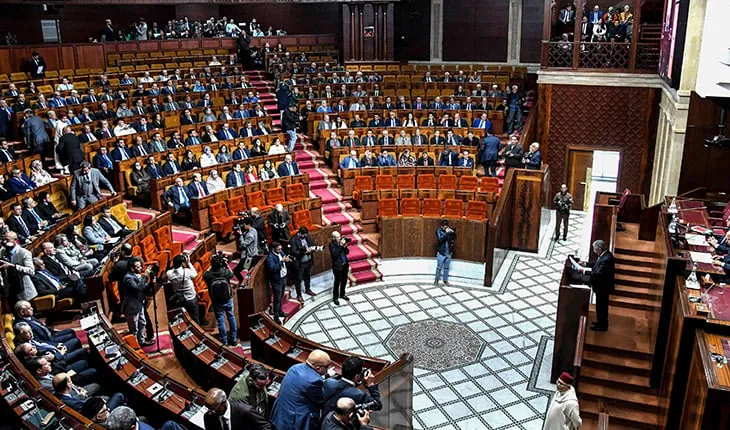
In a heated session of the Moroccan House of Representatives, a significant political uproar ensued as Idriss Chitibi, a parliamentary member from the opposition party, the Socialist Union of Popular Forces, launched a vehement attack against members of the Justice and Development Party (PJD). During this session, Chitibi escalated his previous accusations, labeling them not only as 'communists' but also as 'Shiites.' This outburst, characterized as one of the most contentious exchanges in the current legislative term, stirred a considerable media and political storm, drawing attention to the gravity of the accusations made by the session's president and the broader political context.
The incident occurred amidst a session intended for oral questions, where Chitibi departed from the expected neutrality of his role. As tensions flared during a debate concerning procedural matters, he directly accused the PJD members of being a coalition of 'Shiites and communists.' Such remarks were met with outrage from the targeted MPs, who deemed the comments a form of unacceptable political slander and a blatant attack on their identity.
Initially, the confrontation began as a typical dispute over the management of speaking times and the flow of discussion. However, the situation quickly deteriorated as Chitibi insisted on adopting a combative stance against the protests from opposition lawmakers. Video documentation from the live broadcast highlighted Chitibi’s provocative statement directed at the protesting MPs, asserting, 'You are Shiites and communists.' When the PJD representatives demanded he retract his statement and apologize, Chitibi remained defiant, reiterating his claims and insisting that their behavior mirrored the tactics of 'communists' in enforcing a singular narrative and 'Shiites' in terms of allegiance.
Public Reactions and Political Implications
The repercussions of Chitibi's incendiary statements reverberated beyond the parliament walls, igniting a wave of mockery and derision on social media platforms. Observers pointed out the glaring contradiction of combining accusations of 'Shiism' and 'communism' against an Islamic party, arguing that the political discourse in Morocco had reached a lamentably low point. The incident provoked a chorus of condemnation from various political, human rights, and media figures, particularly noting that it unfolded during a session already marred by controversies surrounding discussions of a sheep priced at 1,000 dirhams (approximately $100).
Political commentator Samir Chouki, who is running for the upcoming legislative elections under the PJD banner, offered a scathing critique of the events, suggesting that they were not mere spontaneous altercations but rather a calculated distraction from pressing issues, particularly the criticism directed at the Minister of Agriculture regarding inflated prices. Chouki accused the government and a portion of the opposition of colluding to divert attention from the real discussions surrounding pricing while providing the minister with a reprieve amidst mounting scrutiny. He lamented that the session’s chair, belonging to a rival party, played a role in steering the debate away from critical issues, ultimately undermining the awareness of the populace.
Ali Fadili, a researcher in political and international studies, described the incident as a 'catastrophic scandal' that undermines the dignity of the legislative institution. He expressed his dismay at a seasoned parliamentarian from the historically significant Socialist Union utilizing accusations of 'Shiism' and 'communism' as insults, viewing it as a continuation of outdated political control tactics reminiscent of those employed by the late King Hassan II's interior minister, Idris al-Basri. Meanwhile, Amira Maâlainine, a prominent PJD leader, contended that the 'hysterical attack' by the session president reflects more on his inability to maintain composure than on the party itself, expressing disappointment in the legislative body’s leadership, which she believes should uphold constitutional and ethical responsibilities rather than serve as a platform for personal grievances.
As reported by alquds.co.uk.

