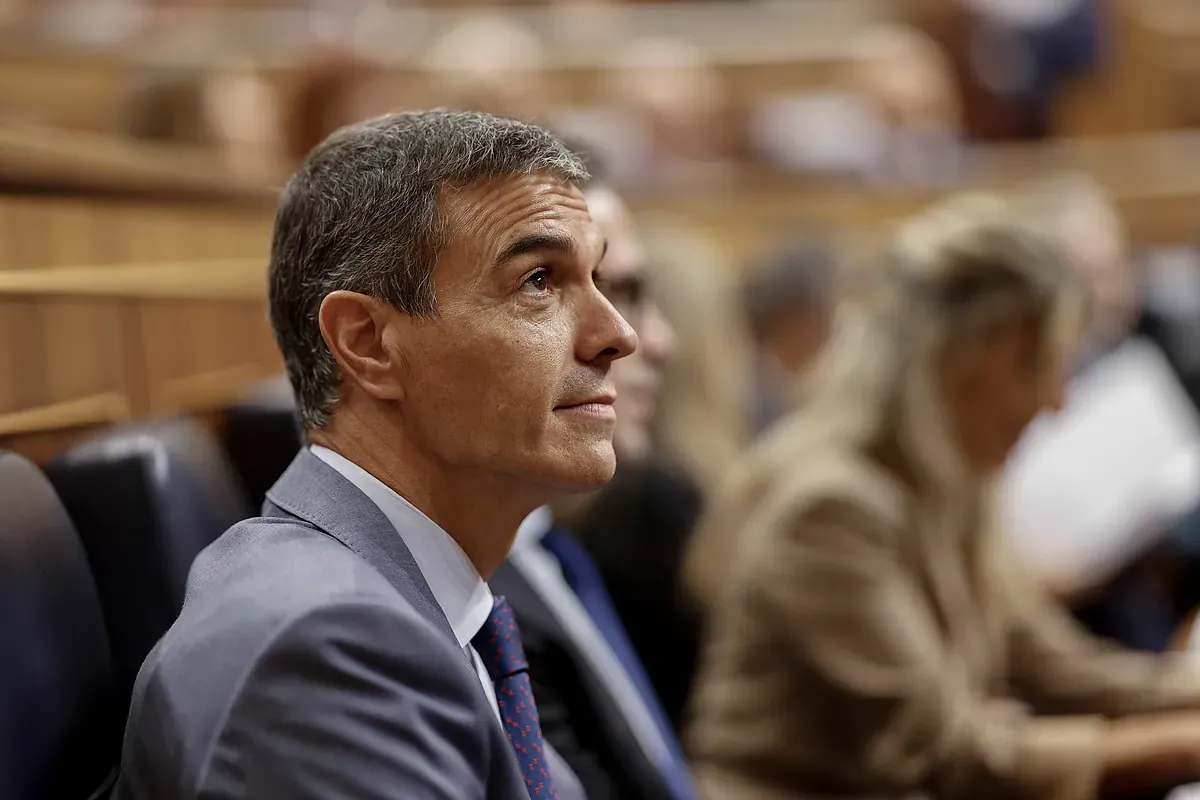

Espionage Allegations Resurface in Spanish Politics
The shift in stance by Spain's Prime Minister, Pedro Sánchez, regarding the sovereignty of Western Sahara in 2022 has reignited discussions about potential implications linked to espionage, particularly involving the controversial spyware, Pegasus. This change of position, which saw Sánchez endorse Morocco's claims over the territory, prompted insinuations from right-wing factions about its connection to the surveillance of his and other government officials' mobile devices in 2021. When questioned about this, Sánchez merely stated, "I have no issues with my phone," a response that did little to clarify the nature of the data that may have been accessed, leading to further criticism from opposition parties such as the Popular Party (PP).
Fast forward four years, and the narrative has evolved. The recent comments made by Sánchez regarding Morocco's role in the mass influx of migrants into Ceuta at the end of July have reignited scrutiny not only from right-leaning parties but also from some of his coalition partners. The lack of transparency from the government concerning the specifics of what was compromised in the Pegasus hack and the communications held with Morocco amidst the Ceuta crisis has allowed speculation of political blackmail to flourish across the political spectrum.
Political Repercussions and Calls for Accountability
The initial accusations were spearheaded by the PP and Vox, who criticized Sánchez for failing to hold Morocco accountable for the irregular entry of 72,000 individuals into Spain. Alberto Núñez Feijóo, the leader of the PP, directly challenged Sánchez two weeks ago, asking, "What was on your phone? Why are you afraid of Morocco? What does Morocco know about you?" This line of questioning was echoed by Santiago Abascal, who pressed for answers regarding the political obligations Sánchez may have towards those responsible for the migrant crisis.
The situation has escalated further as some parliamentary allies of Sánchez have echoed these concerns. Ione Belarra of Podemos speculated whether Morocco possesses excessive information about the Prime Minister, while Aitor Esteban from the PNV suggested that there may be undisclosed factors influencing the pressure on the Spanish government. He hinted at a possible connection between the Pegasus espionage incident and Spain's subsequent pivot in its stance on Western Sahara, which he described as a significant upheaval that lacked adequate explanation.
While some coalition partners, such as Sumar and ERC, have distanced themselves from the allegations of blackmail, they have nonetheless expressed dissatisfaction with Sánchez's handling of the situation regarding Morocco. Their calls for a more robust response remain unheeded, further emboldening those who continue to fuel speculation about the government’s integrity.
The absence of clear answers regarding the material obtained during the Pegasus intrusion has compounded the uncertainty. During a recent interview on El Intermedio, when asked if the Pegasus spying had influenced his government’s stance towards Morocco, Sánchez asserted, "Absolutely not," yet he offered no details about the information that might have been seized. Furthermore, in a prior interview, when questioned about feeling blackmailed by Morocco, he maintained that his government does not succumb to blackmail, asserting that it is not in their nature and insisting that they have nothing to hide. He also mentioned the declassification of documents pertaining to the mass entry into Ceuta that was being initiated that very day.
Throughout his responses, Sánchez has framed the discussion around the government's collective responsibility rather than his individual accountability, which is a key point of contention for the opposition. In the same El Intermedio interview, he clarified that he has never stated that Spain would not respond decisively against Morocco if evidence shows the regime's involvement in the events of July 30 and 31. However, he has yet to delineate the extent of his direct communications with Rabat following these events, a clarification that Feijóo has demanded.
As the situation continues to unfold, the terminology surrounding the unprecedented influx of migrants has shifted from "attack" or "violation of Spain's territorial integrity"—labels Sánchez used on July 31—to terms like "hybrid attack" and currently, a "humanitarian crisis." The political landscape remains charged, and the implications of these espionage allegations may continue to resonate as both the government and opposition grapple with accountability and transparency.
As reported by elmundo.es.