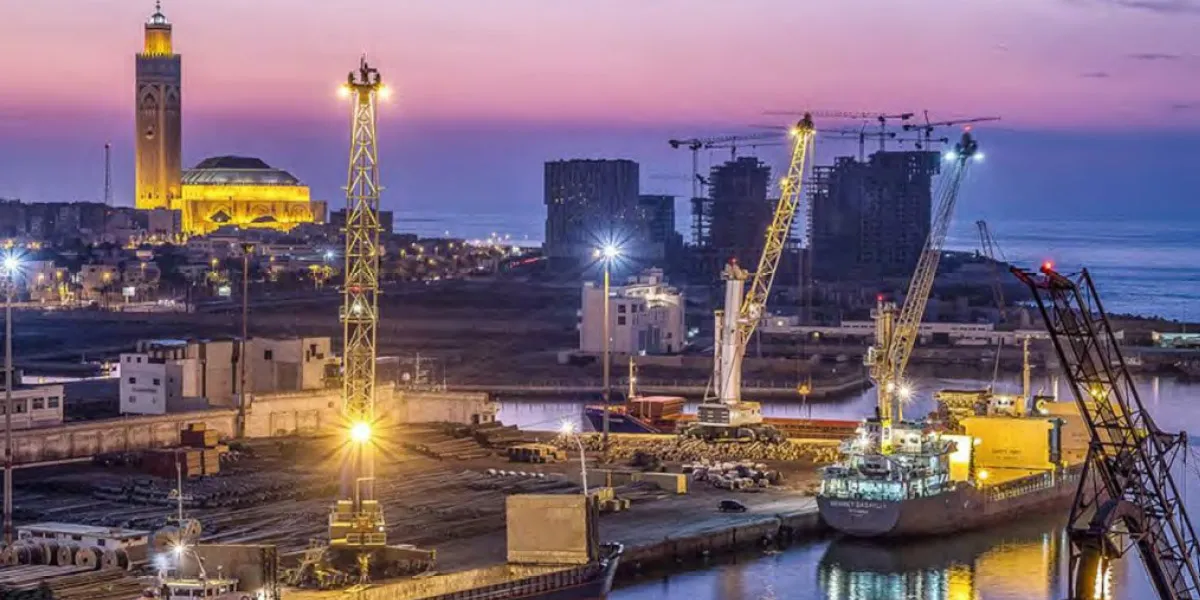

After enduring several months of significant operational tensions at the Port of Casablanca, authorities are now focused on addressing the root causes of congestion. New regulations governing the docking of vessels have been implemented with the aim of expediting cargo rotation and preventing terminal saturation. This evolution is crucial; however, it will not suffice without an improved organization of the terrestrial logistics chain.
The Port of Casablanca is entering a new phase in its fight against congestion. Following the nighttime opening of Gate No. 4, designed to ease the flow of heavy trucks, authorities are now tackling another critical link in the supply chain—ship docking conditions. As of October 5, new provisions from the National Ports Agency (ANP) mandate better preparation for unloading operations and the evacuation of goods.
This measure comes in the wake of a particularly tumultuous period for operators, especially within the cereal sector. According to estimates presented by Habib Hjiaj, a leader in an international trading company, the demurrage costs borne by industry professionals may have reached nearly 100 million dollars during the first five months of 2026. This is a staggering expense for a sector that annually imports over 12 million tons of raw materials intended for human and animal consumption.
Compounding the issue, waiting times have become increasingly prolonged. According to Hjiaj's figures, the average waiting period in the anchorage has escalated from 12 days in 2024 to 25 days in 2026. This trend indicates a dysfunction that transcends mere weather-related disruptions. Behind the immobilized vessels lies an economic cost whose repercussions gradually ripple throughout the entire supply chain.
Hjiaj illustrates this mechanism with a striking example: a ship detained in anchorage can incur costs ranging from $24,000 to $25,000 per day, which equates to nearly $1,000 per hour. Essentially, this floating warehouse's expenses far exceed those associated with a land-based storage solution. The comparison becomes particularly poignant when considering the same cargo.
For instance, 30,000 tons of grain held up for a month, with daily demurrage charges estimated at $25,000, leads to a staggering bill of $750,000, or about 7.5 million dirhams. Conversely, storing this same quantity in silos or warehouses located off the port would only cost around 600,000 dirhams per month, based on a rental rate of 20 dirhams per ton. The difference is substantial, amounting to nearly 6.9 million dirhams for a single shipment within just one month. Investing in local logistics infrastructure could thus retain a portion of this value within the national economy.
According to the expert, there is a direct link between these costs and food prices. The additional fees inflate the production costs of raw materials, which then variably impact industrialists, breeders, and consumers alike. Consequently, port congestion emerges as a factor exerting pressure on food costs. It is precisely on this front that the new docking regulations could yield their most significant effects.
Hjiaj asserts that the crux of the issue lies in the speed of goods evacuation. "A port is fundamentally a transit space. Its storage facilities are designed as buffer capacities, ensuring the smooth passage of cargoes between ships and distribution networks," he emphasizes.
When discharged goods linger in silos or terminals for extended periods, they occupy essential capacities needed for subsequent operations. A ship that arrives may be unable to unload even when port equipment is available, elongating the queue and penalizing all operators, including those equipped to promptly evacuate their cargoes. By requiring that the conditions for merchandise release be met before docking, the new regulations aim to break this vicious cycle.
Hjiaj also believes that a more regular evacuation of cargoes could have significantly mitigated the impacts of last winter's adverse weather conditions. In his assessment, demurrage costs could have been halved or even more. Consequently, the issue of investments is viewed from a different perspective. Contrary to popular belief, the inadequacy of port infrastructure alone should not be seen as the principal obstacle. Significant investments have already been made in terminals and storage capacities. However, enhancing port facilities only addresses part of the problem if the downstream infrastructures do not keep pace.
Hjiaj identifies the main weaknesses as residing in the storage capabilities of industrial units, intermediate platforms within the territory, and the transportation means necessary for swiftly delivering goods to their destinations. He distinguishes three complementary functions in this regard. Port buffer storage must ensure operational fluidity, the factory stock must guarantee one to three months of production as needed, and strategic storage, which falls under a national food security policy, should provide coverage for 6 to 12 months of consumption.
"Rather than concentrating all resources on the quays, it is essential to develop a network of silos and inland warehouses connected to efficient road and rail transport solutions," he advocates.
The case of Casablanca particularly illustrates this necessity. According to data from the National Federation of Grain and Legume Merchants (FNCL) cited by the expert, the port accounted for 64% of cereal and derivative imports between June and November 2025. Such concentration mechanically places pressure on an infrastructure embedded within the urban fabric and limited in available land reserves.
Thus, developing rail transport emerges as another avenue for improvement. Ultimately, the new docking regulations introduce an operational discipline that could benefit the most organized operators and accelerate the turnover of facilities. However, their effectiveness will hinge on the ability of transporters, industrialists, importers, and storage managers to maintain the same pace.
As reported by leseco.ma.