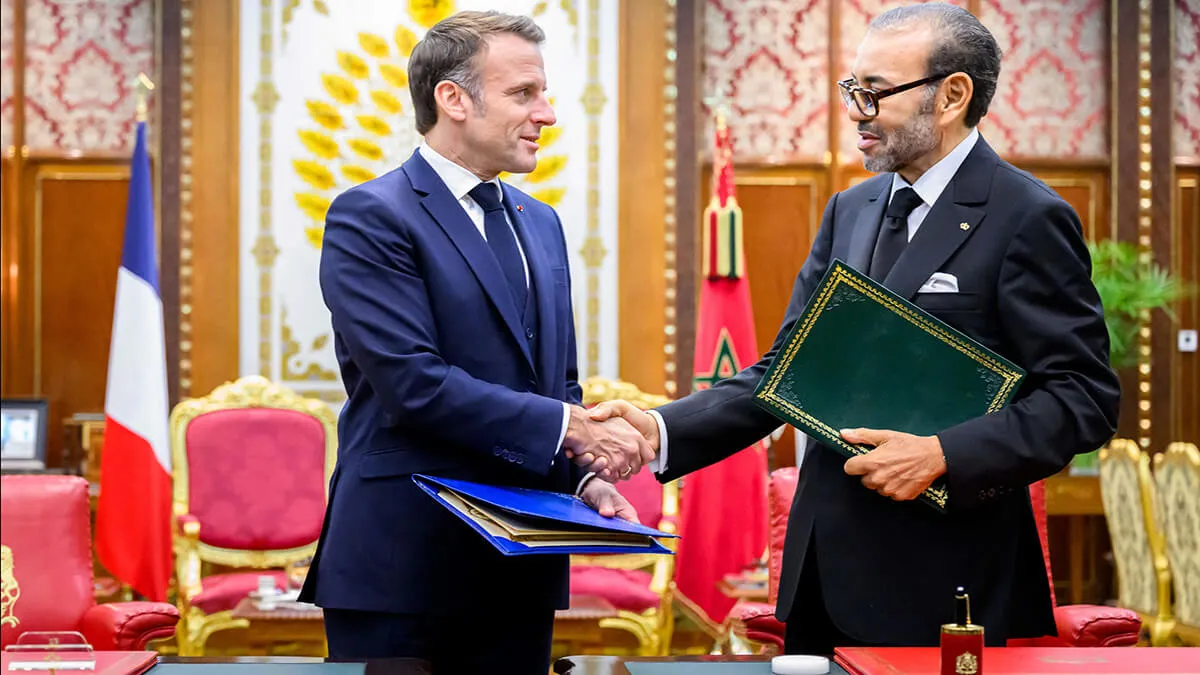

The anticipated treaty marking a new phase in the relations between France and Morocco has led to the postponement of King Mohammed VI's visit to France, originally scheduled for later this year, until early 2027. This decision underscores the importance of finalizing a comprehensive political package that will serve as a long-term strategic agreement between the two nations. The implications of this treaty are profound, potentially transforming bilateral relations and establishing a new framework amid shifting global alliances and an evolving international landscape.
Towards a Long-term Strategic Framework
In the current geopolitically complex environment, France is keen to enhance its strategic partnerships beyond the boundaries of the European Union, while Morocco seeks to solidify its rising diplomatic, economic, and geopolitical influence across Africa. Both nations aspire to create a treaty that extends beyond mere bilateral agreements, aiming instead to establish a robust political and strategic framework to guide future interactions. To facilitate this, a joint committee has been convened, tasked with drafting the treaty text. This committee reflects the collaborative spirit of both parties, emphasizing the significance of King Mohammed VI's upcoming visit as a pivotal moment for signing an agreement of considerable political and strategic weight.
The committee is composed of 11 distinguished members, including six Moroccans and five French representatives, drawn from various sectors such as diplomacy, politics, economics, industry, culture, and academia. On the French side, the efforts are led by former Foreign Minister Hubert Védrine, while the Moroccan contingent is coordinated by Chakib Benmoussa, the High Commissioner for Planning and a former ambassador to Paris. Other notable figures involved include Florence Parly and Sarah El Haïry from France, alongside Mostafa Terrab and Driss El Yazami from Morocco. The committee's discussions are set to encompass a wide array of topics that will shape the future of Franco-Moroccan relations, laying the groundwork for subsequent official negotiations.
The Sahara: Central to the Diplomatic Dialogue
The preparations for King Mohammed VI’s visit extend beyond mere scheduling; they involve crafting a comprehensive political package that reflects the new phase of relations, with the Sahara issue positioned as a crucial element. The Sahara dispute is regarded as a central theme that necessitates meticulous attention in the future treaty. Despite France’s supportive stance on Morocco's autonomy plan regarding the Sahara, Morocco aims to ensure that this supportive position is explicitly articulated in the treaty text, reinforcing Moroccan sovereignty over its southern provinces. Should the new bilateral treaty formalize this support, it would represent a significant diplomatic advancement, potentially aiding in the resolution of the Sahara dispute while solidifying the strategic alignment between France and Morocco. However, this could also lead to alterations in the dynamics of Franco-Maghreb relations, particularly concerning Algeria’s stance.
The thaw in diplomatic relations between Morocco and France commenced in 2023, gaining momentum in July 2024 when French President Emmanuel Macron affirmed his support for Morocco's territorial claims in the Sahara, describing the autonomy initiative as the only viable path to a sustainable political resolution under United Nations guidance. This marked a historic turning point in the bilateral relationship, paving the way for a new strategic framework. Morocco anticipates that the French acknowledgment of its sovereignty and the autonomy plan will be explicitly outlined in the forthcoming agreement, as this is crucial for illustrating the depth of the partnership with Paris and could become a defining aspect of the royal visit.
In addition to political cooperation, the treaty aims to encompass aspects of security and defense, economic ties, investment opportunities, energy cooperation, migration issues, and collaborative efforts in Africa and the Mediterranean. The incorporation of the Sahara issue into a broader framework for bilateral cooperation would elevate it from mere political discourse to a substantial element of mutual interest.
Postponement of the Royal Visit: Key Considerations
The delay of King Mohammed VI’s journey to Paris arrives at a critical juncture for Franco-Moroccan relations. The decision to postpone is influenced by various factors, including the need for adequate time to finalize the political and legal groundwork for the new treaty. Significant reasons for the postponement include domestic political dynamics in Morocco, with parliamentary elections scheduled for September 23, and the opening of a new parliamentary session in October. Additionally, the upcoming French presidential elections in April 2027 may complicate the timeline, making the January 2027 date tentative.
There is a mutual desire to ensure that this diplomatic occasion, now rescheduled from autumn 2026, becomes a landmark event in the evolution of Franco-Moroccan relations. Ongoing negotiations between expert teams from both sides have been extensive, with over 40 ministerial meetings held since the resumption of more dynamic bilateral interactions. Central to these discussions is Morocco’s sovereignty over the Sahara, with hopes that the French position will be clearly articulated in the new framework, potentially requiring sensitive negotiations. The regional implications of these commitments also play a crucial role, as evolving Franco-Moroccan relations resonate beyond their borders, particularly concerning Algeria's position on the Sahara.
As reported by atalayar.com.