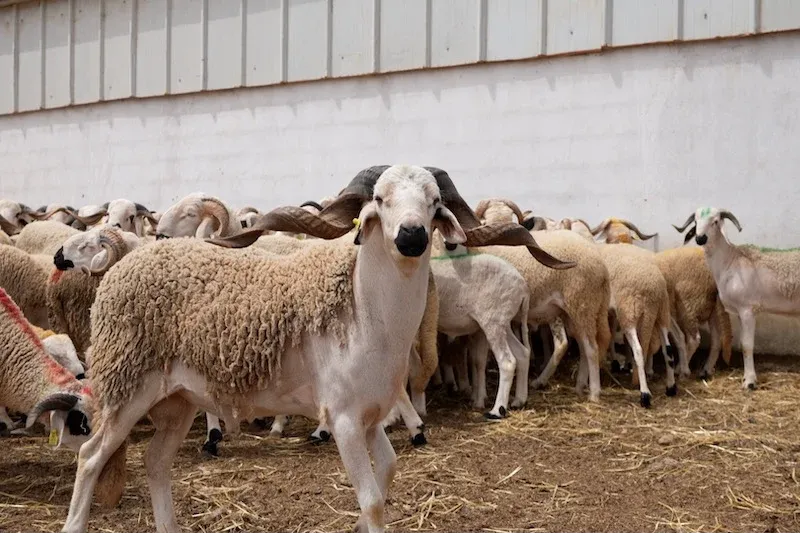

Understanding the Impacts of Government Interventions on Livestock Prices
As Eid al-Adha approaches, all eyes are on the agricultural markets and farms to assess whether the government measures aimed at supporting livestock breeders and maintaining herd levels will effectively influence the prices of sacrificial animals. This situation has sparked widespread debate among professionals and consumers regarding the adequacy of these measures to ensure affordable prices for Moroccan families.
Rachid Benali, the president of the Moroccan Confederation of Agriculture and Rural Development (COMADER), expressed optimism that the support measures will yield positive results. He noted that the production conditions this year appear relatively reassuring in terms of both feed availability and livestock numbers. Furthermore, Benali emphasized that the core issue does not lie with the farmers themselves but rather with market dynamics. He pointed out that speculators play a pivotal role in inflating prices as animals transition from producers to consumers. The absence of legal restrictions on the resale of livestock allows anyone to buy and sell at elevated prices, complicating effective price control.
Benali urged consumers to consider purchasing directly from rural markets or directly from livestock sellers, known as “kassabas,” to avoid price hikes caused by multiple intermediaries in urban markets. He highlighted the importance of discouraging speculation, noting that simultaneous consumer demand can contribute to further price increases. According to him, the current livestock availability and production conditions could facilitate reasonable pricing, although the problematic link remains the journey of the sacrificial animals from producers to consumers.
Government Support and Market Dynamics
Similarly, Said Chati, the General Director of the National Association of Sheep and Goat Breeders (ANOC), explained that a recent census initiated by public authorities is part of the preparation for disbursing the second tranche of support aimed at preserving female sheep and goats. This initiative is primarily designed to bolster the breeding stock dedicated to production. Chati further clarified that the financial allocations for this support in 2025 were intended to incentivize breeders to maintain productive females, particularly following the exceptional measures that previously prohibited the slaughter of female sheep and goats in slaughterhouses. Such constraints have impacted breeders' cash flow, as their livelihood hinges on selling livestock meant for meat production.
Chati noted that the current census will identify the breeders who have preserved their female livestock and integrated them into production, thus qualifying for the anticipated support due in the upcoming months. He emphasized that the overarching goal of this policy is to restore balance within the sector and ensure the sustainability of the herd in the medium term. Although this support does not directly target the prices of sacrificial animals, it may indirectly alleviate costs for breeders, potentially reflecting positively on market prices.
Current indicators seem promising, especially with the reported increase in sheep and goat populations in Morocco, which have surpassed 30.6 million heads as per the latest statistics, exceeding the usual averages of 25 to 26 million in previous years. Additionally, this year’s rainfall has contributed to improved grazing conditions and production circumstances, fostering expectations for a more favorable selling season compared to the last Eid al-Adha.
Despite these optimistic signals, professionals acknowledge that the primary challenge lies in organizing the market and regulating the intermediary channels between producers and consumers, particularly in major cities where demand surges as the holiday approaches. As such, citizens are left to ponder what the price landscape will look like in the weeks leading up to Eid al-Adha, balancing professionals’ optimism about ample supply and support against families’ fears of ongoing speculation that could render livestock unaffordable for many segments of society.
As reported by hespress.com.