
Construction Progress and Environmental Challenges
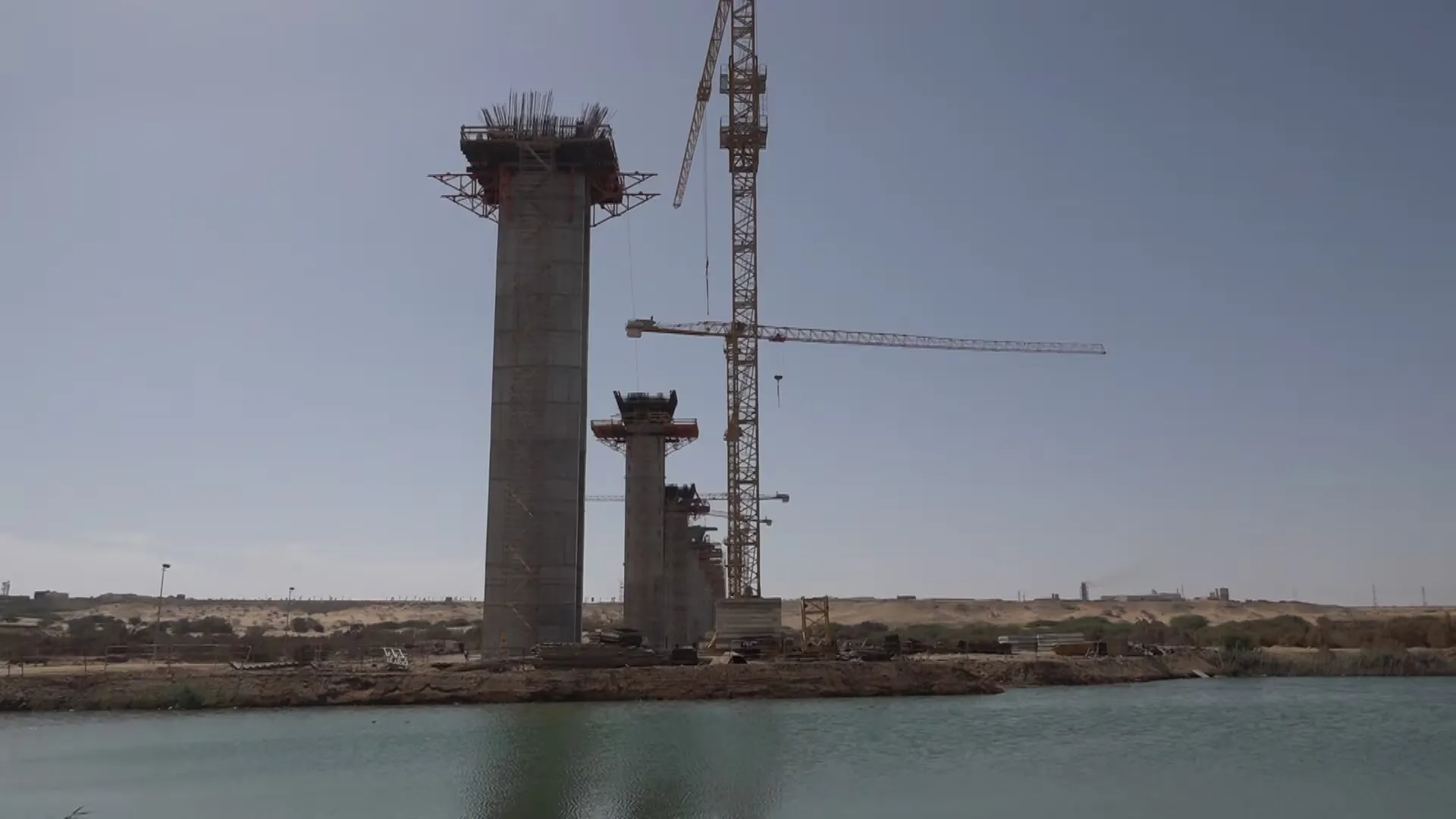
The construction of Morocco's longest bridge in Laâyoune has reached an impressive 56% completion. This significant infrastructure project is backed by a budget of approximately 1.38 billion dirhams and is part of a broader developmental model aimed at enhancing connectivity within the southern provinces of the country. The bridge is designed to improve traffic conditions and strengthen the link between Laâyoune and its surrounding regions, promoting both economic activity and regional integration.
However, the project faces a crucial environmental challenge: preserving the natural habitat along the banks of the Sakia El Hamra river. This area is home to diverse desert vegetation and a variety of wildlife, including both resident and migratory birds, such as flamingos. To mitigate the impact of construction on this delicate ecosystem, specific measures have been implemented on-site. Mbarek Fancha, the central project director for the Tiznit-Dakhla expressway, emphasized the importance of adhering to environmental protocols before any fieldwork is conducted. The ongoing commitment to ecological preservation has received approval from the National Environmental Commission, which oversees the project's environmental monitoring and preventive measures.
Environmental Safeguards and Community Benefits
From its very design phase, the bridge construction has prioritized environmental protection. For instance, the spacing between the bridge’s supports has been carefully calculated to maintain the natural flow of the river. Additional measures include effective waste management practices, the collection of oils from construction machinery, and minimizing noise pollution that could disturb local wildlife. Mustapha Chrif, responsible for safety, occupational health, and environmental protection, noted the establishment of a 'green team' dedicated to maintaining site cleanliness and ensuring compliance with environmental regulations around the clock.
To combat dust dispersion, regular watering of access roads and work areas is conducted, and vehicle speeds are limited to 20 km/h to reduce both dust emissions and noise disturbances. Noise monitoring devices are also in place to track sound levels in the vicinity of the Sakia El Hamra river, aiming to minimize disruptions for the migratory birds inhabiting the area.
The management of used oils is handled with care, collected in designated areas to prevent soil and groundwater contamination. A specialized company is tasked with their processing, recycling, or valorization, depending on their type. Hazardous chemical waste is collected and stored in dedicated facilities before being transported to authorized disposal sites. The site employs a selective waste sorting system, with separate containers for household waste, hazardous materials, plastics, and metals, ensuring responsible waste management practices.
This bridge is not only a critical infrastructural asset but is also expected to significantly improve mobility in Laâyoune. By spanning the Sakia El Hamra river, it will facilitate connections between the city and its northern, western, and southern peripheries, thereby alleviating traffic congestion, particularly for heavy and oversized vehicles. Enhanced traffic flow is anticipated to boost economic exchanges and tourism, further strengthening the connections between various sectors of the city and its surrounding territories.
As reported by fr.le360.ma.