
Moroccan Steel Market Dynamics and Future Outlook
By the year 2027, the demand for steel in Morocco is anticipated to surpass the remarkable milestone of 3 million metric tonnes, marking an unprecedented moment in the nation’s industrial history. Despite the significant reliance on imported steel, local manufacturers maintain a dominant grip on the domestic market, largely due to stringent barriers that hinder foreign suppliers from accessing this lucrative sector. The foundation for decarbonizing and advancing steel production capabilities among local firms has been firmly established, promising a robust future for the industry.
Current Landscape of Steel Production in Morocco
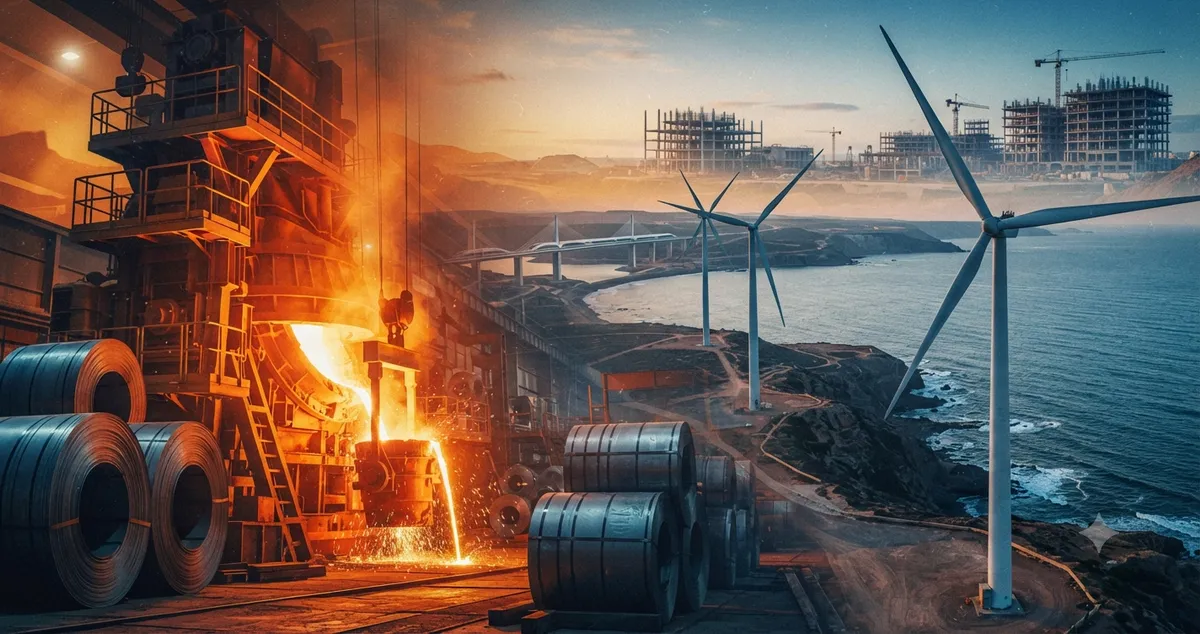
Morocco’s steel industry is distinctly organized, functioning primarily through electric arc furnaces (EAFs) that process scrap metal, as opposed to traditional blast furnaces. However, the existing rolling mill capacity notably outstrips steelmaking capacity, necessitating the import of semi-finished products. The sector is characterized by key players such as Sonasid, which excels in long products with an annual production capacity of 800,000 tonnes of steel and 1.2 million tonnes of rolled products. Another significant contributor is Maghreb Steel, the sole provider of flat-rolled steel in the country, with a similar annual production capacity of 1 million tonnes. Other notable entities include Univers Acier, specializing in rebar, and Riva Industries, the newest entrant to the market. Despite these capacities, investment activity in the sector was relatively subdued during the 2021–2025 period due to various objective factors.
The Moroccan government has played a pivotal role in bolstering the steel industry through a robust support system comprising investment subsidies, tariff protections for local manufacturers, and preferential non-tariff measures. Under the new Investment Charter (Law 03-22), companies, especially in the steel sector, are eligible for direct subsidies of up to 30% of capital expenditures (CAPEX) contingent upon the initiation of investment projects. Additionally, public procurement regulations mandate that at least 30% of contracts be awarded to local suppliers, with an automatic surcharge on imported goods. These measures create a protective environment for the domestic market, effectively limiting foreign competition by delaying the certification of imported steel products.
The market profile indicates that from 2021 to 2025, steel production remained relatively stable, with imports constituting a significant portion of the market. Approximately 45–50% of the total volume of steel consumed in Morocco is imported, primarily in the form of semi-finished products, hot-rolled and cold-rolled coils, alongside specialty rolled products. The primary sources of these imports include Spain, Turkey, the UK, and China. The increased importation in 2022 was largely attributed to rising steel prices, while preparations for the upcoming 2030 FIFA World Cup have further fueled demand forecasts.
Flat steel products, which make up about 30–35% of the total steel consumption, are increasingly in demand due to the automotive industry, the expansion of renewable energy projects, and the construction of steel structures and pipes. Major manufacturers such as Maghreb Steel and SOFAFER cater to this sector, producing a range of pipes and steel products. Furthermore, Morocco's ambitions in wind energy, being the second-largest producer in Africa, necessitate significant volumes of flat-rolled steel for the construction of wind farms.
The automotive industry in Morocco is on a trajectory to rival South Africa as the continent's leader in vehicle production, spurred by government incentives and the establishment of Free Economic Zones. By 2025, the anticipated production capacity of Moroccan car plants is projected to reach 1 million units annually, with a substantial localization rate of 65–69%, leveraging domestic steel production for components. The primary export markets for these vehicles include various EU countries, enhancing the stability of the local automotive sector.
Overall, the demand for long products, constituting 65–70% of total steel consumption, is driven predominantly by the construction industry. The government’s housing program, 'Aide directe au logement' (ADL), initiated in January 2024, aims to stimulate residential construction through direct subsidies, significantly increasing the number of building permits issued. Major infrastructure projects, including the Nador West Med port and various transport initiatives in preparation for the 2030 World Cup, further emphasize the need for steel in Morocco’s burgeoning construction landscape.
In conclusion, while the European economic crisis poses challenges to the automotive sector, the forecast for both flat-rolled and long steel products remains optimistic, underpinned by substantial government support, ongoing infrastructure investments, and a clear demand trajectory leading up to 2027.
As reported by gmk.center.