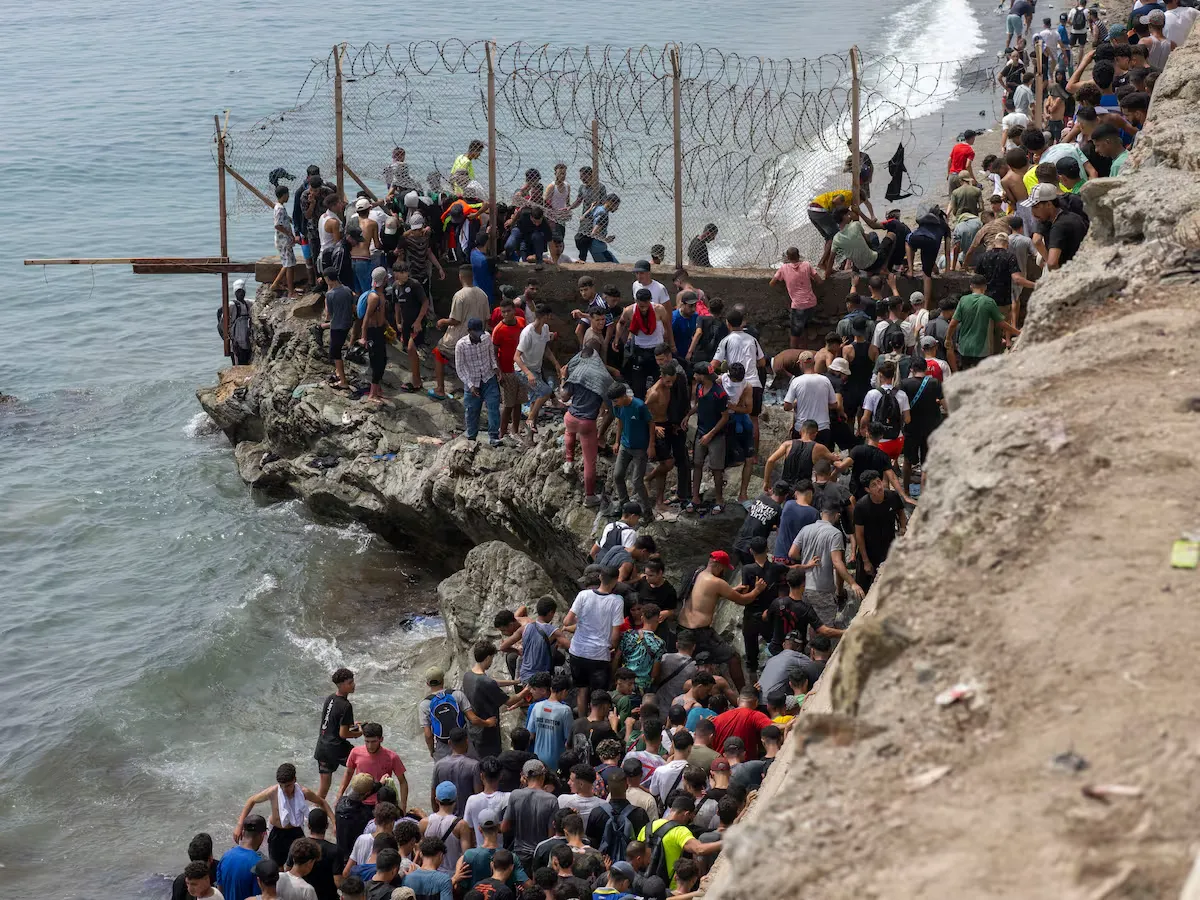

Public Perception of Responsibility in the Ceuta Immigration Crisis
Recent polling conducted by 40dB for SER and El País reveals a significant consensus among Spanish citizens regarding the accountability for the massive influx of migrants in Ceuta on July 30. A staggering 90% of Spaniards attribute the crisis primarily to the Moroccan government, reflecting a deep-seated perception of responsibility towards the neighboring nation. Despite Prime Minister Pedro Sánchez asserting in Congress that there is "no solid evidence" implicating Morocco in the events, the public remains unconvinced, with nearly 75% also holding organized crime networks, social media influence, and the individuals who chose to cross the border accountable. Furthermore, 72% of those surveyed cast blame on the Spanish government itself.
The dissatisfaction with the government's response to the crisis is palpable, as over 60% of respondents believe that Sánchez’s administration has performed poorly in terms of speed, efficacy, and transparency in addressing the situation. A significant portion, around half, also critiques the government’s cohesion during this tumultuous time. Notably, only voters from the PSOE and Podemos rated the government’s transparency and cohesion positively. The survey highlights a concerning trend; when asked which political party is best suited to manage immigration, VOX emerged as the favored choice with 27%, followed by the PSOE at 18.5% and the PP at 14%.
Future Measures and the Role of the EU in Immigration Management
The crisis has prompted a strong call for stricter border controls, with approximately 70% of Spaniards advocating for enhanced monitoring, even at the potential expense of vulnerable migrants. A mere 20% favor prioritizing the reception of individuals in precarious situations, indicating a stark preference for stricter immigration policies across various political affiliations. Additionally, 63% support the repatriation of unaccompanied minors to Morocco, despite legal barriers, while a majority (55%) oppose the idea of accepting these minors in their communities. This sentiment is notably ideological, with left-leaning voters being more supportive of such measures compared to their right-leaning counterparts.
Moreover, over 80% of respondents express the need for increased vigilance at borders and expedited returns of irregular migrants. The consensus extends to calls for the European Union to provide permanent funding and personnel at Spain's southern border, with only 10% believing that the EU has adequately supported Spain during this crisis. The survey also uncovers a general ignorance regarding fundamental immigration laws; many respondents are unaware that individuals who enter irregularly can still apply for asylum. Despite this, a significant majority (70%) would offer assistance to someone who has entered irregularly, although the most common response would be to provide only essential help while notifying authorities.
As reported by cadenaser.com.