
The Transformation of L’Ocean: A Neighborhood in Ruins
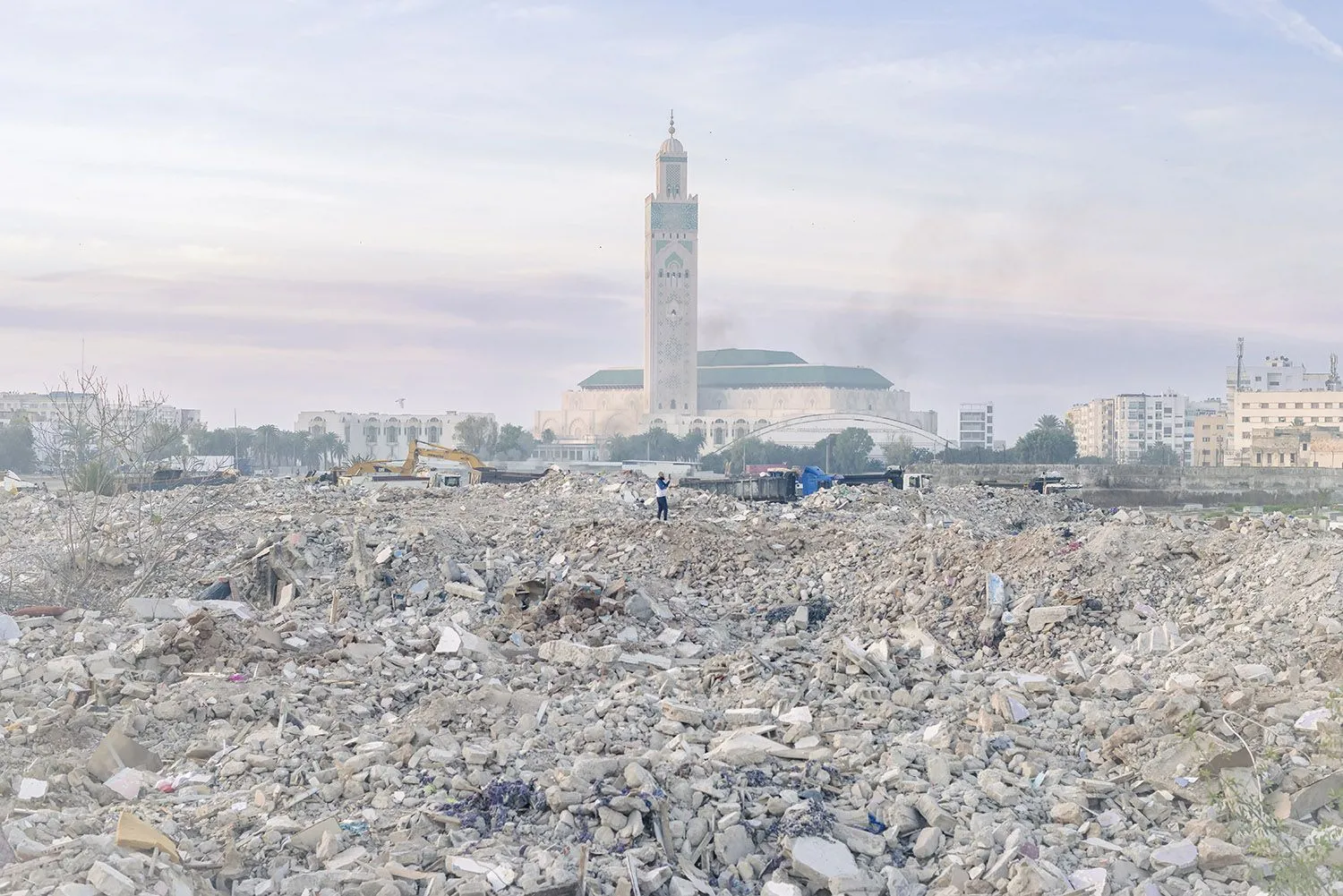
Once a vibrant and bustling area, Zahra’s seaside neighborhood of L’Ocean in Rabat is now a shadow of its former self. Prior to the onset of demolition, this lively district was filled with the sounds of traffic, shoppers, and the laughter of friends meeting for tea at the iconic Cafe Versailles, adorned with artistic murals and decorative moldings. Zahra, a 21-year-old student, fondly recalls lazy afternoons spent on the waterfront rocks, enjoying music, and watching sunsets from her terrace. Yet, as the bulldozers rolled in, Cafe Versailles, along with numerous homes and shops, fell victim to the relentless march of urban redevelopment, leaving behind a landscape of rubble and despair.
“It’s almost as if people are living through a war,” Zahra lamented, expressing the collective grief of her community as they witness the destruction of their homes and memories. In the past year, hundreds of buildings in Rabat have been razed as part of an extensive redevelopment project aimed at revitalizing the city’s coastline. For Zahra, the uncertainty looms large as she anxiously awaits the potential demolition of her own home, shared with her grandmother. Residents often receive mere weeks' notice before their homes are destroyed, leaving little time to find new accommodations, especially for the elderly, disabled, or financially disadvantaged. Many families have had their belongings uprooted, with furniture left behind in the debris.
Government Justifications and Community Displacement
Amid widespread destruction, public transport has stagnated, essential services have been disrupted, and the once-thriving local economy has suffered immensely. Other cities in Morocco, such as Casablanca and Marrakech, have also witnessed similar scenes of devastation, as the government accelerates demolitions in preparation for the 2030 World Cup. Souad Brahma, president of the Moroccan human rights organization AMDH, emphasized the unprecedented scale of the demolitions, which have displaced tens of thousands of families, mainly from vulnerable communities. The government defends these actions by citing public safety concerns, referencing tragic incidents where collapsing structures have led to loss of life. However, critics argue that the rapid pace and extensive reach of these demolitions signal deeper issues that extend beyond mere safety inspections.
While the government pledges to modernize and enhance urban living conditions, the reality for many displaced residents tells a different story. They are being uprooted from their homes and communities, often with inadequate compensation and little regard for the deep connections they have forged within their neighborhoods. Many families find themselves facing eviction notices within days, with offers of compensation that do not reflect the true market value of their properties. Zahra's family, for instance, seeks to contest the government's valuation of their home, which is significantly lower than an independent assessment. As prices soar and the housing market tightens, families are finding it increasingly difficult to secure new homes, forcing them into a precarious situation as they navigate the fallout of government redevelopment initiatives.
As reported by newlinesmag.com.