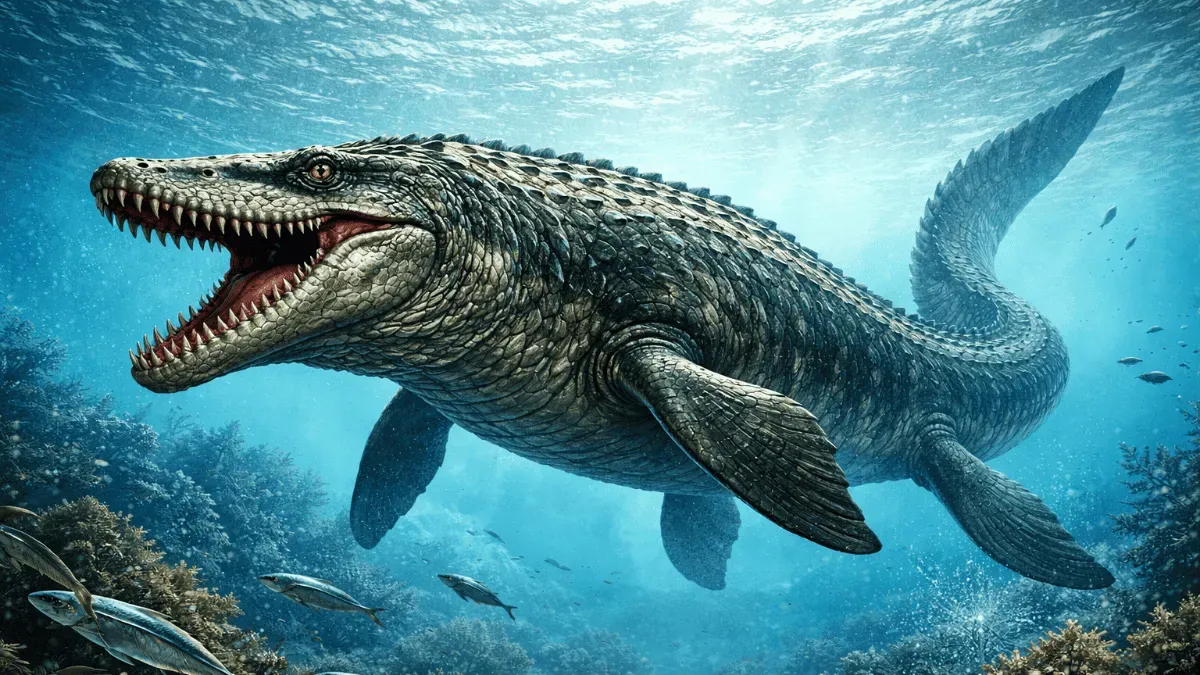

In a remarkable discovery, researchers in Morocco have unearthed a colossal fossil of a mosasaur, a marine reptile that roamed the oceans approximately 66 million years ago. This finding is significant as it may provide new insights into the diversity of marine life just before the extinction of the dinosaurs. The excavation took place at the phosphatic deposits of Sidi Chennane, located in the Khouribga province, which is known for its rich abundance of marine fossils from the Cretaceous period. The fossil has been identified as a new species named Pluridens imelaki, a giant mosasaur that could have reached about 9 meters in length, based on estimates derived from its skull.
According to researchers Nicholas R. Longrich and Nour-Eddine Jalil, this species is considered extremely rare, with only one specimen recovered among the fossils studied in the Sidi Chennane region. The rarity of Pluridens imelaki suggests that it may have been a migratory taxon or simply uncommon within its ecosystem. The discovery indicates that mosasaurs, which were large marine predators, exhibited variations in their anatomical features, including finer jaws and teeth adapted for capturing smaller prey. This adaptation is a crucial finding, highlighting the evolutionary changes in marine fauna leading up to the mass extinction event that wiped out the dinosaurs.
The fossil is currently housed at the Natural History Museum of Marrakech, and researchers are optimistic that ongoing studies will shed light on the evolutionary trajectory of prehistoric marine life. The implications of this discovery extend beyond mere fascination; they present an opportunity to deepen our understanding of the ecological dynamics that existed in ancient marine environments.
As reported by informador.mx.