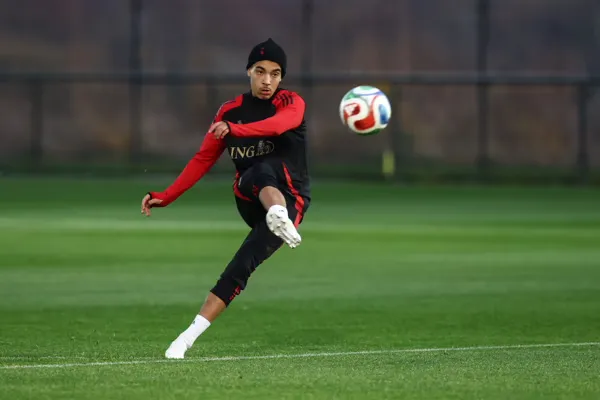
In a significant development within the world of football, Rayane Bounida, the talented winger from AFC Ajax, has officially decided to represent Morocco instead of the Belgian national team. This decision marks him as the latest Belgian-born football prodigy to prioritize the national identity of his parents over the country where he was raised. Bounida’s journey reflects a growing trend among young athletes who navigate their dual heritage and the opportunities available in international football.
Bounida, who was born and raised in Belgium, had previously played for the country's youth teams and even made appearances for the Belgian under-21 side. However, citing his Moroccan roots, he opted to don the colors of Morocco this week. According to FIFA regulations, players are entitled to choose their national team as long as they have not yet represented their country at the senior international level, a rule that gives young talents like Bounida the freedom to make such pivotal decisions.
This is not an isolated incident; several other players with a similar background have also chosen to represent Morocco over Belgium in recent years. Names like Chemsdine Talbi, Ismael Saibari, and Bilal El Khannouss come to mind, each opting for Morocco despite their upbringing in Belgium. Conversely, there have been other talents, such as Noah Sadiki and Mario Stroeykens, who have chosen to represent Congo instead of Belgium. The landscape of national representation is changing, with promising players like Konstantinos Karetsas, who is regarded as one of Europe’s brightest young prospects, also opting for Greece.
The shift in allegiance among these players highlights a concerning trend for the Royal Belgian Football Association (RBFA), which has been criticized for its passive management of youth talents with dual nationalities. In recent years, the organization has not consistently engaged with these players, allowing other national federations to persuade them to represent their countries. This passive approach is now under scrutiny, especially following Belgium's disappointing performance at UEFA Euro 2024, which prompted a reevaluation of their strategy.
Under the leadership of newly appointed technical director Vincent Mannaert, the RBFA is moving towards a more proactive policy. Mannaert has emphasized the need for closer monitoring and structured communication with young players involved in Belgian youth teams. In his own words, "We need to monitor these cases more closely and in a more structured way. Only those who clearly state that they wish to play for Belgium will be selected for the national youth teams. If there is any uncertainty, other players will be given that opportunity." This shift in strategy appears to be yielding initial results, as evidenced by the decisions of Jorthy Mokio and Diego Moreira, both of whom chose Belgium despite having connections to other nations.
As the football landscape continues to evolve, the choices of players like Rayane Bounida illustrate the complexities of national identity in sports, and the RBFA's response will be crucial in shaping the future of Belgian football talent. The changing dynamics of national team representation reflect not only personal choices but also the broader implications for how countries engage with their youth prospects.
As reported by belganewsagency.eu.