
In recent weeks, the United States has intensified its diplomatic communications concerning the contentious issue of Western Sahara, prompting observers in Middle Eastern capitals to scrutinize potential shifts in American policy. While the official stance from Washington continues to uphold Morocco's sovereignty over the territory, senior officials have recently underscored that the long-standing conflict remains unresolved, with no immediate resolution in sight. This situation might appear to signal a retreat by a superpower, but it is, in fact, indicative of a more strategic approach. Rather than abandoning its policy or changing its ultimate objectives, the U.S. is transitioning from a stance of mere recognition to engaging in the complex mechanisms required for a diplomatic resolution.
The Importance of Understanding American Diplomatic Shifts for Israel
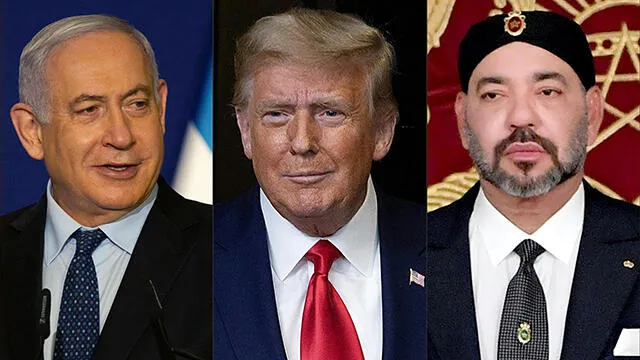
For Israel, grasping this operational transition is critical. The takeaway is clear: while strategic recognition can bolster an ally's position, the long-term stability of regional dynamics hinges on the actions taken following such announcements. Partners must work to translate diplomatic commitments into effective institutions, security collaborations, and political incentives that can sustain peace. The misconception regarding this timeline began when the U.S. placed a renewed emphasis on the conflict's unresolved status in September, although the groundwork for this shift had been laid weeks earlier. On August 1, President Donald Trump communicated directly with King Mohammed VI, reaffirming American recognition of Moroccan sovereignty and labeling Morocco's autonomy proposal as the sole viable foundation for a lasting solution. Importantly, this message also contained a cautionary note: any alternative approach would only serve to prolong the existing impasse.
September did not mark a reversal in American policy but instead elucidated Washington's intended application of its recognition. The focus shifted from whether the U.S. would acknowledge Moroccan sovereignty to exploring how this recognition could be transformed into a political settlement. This strategy gained traction on September 16, when high-level discussions involving Washington, Rabat, and Jerusalem took place, culminating in an agreement to elevate diplomatic missions and appoint ambassadors. This trilateral meeting also reaffirmed the U.S. and Israeli acknowledgment of Moroccan sovereignty over Western Sahara, stressing that any alternatives to autonomy would perpetuate instability. For both Rabat and Jerusalem, this situation provided public affirmation of their strategic alignment, firmly rooted in the framework of the Abraham Accords.
However, in the aftermath of these discussions, senior American officials introduced a notable shift in operational focus. On September 25, Deputy Secretary of State Christopher Landau remarked that while the U.S. supports development initiatives under Moroccan sovereignty, the current status quo cannot be maintained indefinitely. This sentiment was echoed by Massad Boulos, an adviser on Arab affairs, who acknowledged to France 24 that while American recognition remains steadfast, an imminent solution is not on the horizon. He disclosed that negotiations involving Morocco, the Polisario Front, Algeria, and Mauritania have already taken place, with Washington awaiting feedback from the Polisario.
To critics, these sequential statements may appear contradictory. If the United States recognizes Moroccan sovereignty and views autonomy as the only legitimate basis for a resolution, why frame the dispute as an urgent issue necessitating international mediation? The answer lies in a crucial distinction: Washington has delineated two separate concerns—its vision for the final political framework and the current lack of an enforceable agreement among key regional players, which has yet to be achieved.
This distinction underpins the current American diplomatic approach. There is a significant difference between declaring recognition of Morocco's sovereignty and proclaiming the end of the dispute. The former is an established American policy, while the latter has yet to materialize as a political reality. Recognition is a policy stance, but achieving a lasting settlement necessitates effective diplomacy. Washington has not altered its position on Western Sahara; instead, it has redefined the operational question at hand, transitioning from asking whether America will recognize Rabat's claims to exploring whether it can leverage that recognition to construct a stable, negotiated regional order.
To accomplish this, navigating the essential gap between American policy and United Nations doctrine is imperative. While Washington explicitly endorses Morocco's autonomy proposal as the only viable resolution, the UN Security Council operates under a broader diplomatic mandate that seeks a mutually acceptable political solution. UN Security Council Resolution 2797, which extends the UN mission until October 31, 2026, acknowledges Morocco's proposal as a serious basis for discussion but ultimately calls for a resolution that all parties can accept. Bridging the divide between Washington's strong preference for Moroccan sovereignty and the UN's requirement for an agreeable political settlement is where active diplomacy will unfold.
This reality elucidates Washington’s readiness to engage directly with Algiers. In mid-September, Boulos visited Algiers for discussions with President Abdelmadjid Tebboune. Although public statements focused on broader bilateral cooperation, the timing coincided with ongoing negotiations regarding Western Sahara. The U.S. is not shifting toward Algeria's stance or endorsing the Polisario Front's claims; rather, American diplomats recognize that Algeria is a crucial player in the regional equation, and neglecting Algiers will not resolve the conflict. Instead of relying solely on coercive measures, Washington must create compelling incentives for Algeria to engage constructively in a negotiated political framework. Concurrently, American negotiators must establish circumstances whereby the Polisario Front views autonomy under Moroccan sovereignty as a preferable alternative to prolonged isolation. Furthermore, Morocco must demonstrate to the international community that its proposed autonomy is substantive, enduring, and politically significant, rather than merely symbolic.
For Israeli foreign policy, the dynamics in North Africa present critical lessons that extend beyond the relationship with Rabat. Morocco has transitioned from a distant player to a strategic partner, placing Israel in an unusual strategic triangle where both Jerusalem and Washington recognize Moroccan sovereignty, while the U.S. simultaneously communicates that formal recognition is not the conclusion of the diplomatic process. Israel should be cautious about interpreting American nuances as a withdrawal. In the realm of Middle Eastern diplomacy, there is often a tendency to view every official statement as a scorecard, wherein phrases signify victory or concession. However, Washington’s approach is nuanced and sophisticated. Core American recognition remains intact, but the administration is increasingly determined to achieve a tangible political outcome before stagnant regional tensions escalate into conflict.
Israel’s historical experiences underscore the profound difference between international recognition and genuine security. While formal declarations and robust foreign support are invaluable assets, they do not inherently eliminate underlying threats or resolve regional rivalries. A stable strategic architecture can only be achieved when key actors perceive clear incentives to maintain it. Declarations can alter environments, but they cannot fabricate political consent on the ground.
Recent reports from the UN suggest that this shift in focus is no longer purely rhetorical. A report submitted by Secretary-General António Guterres on October 1 outlines negotiations that are beginning to explore the practical framework of a potential settlement, including Morocco's expanded autonomy proposal and transitional arrangements. Although no agreements have been reached, the diplomatic discourse is increasingly evolving from theoretical principles to practical implementation.
As the October 31 deadline for the UN Security Council mandate approaches, Washington faces a critical test of its diplomatic capabilities. The Trump administration must assess how much diplomatic capital it is willing to expend, how far it can push regional players without jeopardizing its interests in North Africa, and what level of flexibility it expects from Rabat. If Washington can successfully merge recognition with sustained diplomatic efforts to transition a frozen dispute into a binding political agreement, it will establish a new model for conflict resolution. Conversely, if these efforts stall, the limitations of recognition will become all too apparent.
The ultimate measure of effective diplomacy lies not in the boldness of presidential proclamations but in their capacity to endure through compromise. Washington stands firmly behind Rabat, yet by acknowledging that recognition alone has not resolved the issue, American policy has entered a demanding phase. President Trump has already addressed the question of sovereignty. The more challenging inquiry remains whether Washington can translate that recognition into a settlement that is acceptable to Morocco, tolerable for Algeria, agreeable for the Polisario, and endorseable by the United Nations. This is where the domain of presidential recognition concludes, and the realm of diplomacy begins.
As reported by ynetnews.com.