
Legacy of a Visionary Journalist
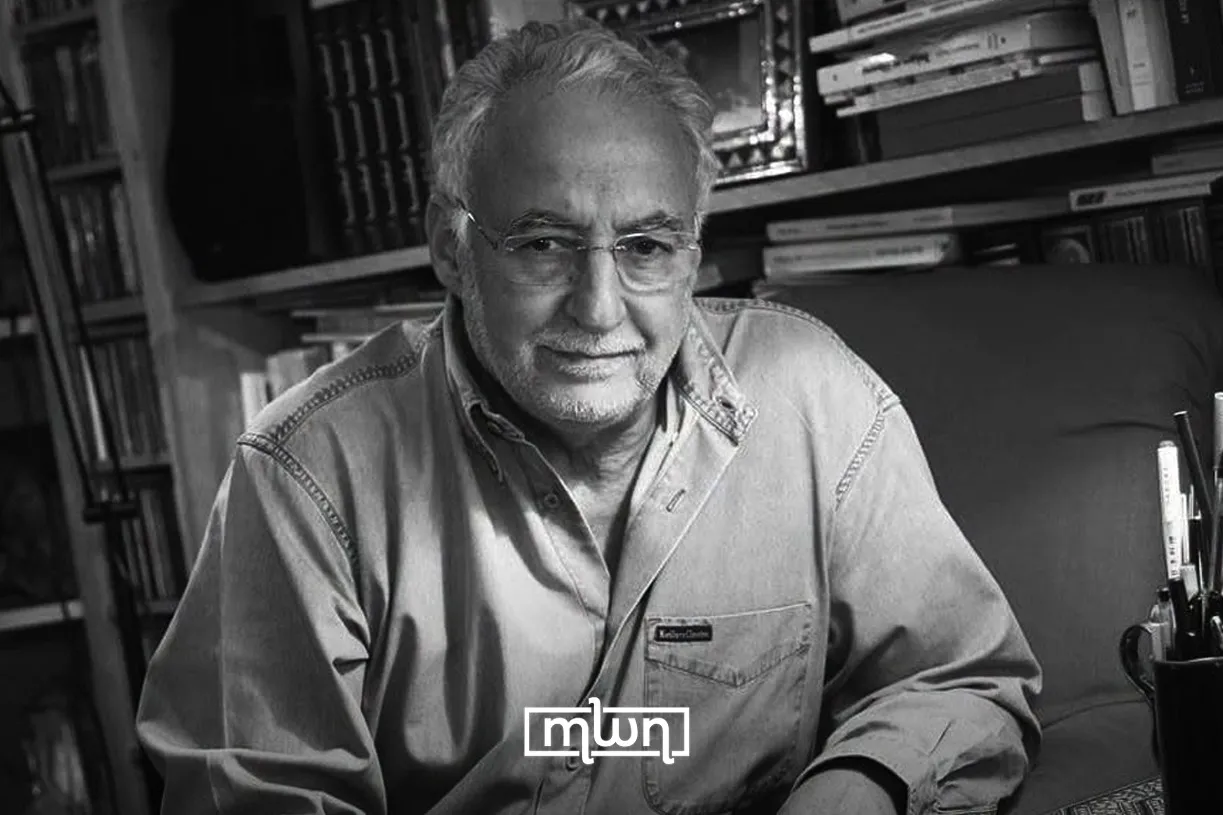
Marrakech – Hamid Barrada, a distinguished Moroccan journalist whose contributions to the media landscape spanned over fifty years, passed away peacefully in the early hours from Friday to Saturday at the age of 87. His burial is set to take place following the Al Asr prayer at the Arrahma cemetery, marking the end of a remarkable life dedicated to journalism and political discourse in Morocco.
Born in 1939 in Tangier to a family with roots in Fez, Barrada’s foray into political activism began at a young age. He became the president of the Union nationale des étudiants du Maroc (UNEM) in 1962 and later engaged with the Union nationale des forces populaires (UNFP), aligning himself with prominent figures of the Moroccan left. However, his commitment to political activism came at a steep price; in 1963, amid escalating political strife, Barrada was sentenced to death in absentia, forcing him into a life of secrecy and subsequent exile in Algeria and France until his return to Morocco in 1978.
A Career Defined by Impact
With a strong academic background in philosophy, law, and political sociology, Barrada transitioned into journalism, where he made his mark as a grand reporter for the Paris-based weekly Jeune Afrique. He later ascended to the role of editor-in-chief from 1974 to 1985, continuing his contributions as a regular columnist. His influence also extended to television, where he directed the Maghreb and Middle East desk at the francophone channel TV5, and became a familiar face on Moroccan television through the long-form interview program “Mais Encore?” on 2M, which aired from 2007 to 2018. This program became a platform for engaging discussions with prominent political, economic, and cultural figures, leaving a lasting impression on Moroccan audiences.
Barrada holds a unique place in the annals of Moroccan journalism as the only journalist to have interviewed the late King Hassan II in 1985. This significant encounter, which addressed pivotal issues including Morocco’s Western Sahara, was later featured in Jeune Afrique, showcasing Barrada's ability to engage with complex political narratives. Throughout his illustrious career, he interviewed a plethora of influential figures, such as Abderrahmane Youssoufi, Abdallah Laroui, and Léopold Sédar Senghor, establishing himself as a key figure in Moroccan journalism.
His commitment to social justice extended beyond journalism; in 2004, Barrada provided testimony to the Equity and Reconciliation Commission regarding his father's fate as a victim of abduction and forced disappearance. His dedication to academia was evident as he taught at various universities until his retirement, shaping future generations of journalists and thinkers.
In 2025, Barrada published the first volume of his “Anthologie des entretiens,” a comprehensive collection of interviews conducted between 1977 and 2012, which serves as both a historical document of Morocco's post-independence political landscape and an archive of intellectual evolution across the region. His contributions to journalism are not just limited to reporting; they encompass a broader narrative of political and cultural change across Morocco, the Maghreb, and Africa.
Barrada was also a proud father to Yto Barrada, who founded the Cinémathèque de Tanger. In tributes from fellow journalists, he has been referred to as “the dean of Moroccan journalists,” a testament to his pioneering spirit and the respect he garnered throughout his career. Journalist Taoufik Bouachrine and others acknowledged his unwavering dedication to journalism, emphasizing his integrity and the poignant stories he shared about Morocco's journey since independence.
Despite the accolades and the potential for wealth that could have accompanied his close relationships with influential officials, Barrada remained grounded, living modestly in a small apartment in Casablanca, surrounded by books, cherished memories, and the love of those who knew him. His life story is not just one of a journalist but a testament to the power of integrity, dedication, and the relentless pursuit of truth in the face of adversity.
As reported by moroccoworldnews.com.