In an era where leading traditional automotive groups teeter on the brink of crisis, as exemplified by Volkswagen's recent restructuring—resulting in the closure of several plants and the loss of nearly 100,000 jobs—the Renault Group stands firm in its commitment to the future. This commitment is driven by common sense, quality, and rational decision-making. Amidst an increasingly competitive landscape, particularly with the influx of Chinese manufacturers armed with advanced technologies into the European market, Renault's strategy is to maintain robust industrial operations on an international scale. Within Europe, Spain serves as the central hub for hybrid development, while France focuses on electric vehicles, with Morocco emerging as a pivotal player in sustainable combustion.
The automotive market is undergoing a significant transformation, presenting diverse energy needs and technological advancements. Renault’s strategy emphasizes the establishment of industrial complexes that create a comprehensive value chain, effectively dubbed 'from the mine to the battery.' The synergy between various production centers is crucial, as components are manufactured in Spain (such as engines and transmissions) and Morocco (like stamping), with all facilities serving as catalysts for excellence in the group’s industrial landscape.
Nine Centers of Excellence
Recognizing the urgent need to refine its future strategy while ensuring short to medium-term stability, Renault identifies Morocco as a site for ongoing industrial development. Dacia's CEO, Katrin Adt, recently highlighted the advantages of doing business in Morocco, noting, "We have the suppliers, we have the workforce, and we enjoy an excellent relationship with the government." This conducive business environment is part of a broader global strategy that has seen Renault establish a network of development, research, logistics, production, and technology centers spanning Paris (Technocentre), Palencia (Spain), Hangzhou (China), Busan (South Korea), Tangier (Morocco), Turkey, Romania, São Paulo (Brazil), and Chennai (India). These nine strategic locations are meticulously designed to address customer needs from a global perspective while preserving local reliability and essence.
After exploring facilities in France, Spain, China, and South Korea, we venture into Morocco, situated just 14 kilometers from Europe. Here, we gain insights into the industrial capabilities that empower Renault to enhance its strategy and maintain a well-ordered, diverse, and multi-technological product offering. Although the future may be touted as electric, we must acknowledge that substantial solutions are still needed on the journey toward this ideal model.
Tangier serves as the cornerstone of Renault Group's operations in Morocco, complemented by its facilities in Casablanca. The French automotive consortium operates 25 factories across 11 countries, all adhering to principles of excellence, efficiency, and sustainability. However, Renault's plans extend beyond mere production; the group also enjoys significant logistical advantages, including 25 logistics platforms and a fleet of 1,200 trucks that transport over 10,000 vehicles daily to 22,000 destinations in 130 countries. Whether by land or sea, Renault’s products are shipped via 1,000 vessels annually, further solidifying their global reach.
Maritime Logistics and Economic Impact
In Morocco, Renault produces models for both Dacia and Renault, with the best-selling Spanish model, the Sandero, manufactured in Tangier along with the Jogger and Renault Express. Casablanca also contributes to the production of the Sandero, Logan, and Renault Kardian. Collectively, these plants yield approximately 395,000 vehicles annually, making Morocco the second-largest production hub for the group after France, which boasts nine production centers. The maximum output capacity of both facilities reaches 500,000 vehicles per year (380,000 in Tangier and 120,000 in Casablanca), with a staggering 82% of the production destined for export. Notably, one in every six Renault models is produced in Morocco, accounting for 17% of the total output.
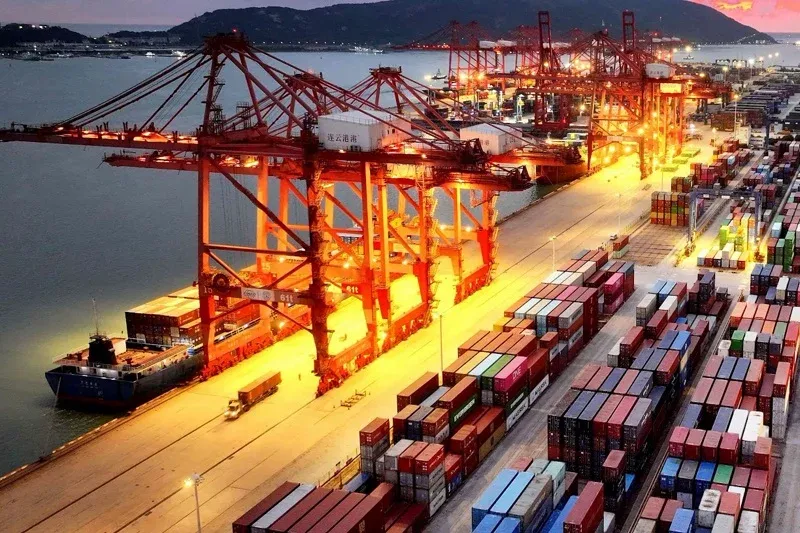
The significance of Morocco’s Mediterranean industrial hub cannot be overstated, particularly in light of Renault Group's strategy. This integrated industrial ecosystem capitalizes on the Tangier Med port as a vital logistical platform. This extensive complex boasts modern facilities and a premier maritime traffic operation, handling 290 million tons of cargo annually, including 12.21 million containers processed through its 35 loading terminals. One of these terminals is dedicated specifically to automotive logistics, receiving vehicles via two railway lines connecting Renault Group with Tangier Med, as well as cars from Stellantis, which also operates a plant in Morocco. Vehicles manufactured in Casablanca are transported to the Tangier facility by truck for further processing. Each day, five trains depart from Tangier’s plant to the port, showcasing an efficient transport network.
The terminal is equipped to process nearly one million vehicles annually, enabling the export of over 8,000 units weekly. The operation encompasses about 26,400 trucks, 290 ships, and 1,440 trains each year, along with direct connections to 24 countries. Renault employs artificial intelligence and three interconnected control towers to monitor real-time parts supply, operational continuity, and vehicle delivery. Consequently, this facility has emerged as the top Mediterranean port in terms of automotive business volume, generating an impressive €10.95 billion annually. From Tangier, Renault Group models set sail for 180 ports worldwide, reaching Rotterdam (Netherlands) in just three days, the United States and South America in ten days, and China in twenty days.
The Tangier factory exemplifies a sustainable model and serves as a prime illustration of Renault Group's FutureReady strategy. The group's operations in Morocco represent a business activity valued at €788 million and contribute 3% to the country's GDP. The company supplies vehicles to 63 countries and captures 38% of the local market. Presently, Renault employs approximately 10,000 individuals at its local plants. The partnership with Morocco began in 2012 with the inauguration of the Tangier plant and the signing of an agreement that aimed for 65% local integration, with a national supply target of €1.5 billion by 2023. The plant has since flourished, and the subsequent agreement set a 75% local integration goal by 2030, aiming for €3 billion in local supply.
The role of the supplier network is crucial, generating a business volume of €2.39 billion through partnerships with 87 Moroccan suppliers. Overall, Renault Group's operations in Morocco account for 50,000 direct and indirect jobs, supported by an investment of €936 million. Besides its industrial strategy, Renault's presence in Morocco also enhances its commercial standing, as four models rank among the top in the local market (the Dacia Logan, Dacia Sandero, Renault Clio, and Renault Express), three of which are produced domestically.
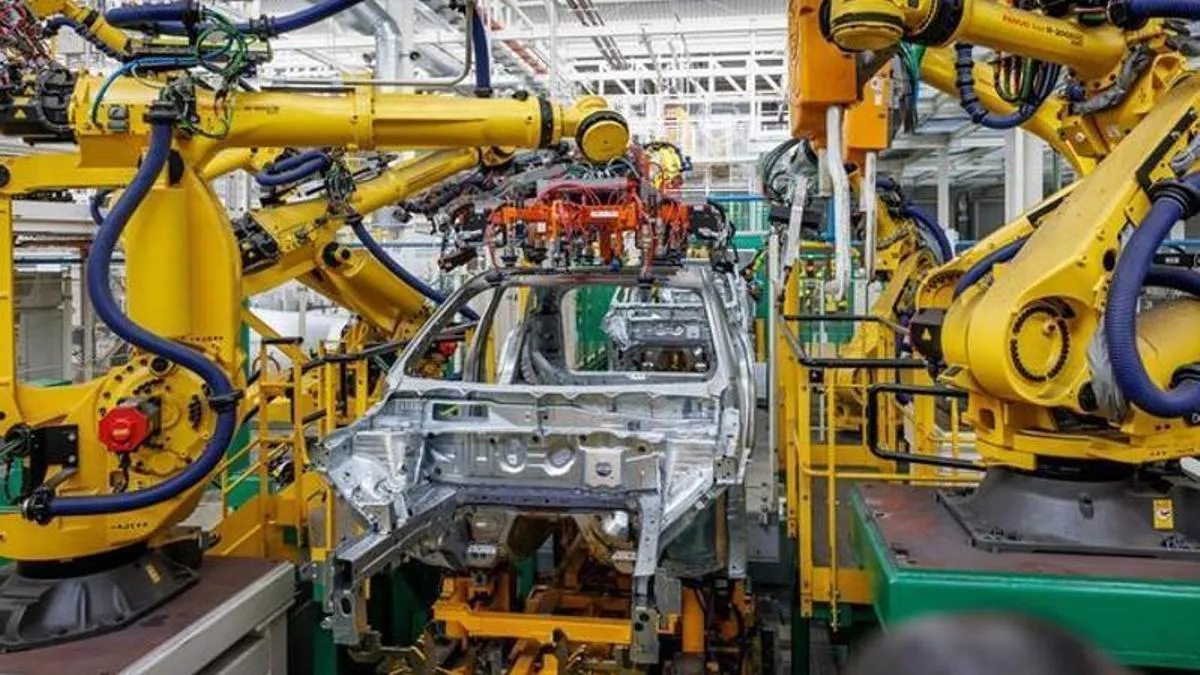
The leadership of these production centers in Southern Europe and Morocco rests with José Martín Vega, who guided 'actives' during their visit to the Tangier facility. Accompanying him was the Moroccan plant director, Charles-Edouard Thiout, who confirmed that the facility spans 300 hectares and employs roughly 6,000 staff. All production processes are digitally monitored, and artificial intelligence is leveraged to enhance operational efficiency. Continuous development of Plant Connect aims to improve quality, volume, preventive maintenance, and other industrial capabilities.
The plant features two body shop lines for creating various metal parts, two assembly and welding lines, a paint line operating 24/7, and two finishing and quality control lines, achieving a production rate of 30 vehicles per hour on each of its two lines. Engines and transmissions are sourced from Spain, ensuring a seamless production process.
As reported by elperiodico.com.