Addressing Misconceptions About Snakes
As summer approaches, there has been a noticeable increase in snake sightings in both urban and rural areas of Morocco, raising concerns among citizens regarding the potential dangers these reptiles pose. Observers attribute this surge to several factors, including the mating season of these creatures and the flourishing vegetation resulting from recent rainfall, which has significantly increased their activity.
In response to the persistent targeting of non-venomous or less venomous snake species, Moroccan researchers have initiated a communication campaign aimed at raising awareness of the ecological importance of these reptiles. This initiative seeks to explain their role in controlling populations of rodents and harmful insects while also correcting prevalent misconceptions associated with them.
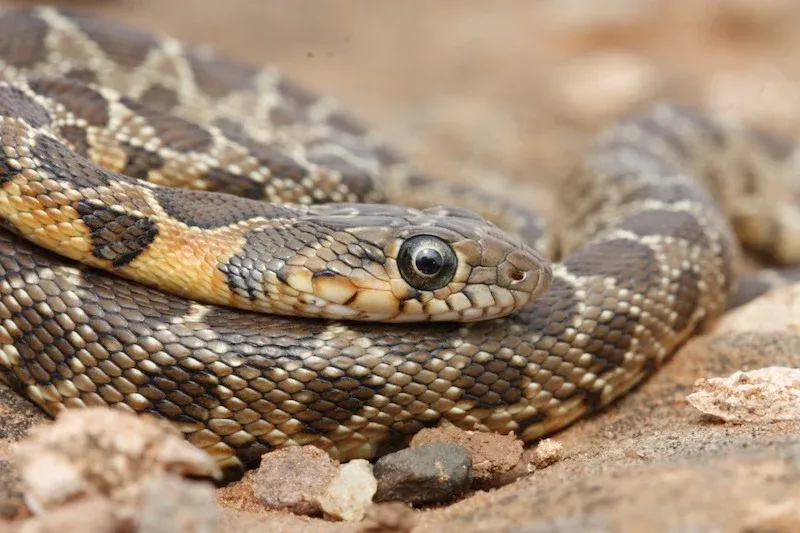
Abdallah Bouazza, a researcher from Ibn Zohr University and founding president of the Moroccan Association for the Conservation of Reptiles and Amphibians, emphasized that the campaign's objective is to rectify misunderstandings regarding snakes in Morocco and to provide simplified scientific information about the most commonly encountered species. He noted that the campaign specifically addresses certain species, such as the Montpellier snake (Malpolon monspessulanus) and the horse-hair snake (Hemorrhois hippocrepis), which are not considered dangerous to humans compared to more venomous snakes like the Mauritanian viper (Daboia mauritanica).
Importance of Education and Awareness
Bouazza explained that this period naturally sees an increase in snake activity coinciding with their breeding season, where they actively search for partners. Observations of behaviors such as mating and male competition are common during this time. Furthermore, he highlighted that the significant rainfall Morocco has experienced this year has contributed to the growth of vegetation, providing hiding places and prey for these slithering creatures, thus increasing their visibility, particularly in agricultural areas during harvest time.
Regarding public awareness, Bouazza asserted that the solution lies in disseminating scientific knowledge and distinguishing between various snake species rather than considering all snakes to be dangerous. Most species play essential ecological roles in controlling rodent populations and agricultural pests, and all reptiles in Morocco are legally protected under the law concerning the protection of wild plant and animal species and the regulation of their trade.
It is unfortunate that some content circulating on social media often amplifies the fear surrounding these creatures by sensationalizing their presence for views, rather than providing accurate scientific information about them.
The campaign involves the participation of researchers, specialists, students, and volunteers interested in biodiversity conservation, relying on field data and documented images to support its efforts. Mohamed Moussaid, a research student at the Multidisciplinary Faculty in Taroudant, reiterated the importance of preserving the biodiversity of these reptiles in the kingdom due to their vital ecological role as predators of other animals, including rodents, birds, and even other reptiles.
Moussaid pointed out that among the common snakes in Morocco, the horse-hair snake (Hemorrhois hippocrepis), which is completely non-venomous, and the Montpellier snake (Malpolon monspessulanus), which is classified as mildly venomous, are frequently encountered by farmers in their fields. Unfortunately, these snakes are often killed in large numbers, despite their presence being linked to their search for rodents. He warned that the excessive killing of these species could lead to a decrease in their populations and an increase in rodent numbers.
In contrast, it is important to note that the Mauritanian viper (Daboia mauritanica) is responsible for the majority of snakebite incidents in Morocco. Bouazza stressed the necessity of coordinating educational and awareness campaigns to highlight the critical roles these reptiles play and the precautions that should be taken when dealing with non-venomous or mildly venomous snakes to avoid any serious incidents.
As reported by hespress.com.