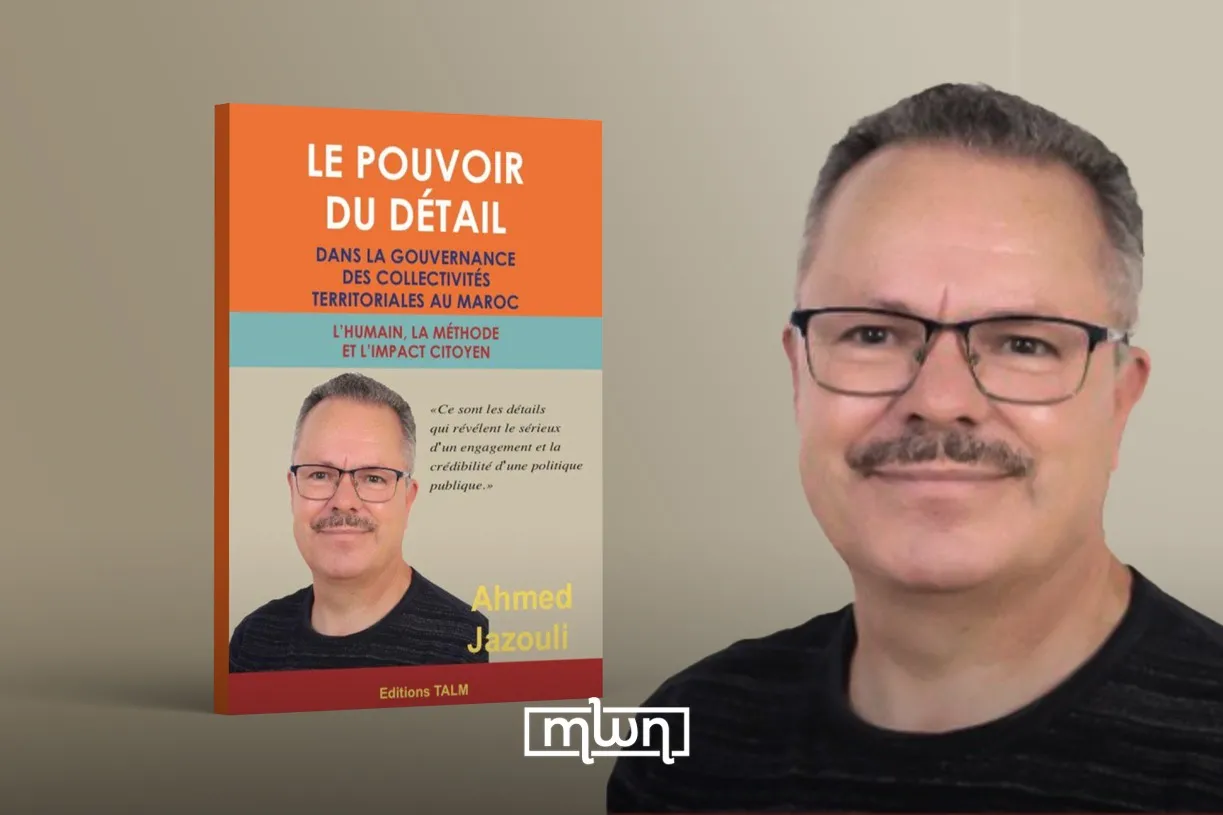

Transforming Governance through Detail
In a noteworthy addition to the discourse on governance, Ahmed Jazouli's recently published book, 'The Power of Detail in the Governance of Moroccan Local Authorities,' serves as a comprehensive examination of the intricate challenges facing Morocco's public institutions. As Morocco experiences significant economic growth, particularly in its renewable energy sector, the disparity between governmental promises and the actual experiences of citizens remains glaring. Jazouli, a seasoned expert in governance and democracy, dives into this crucial gap, aiming to provide insights and methodologies that can bridge it effectively. His 296-page volume is not just an academic treatise but also a practical guide, crafted to resonate with policymakers, practitioners, and scholars alike.
The timing of Jazouli's work coincides with a critical juncture for Morocco, as recent reports from the Court of Accounts highlight a concerning trend: numerous agreements signed between the King and various entities remain largely unfulfilled. With only 41% of signed conventions completed and a mere 9% of promised funding actually allocated, it is evident that the issue lies not in the planning phase, but in execution. Jazouli's examination reveals a systemic failure in turning ambitious plans into tangible outcomes, emphasizing that the details of governance are paramount and should not be treated as secondary considerations.
The OPPOSER Method: A New Approach to Governance
One of the standout contributions of Jazouli's book is the introduction of the OPPOSER method—an innovative framework designed to enhance the effectiveness of public policy design. This method comprises several key components: Objectives, Person, Plan, Openness, Monitoring and Evaluation, and Reports. By focusing on well-defined, realistic objectives that are grounded in available resources, Jazouli asserts that public policies can be transformed from mere slogans into actionable compasses guiding local governance. The emphasis on the human factor—ensuring that the right individuals are placed in appropriate roles—underscores the critical nature of human resources in realizing governance objectives. Furthermore, Jazouli advocates for the professional development of local officials, emphasizing the need for training and a commitment to excellence, which is often lacking in the current political landscape.
Jazouli's insights extend beyond procedural improvements; they delve into the sociocultural dimensions of governance. He introduces the idea of a 'territorial social contract,' which posits that effective governance emerges from collaboration among local governments, civil society, and citizens. This co-construction model fosters legitimacy and accountability, as citizens who are involved in shaping policies are more likely to support and monitor them. This concept aligns with the findings of Morocco's own governance evaluations, which call for closer collaboration between various stakeholders to achieve meaningful results.
In a world increasingly focused on results, Jazouli's recommendations for monitoring and evaluation stand out. He argues that performance reports should serve as vital management tools, accessible not just to officials but also to the public, fostering transparency and civic engagement. By empowering citizens to track progress and hold their representatives accountable, Jazouli envisions a more participatory governance landscape that actively involves the populace in the democratic process.
Ultimately, 'The Power of Detail' is not merely another call for governance reform; it is a detailed roadmap for achieving genuine transformation in Morocco's public policy landscape. Jazouli advocates for procedural changes that could significantly enhance governance quality, such as scheduling regional elections in advance of current mandates to allow new officials to prepare effectively. By formalizing the consultation process with regional councils during national budget preparations, Jazouli aims to ensure that local voices are heard in critical fiscal decisions, bridging the gap between national priorities and local realities.
As Morocco stands at the threshold of significant developmental milestones, including preparations for the 2030 World Cup and ongoing regional reforms, the insights and methodologies offered by Jazouli are not only timely but essential. The pressing need to reconcile ambition with actionable governance strategies underscores the importance of detail in realizing Morocco's aspirations for a more effective and democratic public administration. Jazouli reminds us that attention to detail is not an obstacle to vision; rather, it is the indispensable vehicle that can drive progress forward.
As reported by moroccoworldnews.com.