
The Dynamics of Lateral Thinking in Crisis Analysis
Lateral thinking, often referred to as "thinking outside the box," compels individuals to challenge underlying assumptions when addressing any given situation. The more entrenched these assumptions are, the more innovative this analytical approach becomes, ultimately enhancing the overall understanding of a phenomenon. Traditionally, this style of thought is less prevalent in political discourse; however, it finds significant application in the realm of business creativity, where it often heralds genuine innovation in the value of products or services. For instance, prior to the establishment of Cirque du Soleil, few envisioned that a circus could cater to adults, eliminate traditional multi-ring formats, or tell a cohesive story. Similarly, the introduction of the Smart car redefined urban mobility by demonstrating that a vehicle the size of a motorcycle could seamlessly fit into congested city environments. Likewise, the Nintendo Wii showcased that a gaming console could thrive without relying on high-end graphics or expensive licenses, focusing instead on player interactivity. These value propositions, termed "blue oceans" by scholars Chan Kim and Renée Mauborgne, emerged by breaking the conventional trade-off between value and cost, successfully generating greater value at lower costs.
Understanding the Humanitarian Crisis at the Morocco-Ceuta Border
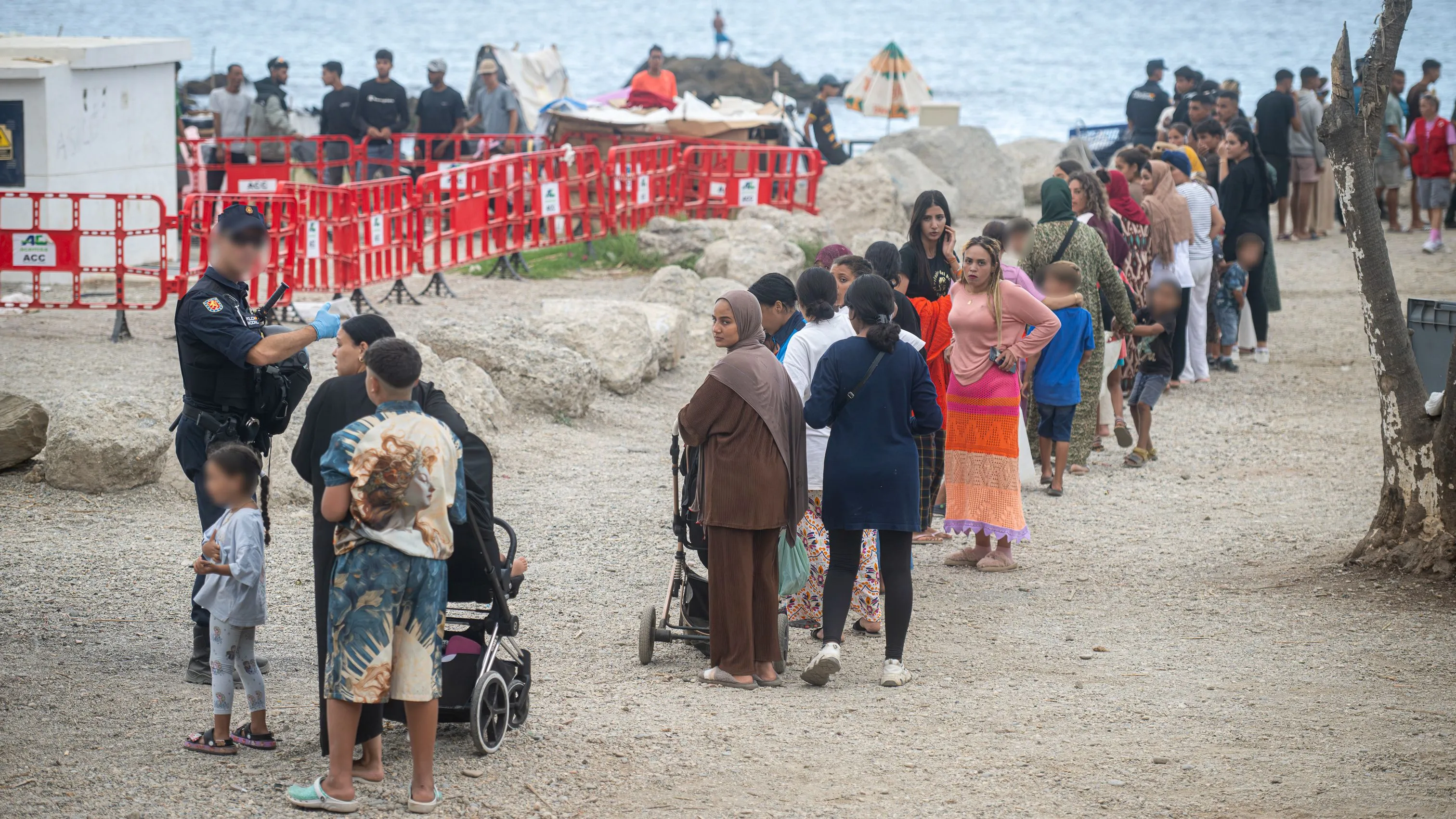
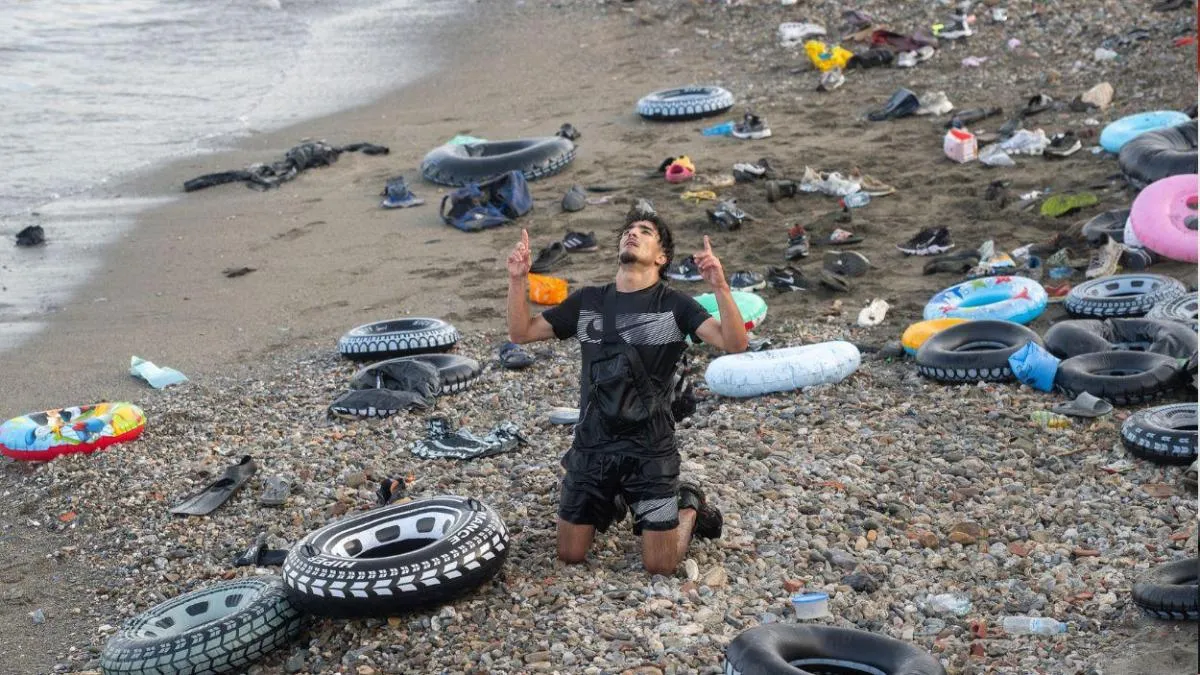
In light of the ongoing humanitarian crisis at the border between Morocco and Ceuta, which has tragically resulted in over 140 fatalities, the prevailing narrative suggests that Morocco has played a more or less voluntary role in the events. Some analysts assert that Morocco intentionally allowed its citizens to cross the border, suggesting that they could have intervened. Others go further, positing that Morocco orchestrated this so-called "invasion" for ulterior territorial motives. These premises, common across various analyses, lead to conjectures regarding the underlying causes and the appropriate responses from the Spanish government. Political parties such as Podemos, Sumar, and Vox have even speculated about withdrawing from the 2030 World Cup, which Spain is set to co-host with Portugal and Morocco, or expelling Moroccans from the organizing committee.
The motivations behind this crisis range from the historical claims of the Alawite monarchy over the autonomous cities of Ceuta and Melilla—an argument made by those who interpret the situation as an "invasion"—to a symbolic retaliation against the recent strategic gas agreement between Sánchez and Algeria, Morocco's historical adversary. Additionally, some conspiracy theories suggest involvement from Morocco's powerful allies, the United States and Israel, aimed at destabilizing Spain.
However, these conjectures, which uniformly assume Morocco's active participation in the crisis, fail to convincingly explain why Morocco offered to repatriate all migrants who entered Ceuta. Remarkably, Morocco successfully managed the return of 70,000 out of the 73,000 migrants who crossed the border. Furthermore, Morocco quickly reinforced its borders in Melilla to prevent a recurrence and is actively working to locate the families of minors still in Spain. If Morocco had indeed played a role in instigating this "invasion," one would struggle to comprehend the extraordinary cooperation it extended to the Spanish government in managing the aftermath, which has been described as remarkably efficient and rapid by EU Home Affairs Ministers, the European Commissioner for Home Affairs, and even The New York Times. Within just 24 to 48 hours, 70,000 migrants were orderly returned without further casualties, and the remaining challenges, particularly concerning unaccompanied minors and humanitarian aid, continue to be addressed towards normalization.
By adopting a lateral perspective, it becomes more plausible that the Moroccan border guards acted similarly to their Spanish counterparts in response to an unexpected influx of up to 200 individuals per minute over several hours: allowing them to pass while tending to the injured. The alternative—resisting the influx with violence—would hardly be a stance supported by even the most extreme right-wing factions and would likely have resulted in a catastrophic loss of life.
Supporting this thesis, which challenges the premise of Morocco as a catalyst (active or passive) in the crisis, are several factors: Morocco's immediate and subsequent collaboration with Spain, its willingness to accept and organize the entry of non-nationals, the current positive momentum in Spain-Morocco relations, and the potential damage to Morocco's image amidst the tourist season, particularly during a period marked by sportswashing as the nation prepares to host the Africa Cup, the World Club Cup in 2029, and the World Cup in 2030 alongside Spain. Additionally, it is worth noting that, regardless of opinions about the Moroccan regime, it is a tragedy for any nation to bury over 140 of its citizens, especially in a crisis where no one emerges victorious.
Conversely, the argument favoring the previously established premises of Moroccan collaboration hinges solely on one point: the failure to foresee. How could they not have anticipated the surge of 73,000 individuals? Did they not observe suspicious movements towards the border? This aspect raises questions not only regarding their intelligence services and law enforcement but also about our own. However, it is reasonable to suggest that both Moroccan and Spanish authorities may have detected unusual activity at the border, as indeed they had noted an uptick since the 15th and alerted Spain accordingly, yet perhaps not the level of intensity that ultimately occurred. The "pull effect" activated through messaging groups and social media could have been triggered by a Supreme Court ruling from July 9, which prohibits the immediate repatriation of migrants crossing non-physical borders (i.e., those who swim across). Media coverage in Spain detailing potential consequences of this ruling for migration in Ceuta might have spurred civilian organization for mass crossings.
It seems plausible that Moroccan security forces were more concentrated in Rabat, engrossed in celebrations for the anniversary of King Mohamed VI's enthronement, while migrants coordinated their crossing via networks to exploit this opportunity. This pattern would also clarify the immediate collaboration with Spain, the fortification of borders, and the subsequent proactive stance of both governments, highlighting their strong bilateral relationship. In any case, this conjecture serves as an alternative explanation to those assuming active Moroccan collaboration in the crisis. The surprising aspect is that this perspective has not been previously considered, yet it effectively dismantles the trade-off between value and cost, presenting the most advantageous explanation for the present and future of relations with our neighbors.
As reported by elplural.com.