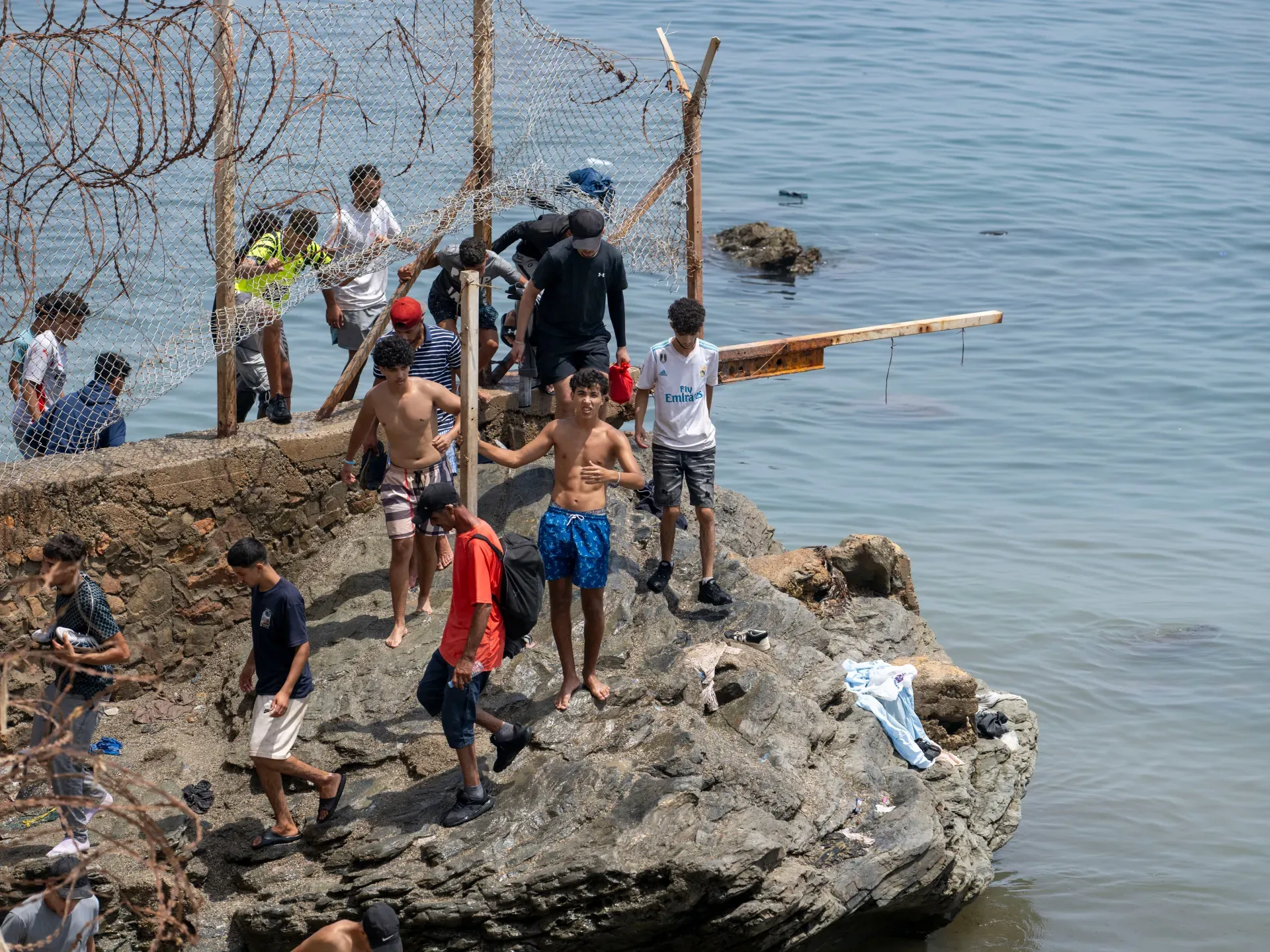

Recent revelations from declassified documents indicate that Spain's intelligence services had foreseen a potential influx of migrants and asylum seekers into Ceuta just prior to a significant surge in late July. The release of these documents, which comprises a collection of 40 files, coincided with ongoing protests in Ceuta regarding the government's management of the crisis, and has spurred inquiries into the role of neighboring Morocco in these events.
Specifically, on July 29, the day before over 72,000 individuals began to cross from Morocco into Ceuta, Spain's National Intelligence Center (CNI) issued an alert via WhatsApp to the government representative in Ceuta. The alert highlighted social media calls advocating for a mass breach of the border fence and maritime crossings, scheduled for 8 PM the following day. In this message, the CNI noted that there were two separate groups comprising a total of 180,000 followers on social media, underscoring the scale of the planned crossings.
In addition to informing the Spanish authorities, the CNI also alerted Moroccan intelligence agencies about the potential for migrants to either scale the border fence or swim around it, particularly referencing the timing coinciding with Morocco's national Throne Day celebration on July 30. The intelligence report indicated that while Moroccan authorities were not necessarily encouraging this mass migration, their response had been negligent, lacking proactive measures to control the situation.
Following the declassification of these documents, Spanish Prime Minister Pedro Sanchez dismissed claims that they demonstrated prior awareness of a crisis of such magnitude. He emphasized that while the campaign was being monitored by various institutions, it did not constitute a reliable indicator of the eventual scale of the border breach that occurred between July 30 and 31. Despite a leaked police report suggesting lax enforcement by Moroccan authorities during the border rush, Sanchez maintained that there was no conclusive evidence implicating Morocco in orchestrating the crisis.
In the immediate aftermath, it was reported that approximately 5,000 migrants and asylum seekers remained in Ceuta, a city with a population of about 84,000, with local officials estimating the number could be as high as 10,000. In response to the ongoing situation, Madrid has allocated $357 million in aid to assist those still without shelter. Meanwhile, opposition parties have criticized the government's handling of the situation, alleging that the administration had ample information prior to the crisis but failed to act effectively, thus deeming them responsible for what they term an 'invasion' of Ceuta.
As reported by aljazeera.com.