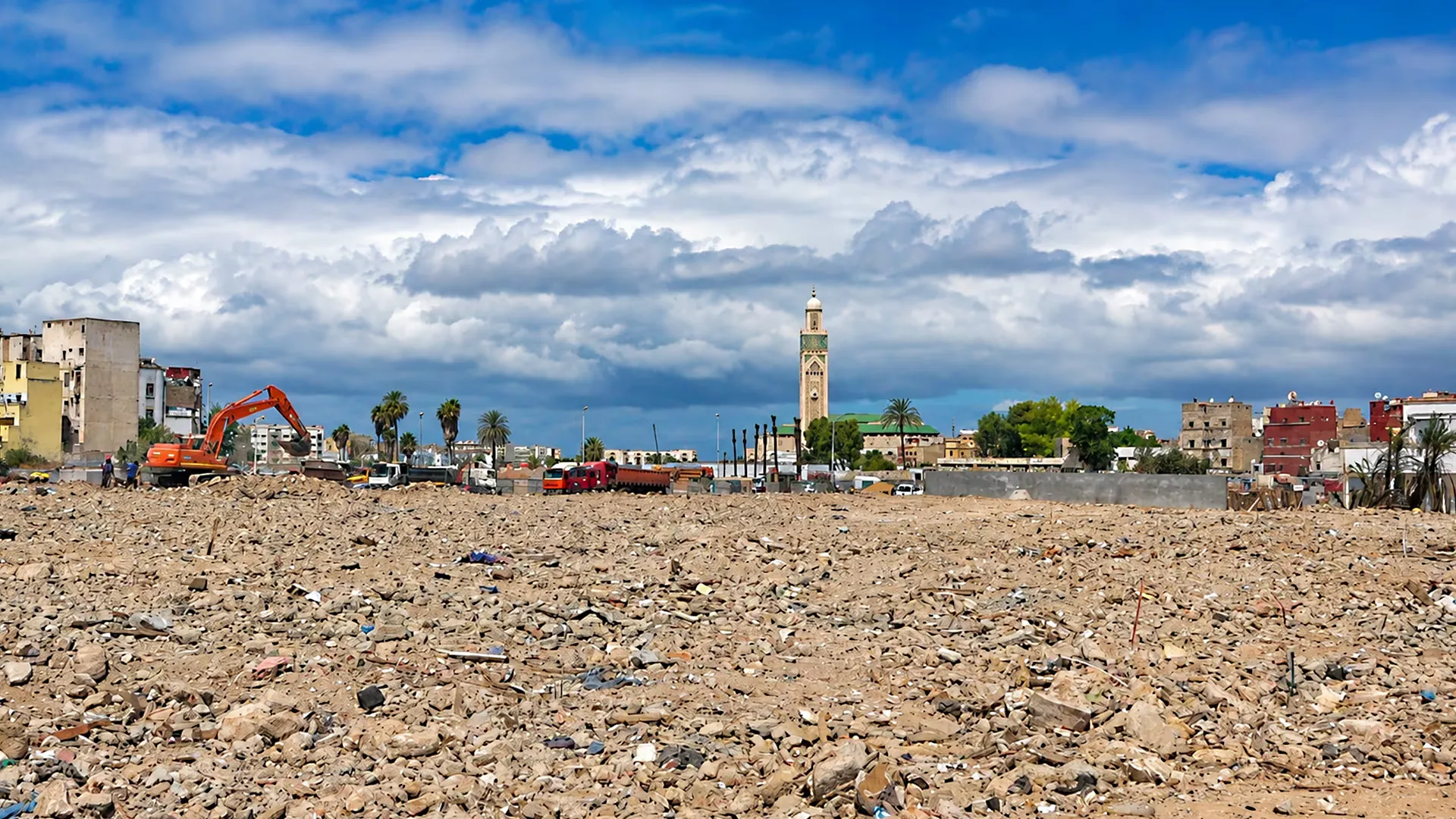

The Royal Passage Project, which has faced delays since its inception in 1989, has reached a significant milestone as the demolition of buildings earmarked for the vast development continues. This ambitious initiative is set to transform the heart of Casablanca, giving the city a fresh perspective and modern urban landscape.
According to informed sources at Le360, the demolition process is slated to resume at the beginning of next month, with current estimates indicating that approximately 60% of the targeted buildings, either subject to expropriation or in danger of collapse, have been demolished. This figure corresponds to around 15,000 buildings involved in the project. The ongoing changes are poised to redefine the urban fabric of the city.
Kenza Al-Shraibi, the head of the Sidi Bliout district council, noted that responsible authorities are diligently working to complete all necessary legal and technical arrangements prior to the launch of construction for the Royal Passage Project. These preparations include transferring ownership of certain properties, such as pathways and access roads, to ensure they are under municipal control, as well as addressing other technical files to facilitate the project’s progression in compliance with existing regulations.
Project Features and Timeline
Al-Shraibi emphasized that the project entails the creation of a sprawling green corridor stretching from the Oued Mohazine Square to the Hassan II Mosque. Although the final architectural plan has yet to be finalized, the overarching goal is to establish an ecological and urban oasis that will significantly enhance the character of Casablanca, the economic capital of Morocco. The project is expected to cover an area of approximately 50 to 57 hectares, with a target completion date set for 2029, aligning with major preparations for upcoming events in the city.
According to local sources, the final design and model for the project are still under review, with architects actively working on the plans. In terms of relocating families affected by the demolitions, Al-Shraibi revealed that about 2,000 households have been identified for resettlement, with two-thirds of these families already benefiting from options that include receiving alternative housing in districts such as Nassim, Dar Bouazza, and Lissasfa or direct financial compensation of 100,000 Dirhams.
Accelerating the Project’s Implementation
The Casablanca City Council approved an agreement on September 2, 2025, aimed at accelerating the Royal Passage Project, thus propelling it towards a new phase of development with the involvement of various institutions. This substantial initiative is backed by a financial allocation of 2 billion Dirhams. Mayor Nabila Rami described the council's approval of this agreement as a historic moment, underscoring that it is not just an ordinary agreement but part of state-level projects poised to elevate Casablanca to a metropolitan status comparable to major global cities. This agreement has paved the way for new institutions to contribute to the swift realization of the long-awaited project, which has been in the pipeline for 40 years.
The agreement facilitates the transfer of property ownership from the Sonadac company to the Casablanca municipality at no cost, along with the cancellation of any associated debts. The Fund for Deposit and Management (CDG) will finance the resettlement program for approximately 16,000 families and 2,500 commercial premises without imposing additional burdens on the municipal budget. Moreover, the social accompaniment will be managed by Casa Housing and Equipment, while the responsibility for evacuation and resettlement has been assigned to the Casablanca Housing and Equipment Company, with an 18-month timeline established for the completion of demolition operations.
This 2 billion Dirham initiative will be managed through annual installments of 250 million Dirhams from the end of 2025 through early 2029, ensuring a structured approach to financing the project.
In a related note, community activist Mahdi Limina emphasized the importance of implementing the Royal Passage Project, which will facilitate the rehabilitation of the city center and position Casablanca as a competitive tourist and urban hub alongside major global capitals. He further noted that the current vision for the project prioritizes green spaces and open areas, providing a genuine respite for residents rather than succumbing to urban sprawl, marking a significant turning point in the city’s urban planning trajectory.
It is worth mentioning that the demolition process has already impacted several streets in the old city, including Derb Al-Ingliz, Mouha Oussaid, Derb Al-Ramad, Derb Al-Hidaoui, Al-Nazala, Derb Al-Khalifa, and Derb BouTwil.
As reported by ar.le360.ma.