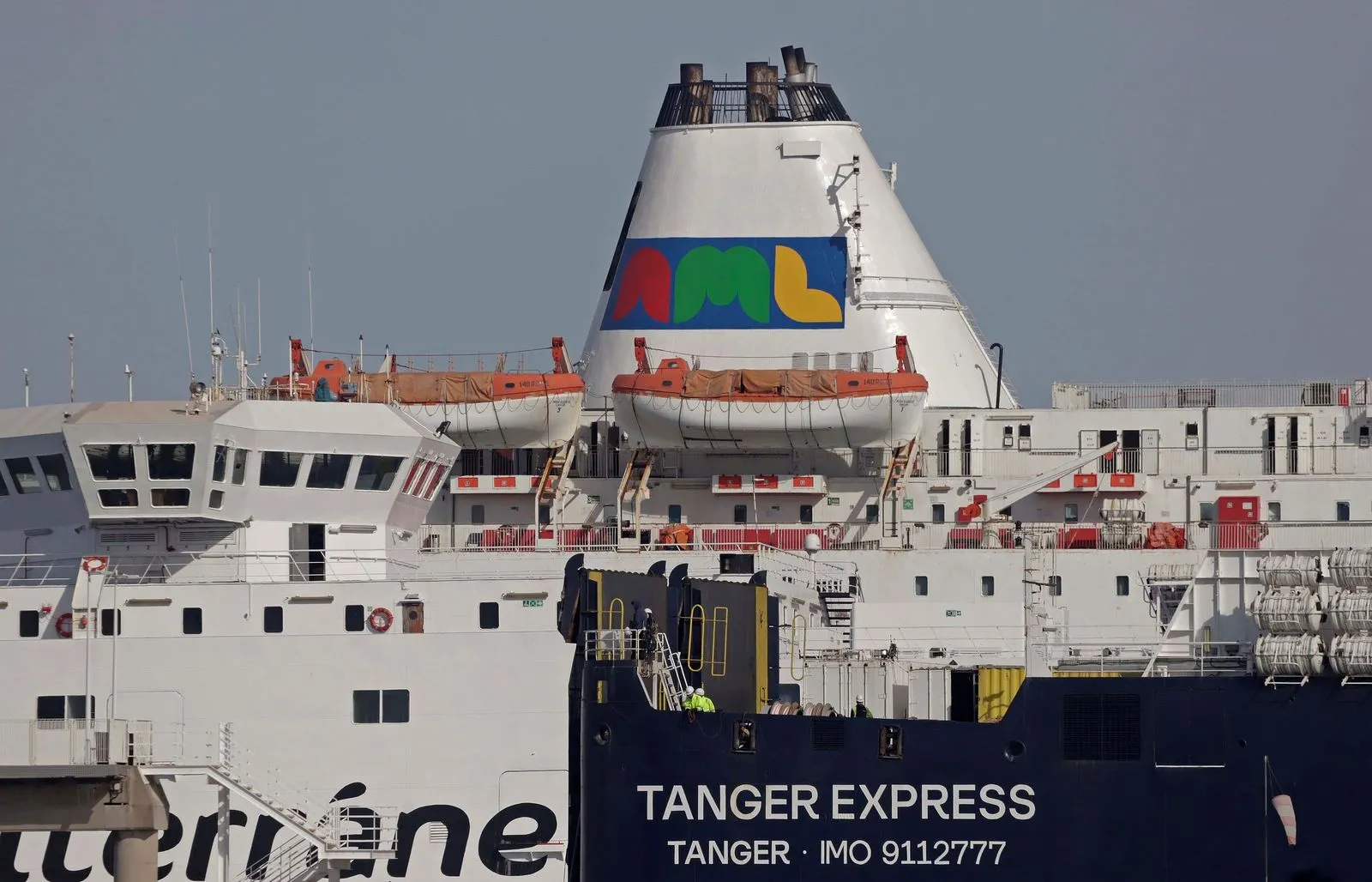

Renewing Ferry Connections in the Strait of Gibraltar
The ferry connections across the Strait of Gibraltar are on the verge of significant renovations, as the Moroccan government prepares to launch bids for the Algeciras-Tanger Med and Tarifa-Tanger City routes. These international connections have a unique operational structure where both Spain and Morocco share the traffic to ensure a balanced presence of national operations from both shores. Currently, the Moroccan government is in the process of drafting the tenders that will govern the second docking point at the Port of Tarifa for the connection with Tangier City, along with one of its licenses for the route between Algeciras and Tangier Med.
The Algeciras-Tangier Med route is noted for having the highest passenger volume among the ferry services operating in the Strait of Gibraltar. Port sources indicate that the resulting license will fill the gap left by Intershipping, a Moroccan shipping company that ceased operations in the port in 2023 due to financial difficulties. Since then, Africa Morocco Link (AML) has been the sole North African representative on this maritime route.
According to AXSMarine, the tender is currently in the second phase, with three shipping companies having reached this stage. Notably, La Méridionale, a ferry operator that is part of the CMA CGM group, is among the selected candidates. This company operates various services in the French market and has established a presence in Morocco, covering the route between Marseille and Tangier Med. Alongside AML, the Algeciras-Tangier Med connection is served by Baleària, Armas Trasmediterránea, and DFDS. The Danish group is awaiting approval from the National Commission of Markets and Competition regarding its acquisition of part of Armas's business to take control of its operations, similar to Baleària's previous acquisition of one of its concessions.
Tarifa Route Developments
Regarding the Tarifa to Tangier City route, Morocco is putting out for tender the second docking point, following Baleària's commencement of operations at the third docking point last year after winning the bid from the Algeciras Bay Port Authority. The license being tendered by the Kingdom of Morocco is the one that has been operating until now under Africa Morocco Link, which took over from Intershipping in 2024 and has significant European capital, as Swedish company Stena Line owns 49% of it.
AXSMarine indicates that the tender for the third docking point at Tarifa-Tangier City is expected to attract the attention of major international shipping companies, given the strategic importance of this route at a location like the Strait of Gibraltar. In fact, it is anticipated to gain even more significance in the future, especially looking ahead to 2030 when the World Cup, co-hosted by Spain and Portugal along with Morocco, will take place.
Industry publications cite DFDS, which acquired the Spanish FRS Iberia Maroc in early 2024, as a potential contender. The company had been operating the docking point corresponding to Spain until Baleària won the contentious bid last year, despite challenges raised by DFDS itself. Should DFDS decide to bid, it is likely to do so in partnership with another entity, as the shipping company operating this docking point must have a majority share of Moroccan capital.
Regarding the technical conditions, Spanish port sources have informed El Conciso that they currently do not know the technical criteria the Moroccan government will apply in its selection process or whether they will adopt a model similar to that of Baleària, which plans to utilize electric vessels once construction is completed. Nevertheless, the awarded shipping company will utilize the OPS electrical connections at the Tarifa dock to reduce emissions during layovers.
The nature of these routes as international connections and the strong bilateral relations between Spain and Morocco are grounded in a maritime transport agreement signed in 1979, which aims to regulate and streamline mutual cooperation. One of the key aspects outlined in this agreement is that each party is entitled to carry out at least 40% of passenger and cargo transport, ensuring an equitable distribution of traffic among the shipping companies of both countries. In Spain's case, being a part of the European Union allows any community shipping company to participate in the bidding process.
Thus, both Spain and Morocco autonomously regulate their licenses and determine the specifics, although there is ongoing communication between the two parties. In Spain's case, the licensing for Tarifa is conducted through public tenders via the State Contracting Platform, while in Algeciras, companies submit their applications directly due to sufficient supply and space.
On the Moroccan side, the process is quite different. As port sources detail, interested parties first express their interest based on a set of conditions. Subsequently, the administration selects a group of companies and engages in negotiations that narrow down to a final group of candidates competing in the actual bidding process, ultimately leading to the selection of the winning company.
The timing of these tenders by Morocco aligns with the Algeciras Bay Port Authority's goal of gradually renewing the fleets operating in the Strait of Gibraltar, as stated in the new strategic plan for 2030. One of the milestones highlighted is a new governance model for Strait traffic that, in collaboration with the Moroccan administration, will promote the introduction of new vessels to help reduce carbon footprints. Additionally, this will be accompanied by the expansion of docking points for ropax ferries (for passengers and cargo) from eight to ten at the Port of Algeciras, facilitating an increase in traffic aimed at achieving the 2030 targets of 7.5 million passengers and 800,000 industrial vehicles.
As reported by elconciso.es.