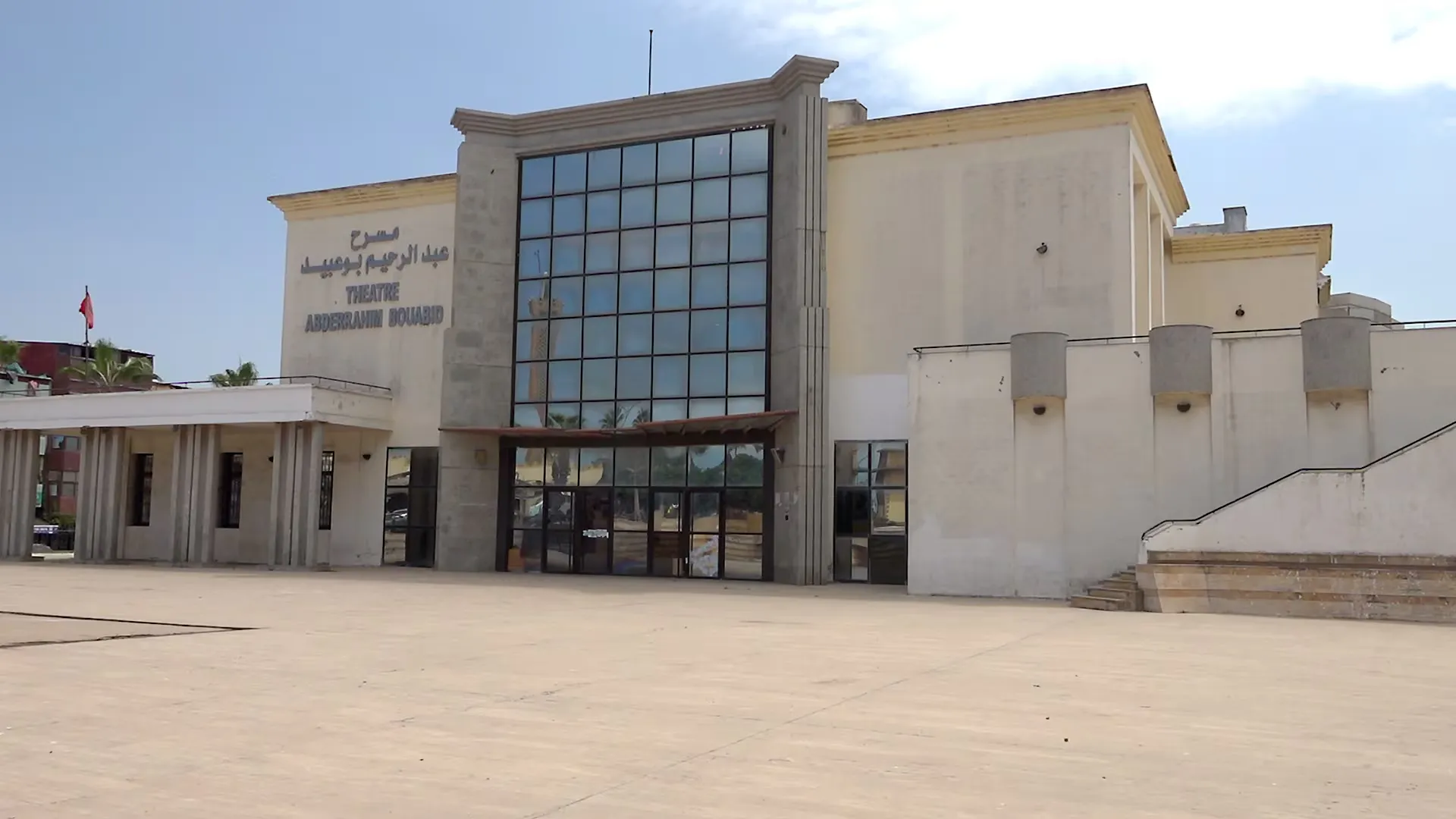

The Decline of a Cultural Landmark
The Abderrahim Bouabid Theatre, once a vibrant hub for the cultural life of Mohammedia, has fallen into a state of disrepair that starkly contrasts with its former glory. Inaugurated in 2001, this theatre was not just an architectural marvel; it was a crucial venue for theatrical performances, academic events, and artistic gatherings. For the cultural stakeholders of the city, it represented a unique asset—a fully equipped stage capable of hosting a variety of performances and significant events. However, the theatre has been closed since 2019, and the signs of neglect are now glaringly evident both inside and outside the building. Years of inactivity have severely deteriorated the structure, which was already in need of maintenance before its doors were shuttered.
A Call to Action for Cultural Restoration
Mohammed Bassalah, the artistic director of the cultural association Hawass, reflects bitterly on what was once a venue with exceptional qualities. "This theatre boasts around 900 seats, featuring unique interior architecture and acoustics that are unmatched in Morocco," he explains. Its design allowed performers to deliver shows without the constant reliance on artificial sound systems, a testament to its refined engineering. The project, which cost nearly 7 billion centimes, included technical specifications comparable to those of the Opéra de Paris, with the same specialized sound and lighting service providers involved in its construction. However, this architectural excellence has not withstood the test of time due to a lack of maintenance. Bassalah describes the current state of the theatre: the interior curtains are heavily damaged, a portion of the stage machinery is in disrepair, and the restrooms are non-functional. Consequently, the venue is no longer capable of hosting artistic productions under normal conditions.
The theatre's closure in 2019 was initially accompanied by promises of rehabilitation. Despite a partnership agreement established in 2022 between the Ministry of Culture and the Mohammedia Municipal Council, which entrusted the rehabilitation project to Casablanca Aménagement, progress has been painfully slow. "A commission visited the site to assess the theatre's condition and determine its needs at that time, yet nothing substantial has been done on the ground," Bassalah laments. While the cultural scene awaits its revival, the building has been repurposed for different uses. During the health crisis, it was converted into a vaccination center, and since then, it has primarily hosted occasional meetings or gatherings, far removed from its intended purpose.
This shift in usage encapsulates the broader issue faced by artists in Mohammedia. "There is no dedicated contact for organizing rehearsals or staging performances, nor is there a genuine political framework in place," the community actor expresses regretfully. As a result, local artists and troupes are compelled to seek appropriate venues in Casablanca or Rabat, creating a paradox for a city that houses such a significant cultural facility.
Beyond the physical condition of the theatre, cultural stakeholders are eager to address the overarching cultural policies being implemented in Mohammedia. They criticize a management approach that appears to prioritize sporadic events over the maintenance of infrastructure and support for local creativity. While budgets for festivals may reach millions of dirhams, permanent facilities remain closed or continue to degrade. Thus, the issue transcends mere building renovation; it reflects a need for a comprehensive cultural vision to be reestablished. For cultural associations like Hawass and local artists, reviving the Abderrahim Bouabid Theatre should only be the first step. They advocate for regular programming, accessible rehearsal spaces, support for local artists, and, importantly, a long-term cultural strategy.
As the Abderrahim Bouabid Theatre awaits its much-needed rehabilitation, a segment of the cultural life in Mohammedia continues to seek refuge in neighboring cities, highlighting the urgent need for action.
As reported by fr.le360.ma.